Historical Mystery with Alan Bradley’s Flavia De Luce

Interview with Alan Bradley


Describe the historical background during which your story takes place.

The Flavia de Luce novels are set about five years after the end of the Second World War. England is still impoverished from the conflict, and social recovery has scarcely begun. Rationing is still in effect and times are tough. Old England is gone, and everything now seems shambles and decay. Only by clinging to ancient traditions do the people find a sense of comfort and security.


A lot of your stories take place in the English village of Bishop’s Lacey. What were such places like during the 1950’s?

Before the building of the motorways, and the rise of the motor-car, English towns and villages were much more isolated than today. Transportation was by railway. There was a profusion of local institutions and government, each providing services to a relatively small area. Many people had never traveled far from where they were born, although that was beginning to change. The war had brought an influx of servicemen from the U.S. and what remained of the British Empire. Strangers were viewed with suspicion. Some things never change.


Recessed Country Map Britain


What did you learn about Flavia De Luce while writing this story?

Flavia never ceases to amaze me, especially her frightening grasp of the underside of chemistry. I am always as surprised as any reader at the things she says and does. In “The Golden Tresses of the Dead”, I began to discover Flavia’s underlying compassion. I began to suspect that she might, in the end, come to love a few people as much as she loves corpses. Well…almost.


I love all of the titles of your books. Describe how you came to name “The Golden Tresses of the Dead.”

The title is taken from Shakespeare’s Sonnet 68, and concerns a certain ghastly and despicable practice which was once fairly common among those who will stop at nothing in their lust for money. Does it still exist? I hope not, although you can never be sure about anything where money is concerned.


SHAKESPEARE - close-up of grungy vintage typeset word on metal backdrop


What do you enjoy most about writing historical mysteries?

The research is always great fun. England in the 1950’s has always been of special interest to me, and ferreting out forgotten customs and folklore is like a paid holiday. It isn’t so much a case of finding ideas as weeding out the vast number that present themselves. Each book centres upon a particular long-lost English custom or peculiarity, ranging from sociopathic stamp-collecting to peculiar religious sects, and from Gypsy caravans to the exhumation of saints.


What can you tell us about Ophelia and her wedding?

Feely has come to the altar at last, after a protracted on-again-off-again courtship with former Luftwaffe pilot, Dieter, who has elected to remain in England after being shot down and kept captive as a prisoner of war – and all because of his love of the Bronte sisters! Their courtship has been a war in itself, with Feely as fierce as any Field Marshal. Now, just when peace seems about to break out, something nasty is found in the wedding cake.


wedding funny cake


What’s the relationship like between her and Flavia?

It has been mostly a life of revenge and re-revenge. Feely is as vain a creature as ever fogged mirror with her self-admiring breath. Flavia fancies poisons. The outcome is inevitable.


What role does Dogger play in this one?

Arthur Wellesley Dogger, who served with Flavia’s father, Colonel de Luce in the Far East, suffers from what would nowadays be diagnosed as PTSD. Because of his fragility, Dogger has worked at different times as gardener, manservant, and general all-round handyman. But much about the man himself remains shadowy. In “The Golden Tresses of the Dead” Flavia and Dogger found their own detective agency: Arthur Dogger and Associates – Discreet Investigations. Their first official case involves rogue missionaries, quack remedies and, of course, that abominable crime to which I have referred above. All typical, of course, of a sleepy country village.


I recently had the pleasure of listening to an interview you had with Jayne Entwistle on Audiophile. What was it like speaking with Jayne for the first time?

It was astounding to find how similar our experiences had been in my writing the books and her recording them for the audiobook versions. Jayne has won awards for her portrayal of Flavia, and with good reason: her ability to bring to life a whole cast of characters is a special gift. The interview was conducted by an interviewer in New York, with Jayne in Los Angeles, me in a tiny studio on an island in the middle of the Irish Sea. It was like getting Mercury and Pluto together for a good old chinwag and an abundance of laughs. What we had in common, of course, was Flavia de Luce, who seems to have approved. At least, she hasn’t poisoned either of us….yet.


****

Behind the Mic with Audiophile Magazine: Interview with Alan Bradley & Jayne Entwistle


Originally appears on AudioFile Magazine Feb. 15, 2019. Duration 30 min. 


Alan Bradley image


About Alan Bradley

Alan Bradley received the Crime Writers’ Association Debut Dagger Award for The Sweetness at the Bottom of the Pie, his first novel, which went on to win the Agatha Award, the Barry Award, the Dilys Award, the Arthur Ellis Award, the Macavity Award and the Spotted Owl Award. He is the author of many short stories, children’s stories, newspaper columns, and the memoir The Shoebox Bible. He co-authored Ms. Holmes of Baker Street with the late William A.S. Sarjeant. Bradley lives in Malta with his wife and two calculating cats. His seventh Flavia de Luce mystery, “As Chimney Sweepers Come to Dust” will be published in the US and Canada on January 6, 2015, and in the UK on April 23.


www.alanbradleyauthor.com


MTW Thriller Giveaway Contest


Dying to see you image


He’s Watching, He’s Waiting, She’s next.

When Sophie is told to organize care for elderly Ivy, she is unaware that by meeting Max, Ivy’s grandson, her life will be turned upside down.

As Sophie’s involvement with Max and Ivy increases she becomes more distracted by her own problems.

Because Sophie is certain she is being watched.

For a while, Ivy relishes Sophie’s attention but soon grows concerned about the budding relationship between Sophie and Max.

Torn between Sophie and his grandmother, Max cuts ties with the care agency, leaving Sophie hurt and confused.

Meanwhile, there is a murderer killing women in the area.

Is there a link between Sophie’s stalker and the killings?

Soon Sophie will learn that appearances can be deceiving.


Contest yellow word text on white background with clipping path


To enter the thriller giveaway competition simply answer a question:

What inspired Kerena Swan to write?

The answer can be found on her website: Kerena Swan

*The winner will win a free copy of Dying to See You.*

May the odds ever be in your favor.


Becoming a Writer with Kerena Swan


Kerena Swan image


Interview


What do you do full time?

14 years ago I left a well-paid and secure job as Head of Disability Services for Bedfordshire County Council to start my own company; a care agency supporting children and families with disabilities. It was a scary leap into the unknown and meant investing my own money and a lot of time. For a while I worked full-time as a management consultant during the day and ran the business evenings and weekends, often totalling 70+ hours a week. I expected to have a team of eight carers but now have around ninety staff, including the management team. As I’ve built the business from scratch and have created all the necessary policies and procedures, the service is unique and personal. I have a highly motivated and positive team and together we provide highly valued care to families in need. It’s rewarding and satisfying though can be demanding at times.


Work Smart Vs Hard Better Process System Procedure Efficiency 3d Illustration


What’s it like writing with a full time job under a deadline?

I try to take Wednesdays off now and dedicate the day to my writing but it’s disappointing how meetings always seem to crop up on that day. As my company office is set in a large annexe attached to the house I’m always on hand to answer queries or make decisions. It’s convenient being nearby but I never get a proper break so I tend to do most of my writing at the weekends.


Why do you write?

Writing is no longer a hobby, it’s become an addiction. I’ve spent my career as a social worker and director writing reports, policies, training materials and content for websites. It was only when I was seriously ill in 2016 that I decided I wanted to tick one more thing off my bucket list which was to write a book and get it published. I joined a writing course and from day one I was hooked. I can lose myself for hours when I’m creating a story and am at my happiest when it pulls together. I just wish I’d discovered writing fiction a lot sooner as the market has become saturated with books and is really tough now.


Work Hard Dream Big written on desert road


“A professional writer is an amateur who didn’t quit” – Richard Back – What does this quote mean to you? 

As I was born in May I’m a Taurus and one of the characteristics is stubbornness. Once I have decided to do something I won’t stop trying until I’ve achieved it. I still feel like an amateur when I read fantastic authors like Robert McCammon or Michael Robotham but I dedicate time to learning as much about the craft of writing as I can. I study books on character arcs, forensics, and story structures. I research everything thoroughly and have learned how bodies decompose, what patterns blood spatters make and ten ways to bury a body. My husband is alarmed by my searches on the iPad and said I must never write about making bombs or we’ll have the terrorist squad knocking our door down.

I’ve always enjoyed learning and it doesn’t matter how good I am at something I believe there is always room for improvement so will study everything I can on the subject. It feels weird to think of myself as a professional writer but I suppose I am as I’ve earned a little money at it. I’m a long way from earning enough to live on though, so won’t be giving up the day job!


Metal Wheel Concept


What are you currently working on?

I’ve just finished the final proof-read of my third novel, a psychological thriller Scared to Breathe, which is being released on the 3rd June. My second novel, a social crime story called Who’s There? was declined by my current publisher as it didn’t quite fit their lists but is being considered by agents. I’m currently writing my fourth novel, Not My Sister, which was inspired by a news article about a woman who took a DNA test and discovered she wasn’t related to her family. It’s another psychological thriller with twists and turns and I’m about a third of the way through the first draft. I have a contract with my publisher for it and hope to release it by the end of the year.


****


Scared to Breath image


When Tasha witnesses a stabbing at the train station in Luton, she is compelled to give evidence in court that leads to Dean Rigby being convicted. But when Lewis, Dean’s brother, vows revenge, Tasha is afraid and no longer feels safe in her own home.

Tasha’s partner, Reuben, hopes to marry her and start a family soon. But Reuben is concerned about Tasha’s state of mind and urges her to see a doctor.

When Tasha is left a derelict country house by her birth father, she sees an opportunity to escape Luton and start a new life. After visiting Black Hollow Hall she sees it as the perfect opportunity to live a life without fear.

At first Tasha feels liberated from her troubles. The gardener, William, who is partially paralysed but employed to maintain the grounds of Black Hollow Hall, is welcoming.

But soon Tasha realises the Hall is not quite the idyll she imagined.

When she discovers that a woman jumped to her death there years ago following the murder of her husband, strange events begin to take place and Tasha fears for her safety.

Have the Rigby family found her?
Is someone trying to scare her into selling the house?
Or is she suffering from paranoia as Reuben suggests?

As Tasha’s sanity is put under pressure she begins to wonder if Black Hollow Hall going to be her salvation or her undoing…


Extract of Scared to Breathe


The sooner I get the door or window fastened the sooner I can get back into the safety of my bed. Huh. Who am I kidding? Only children believe blankets offer security. I cross the hall and enter the small sitting room then through to the library. Nearly there. A draught of cold air wraps itself around my feet and I shiver, goosebumps rising on my arms and legs. It’s so dark, as though all the colours of the daytime have been layered one over the other like printing ink until the only colour left is black. The lantern barely lights a foot in front of me. Maybe Reuben was right. I should have gone back to Luton, at least until the overhead lighting is sorted.

The tall French window smashes into the wall again and this time glass shatters. Damn. I hasten across the room to secure the door to prevent any more panes breaking but before I get there I spring away to my right as something moves to the left of me. Still backing away, I bring the lantern round to see what it was. Or who…

The light from two tiny candles is pitiful. It barely penetrates the darkness but I’m too afraid to step forward again.

‘Who’s there?’ I can’t help asking.

No one answers. Of course they don’t. The storm continues to rage outside and gusts of air surge through the open door making the candles flicker. Making the shadows flicker too. Was that what I’d seen? Am I literally afraid of my own shadow now? I step to the door and with glass crunching underfoot I reach for the handle. It’s cold and wet in my sweaty palm. I’m exposed here and the rain soaks into my wrap while the strong wind flaps it around my legs. I scrape the soles of my slippers on the door sill to dislodge any fragments of glass then drag the door shut. I click the latch then test it to see if it holds. It seems fine but I puzzle over why I couldn’t open it earlier. The wind continues to throw rain through the broken pane but I’ll have to sort it out in the morning.

As I turn back to face the room a sudden flash lights up the wall of the library and I see a man-shaped shadow. My shock turns into a scream then I run, the poker bashing painfully on my shin and my wet slippers skidding on the wooden flooring as I bolt through the sitting room doorway. I catch my shoulder on the frame and pain erupts down my arm. A door creaks behind me but I don’t stop. I weave in and out of the furniture in the drawing room and rush into the dining room. The candle flames gutter and die as they drown in liquid wax. I slam the door behind me and throw the poker and lamp on the floor then grab a dining chair and tilt it, ramming it under the door handle.

It isn’t enough. One push from the other side of the door would send it flying across the room. The chest of drawers. They’ll be better. My breath’s coming in short gasps now and sweat trickles down my sides. My left arm feels numb. I run to the chest of drawers and lean all my weight into it, pushing it across the floor. The feet scratch the polished wood but I don’t care. It crashes into the dining chair sending it skittering away. With the furniture positioned across the doorway I turn and look wildly around. I need something else to go across the other doorway that leads to the kitchen but no. It won’t work. This one opens outwards.

Under the bed.

No. Too obvious.

The cupboard.

I grab my thin duvet and rush to the huge sideboard. I open one of the doors and crawl inside, grateful I’ve emptied it of old rubbish, and tuck the cover under and around my sodden robe. I find a screw head on the inside of the cupboard door and use it to pull the door shut. I wrap my arms around my knees and hunch into as tiny a ball as possible. I rock slowly back and forth, blood pounding through my veins. I’m trembling all over.

I listen.

Nothing.

I put my head on my knees, silent tears soaking into the thin duvet and then lift my head in horror.

I can hear the unmistakable sound of laughter. Deep and male. There’s no doubt about it now. I’m not going crazy or suffering from paranoia. There’s someone in the house.


Kerena Swan image


Kerena lives on the Bedfordshire/Buckingham border with her husband, son and two cats. She also has two daughters and two granddaughters.

‘Dying to See You’ is Kerena’s first novel, Her second book ‘Scared to Breathe is being released on 3rd June 2019. Drawing on her extensive knowledge and experience in the problematic world of social work, Kerena adds a unique angle to the domestic noir genre.


Website | Amazon | Goodreads | Twitter


Who’s In Charge Here?  Getting Jurisdiction Correct in Your Writing

JURISDICTION -   3D stock image of Red text on white background


Who’s In Charge Here?  Getting Jurisdiction Correct in Your Writing

By Micki Browning


I recently picked up a novel that featured an FBI agent as a first responder to a burglary investigation at a city residence. The author immediately lost her credibility with me and I put the novel aside. Why? The Feds are about four levels too high for the job. Can federal agents investigate a burglary? Absolutely. Are they the first responder in a city? No.

At some point, a story you’re writing will likely involve a law enforcement character. It may be on a traffic stop, in response to a crime, an encounter in a coffee shop, in another character’s school, or over the neighboring fence. Our nation has more than 750,000 law enforcement officers, so for art to mimic life, there are a couple of things you need to know.


What is Jurisdiction?

Jurisdiction is easiest to imagine as geographical boundaries, but is best thought of in terms of power. Jurisdiction defines the statutory authority of a government agency—in this case, law enforcement—to act and investigate based on the location of the incident, the type of crime, or the dollar amount at stake.


Who are you going to call?

Most people don’t worry about jurisdiction. If they need help, they dial 911 and then wait for help. As the master manipulator of your novel, however, you are the dispatcher and it’s up to you to decide who goes. Need a quick response? Local police almost always arrive first.


911 emergency number


The Locals

The backbone of law enforcement is the patrol force. New York City employs approximately 38,00 officers. A rural agency may only employ a single peace officer. Throw in a county agency and your first responder could be an officer, marshal, or deputy.

So how do you know the difference? If you are writing about an actual agency, it’s easy. Find a computer. Nearly all agencies have a wealth of information regarding size, jurisdiction, rank structure and community outreach on their websites. Photos will reveal the types of vehicles they drive, how they dress and the color of their uniform (which varies considerably).

Every county has a sheriff’s office. The sheriff is an elected official and is statutorily required to provide public safety for the county. Deputy sheriffs perform the patrol grunt work. They also carry out civil law responsibilities, such as serving subpoenas.

By comparison, cities often operate their own municipal police departments. An appointed Chief of Police runs the agency, and the first responders are referred to as officers. But police agencies are expensive to administer, and many cities contract for public safety services from the county sheriff. Likewise, most towns and villages contract from the county, although some operate their own office, and may be called marshals.

On very rare occasions, cities and counties combine agencies, for example the Miami-Dade Police Department and the agencies in San Francisco and Denver. Usually this occurs when the city and county share the same geographical boundaries.


Polizei - Hintergrund - Banner


State Agencies

State agencies differ across the nation—and it gets murky fast. Many states have multiple public safety agencies that focus on either investigation or enforcement. Other states run one agency with different divisions.

California combines these functions under the umbrella of one massive agency. Remember the television show CHPs? Well, they do a lot more than ride motorcycles. In addition to patrolling the state’s highways, they also staff a Protective Services Division tasked with capitol, dignitary, judicial and governor protection. The agency oversees the State and Regional Threat Assessment Centers, Counterterrorism and Threat Awareness Section, and the Emergency Operations Center.


State Agencies image black background


Federal Agencies

Think state agencies are confusing? Wait until the Feds get involved. The Department of Homeland Security, the U.S. Marshals Service, the Drug Enforcement Administration, and of course, the Federal Bureau of Investigations are familiar names. But don’t forget the Bureau of Alcohol, Tobacco Firearms and Explosives, United States Park Police, or everyone’s favorite, the Transportation Security Administration.

Involving federal agencies in a story typically requires more than casual research. Introducing a character as an officer from the FBI will mark you as a rube. While it is true that they are sworn peace officers, the FBI hierarchy is paved with agents, not officers. And just when you think you may have it all figured out, here’s a curveball. Law enforcement officers in the TSA are Federal Air Marshals. The U.S. Marshals Service, the oldest federal law enforcement agency, is the enforcement arm of the Federal Court System. Their enforcement officers are called U.S. marshals (as opposed to a town marshal). Confused yet?


US government concept acronym


Who is the best?

That’s an easy one. It depends on what you need. Every agency thinks it’s the best. Law enforcement is remarkably similar to a family—complete with sibling rivalry, petty jealousies, and intense loyalty. Some departments welcome assistance; others not so much. The truth? The world is shrinking. People are far more mobile, crimes cross borders, and the Internet links continents. Law enforcement cannot be conducted in a vacuum. Departments rely on each other.

Federal task forces give smaller agencies the opportunity to tackle major issues in their communities. The US Immigration and Customs Enforcement Agency launched a task force to address Internet child exploitation. They also assist with cyber crimes, human trafficking and smuggling investigations. The Marshals Service routinely spearheads fugitive task forces. The Drug Enforcement Agency partners with local law enforcement on narcotic task forces.


Two groups of people pulling line, playing tug of war. Teamwork


Truth is stranger than fiction

Jurisdiction can be tricky. Regardless of genre, the takeaway for authors is that with a little bit of background information, the truth can be manipulated to fit your story needs. The author at the beginning of the article could have legitimately had an FBI agent respond to a burglary investigation with a few easy tweaks. If the responding local officer noticed something in the home indicative of a federal issue—such as a tie to a bank robbery suspect, a terrorist threat, or if the investigation grew to include a kidnapping that crossed state lines—then the FBI would become involved. There’s even a way to legitimize a responding FBI agent. Set the crime on a Native American Indian Reservation. Some tribal nations have their own agency, but for those that don’t, the FBI holds jurisdiction.

In the end, the criminal justice system is a tangled network of agencies with overlapping jurisdictions and operational goals. But the people who make up those agencies are remarkably similar. Every officer swears to uphold the public trust, and they share a common goal. They tend to be strong-willed, opinionated and honorable. By virtue of law, they have enormous authority, and what they do with it can make great fiction.

This article has been updated. The original version appeared in The Florida Writer April 2015.


Micki Browning 600px photo


An FBI National Academy graduate, Micki Browning worked in municipal law enforcement for more than two decades and retired as a division commander. She is the author of the award-winning Mer Cavallo Mystery series set in the Florida Keys. Her debut novel, Adrift, was an Agatha Award finalist for Best First Novel. It won both the Daphne du Maurier Award for Excellence and the Royal Palm Literary Award prior to its publication. Her latest thriller, Beached, was released in January 2018. It won the Royal Palm Literary Award for both Best Mystery and the Book Book of the Year.

Micki also writes short stories and non-fiction. Her work has appeared in dive magazines, anthologies, mystery magazines and textbooks. She lives in South Florida with her partner in crime and a vast array of scuba equipment she uses for “research.”


www.mickibrowning.com


The Elements of a Bestselling Thriller: Top Tips for Authors


Bestseller neon sign on brick wall background.


The Elements of a Bestselling Thriller: Top Tips for Authors

by Adam Durnham


When it comes to conjuring ideas for a thriller or mystery, authors should create perspectives that are relevant to current readers with a special attention to market trends. What are the possible elements of a bestselling thriller? Read to know more.

After reading a gripping mystery or thriller, do you find yourself thinking about how interesting it was? If you’re an author, there are elements to bestselling thrillers that can help your readers stay on the edges of their seats.

In order to do this, authors may want to strike a balance between the foundational elements of their work and current trends in thrillers and mysteries. Here are some top tips for authors who are planning to create pieces in these special genres.


Pick the type of thriller or mystery genre that you want to create

Thriller or mystery novels are broad categories on their own. It is important to know who your target readers are. Knowing your target audiences will help you determine the literary subgenre that you will use. Some thriller subgenres include:


  • Psychological thrillers: These thrillers include themes relating to psychological or mental health conditions. The protagonist or the perpetrators in such stories might have mental health issues.
  • Mystery thrillers: These thrillers feature mysteries that revolve around a crime, accident, or another incident. The protagonists in these works find and analyze clues throughout the stories.
  • Science fiction thrillers: These popular thrillers incorporate science fiction topics. Authors may be particularly creative with this subgenre, which may include futuristic themes such as aliens, monsters, human cloning, and entirely new worlds.


Developing clear ideas about your subgenres gives you a laser-sharp focus on the elements that you want to place in your story. The focus helps readers feel that your characters, settings, plot twists, and other crucial parts of your work are thematic and fit together cohesively.


Choose relevant themes

Theme is quite different from your subgenre. It unifies your story and gives something for your readers to think about as they progress through your story. This is helpful if you want to create a thriller or mystery novel, since you want to provide puzzle pieces that the readers can think about as they approach the end.


Consider using thriller or mystery story themes that people find relatable. They can involve problems such as mental health, addiction rehab, crime, or social injustices. These themes can bring value to your readers, especially if your readers advocate for such topics. Your book has a better chance at reaching the best-seller lists if many of your readers have firsthand experience with or knowledge of your themes.


Successful writers pay attention to what is happening in the larger culture. When topics about mental health, addictions, crime, or social problems appear in the news, books and movies associated with these relevant themes also appear.


Plot your story before beginning to write

Before starting your first chapter, consider creating an outline of your thriller or mystery to develop your plot. Outlines are important for many types of work, but they are especially crucial for thrillers and mysteries because those genres include large amounts of action. Creating a well-plotted story can help you avoid unnecessary fluff and irrelevant elements in your writing.


Your plot should include a buildup of conflict, and your characters’ goals and motivations should be consistent with your themes. Thrillers or mysteries can start at the middle of the action to create a thrilling atmosphere that you can heighten for effect.


Experiment with multiple points of view

One sign of a great author is his or her flexibility in presenting the points of view of various characters. Some bestselling thrillers and novels shift between the viewpoints of the protagonists and the villains in the stories instead of presenting the story entirely in the third person perspective.


Shifting between multiple points of view depends on your theme and other elements of your story. But multiple viewpoints can greatly benefit mystery and psychological thrillers. They can showcase the depth of the story and portray the intrinsic motivations, thoughts, and actions of the characters.


Create interesting plot twists

To develop an interesting plot twist, you need to get inside the minds of readers. One element of bestselling thrillers or mystery novels is that many plot twists can appear quite predictable at the beginnings of stories yet profound and surprising at the ends of the same pieces.

You can create these puzzle pieces to appear one way at the beginning and middle of your stories while creating a sense of jeopardy and conflict. Such story construction encourages readers to exercise their common sense and typical thought processes as they proceed through the plot.

When they encounter your story’s plot twist, readers may be surprised and pleased when your writing reveals your actual story. This shift is what makes the story gripping and exciting for readers. Well-written plot twists are one of your greatest tools as an author of mysteries or thrillers.


Ready, set, write!

If you keep in mind these elements of writing a bestselling novel, you can stay on top of your game. Great authors create solid foundations for their stories, incorporate creativity, and understand trends that matter to readers.


Golden Best Seller Award Over Black Paper Background


Managing the Ensemble Cast of Characters by Saralyn Richard

ENSEMBLE - Glowing Neon Sign on stonework wall


Managing the Ensemble Cast of Characters


by Saralyn Richard

When I decided to write a mystery novel situated around a weekend birthday celebration at a country mansion (Murder in the One Percent ©2018 Black Opal Books), I wasn’t fully aware of how challenging it would be to populate the party with a slew of guests and keep the novel moving for readers. To start with, I wanted to have seven couples on the guest list, plus a single, for a total of fifteen characters. Some would be the hosts, one would be the murder victim, one or more would be the killer(s), and others would be the suspects. Fifteen seemed like a fine number until I started to write the first few chapters.


dinner party toast image


For one thing, the party guests, like most in real life, were quite similar. Most of them had been to college together, and most of them had careers in the same field of endeavor. They were all members of the wealthy one percent, so they all wore expensive clothes and jewelry, enjoyed multiple residences, and indulged in luxurious hobbies. It was fun to pull back the curtain on their lives, but I soon realized a few things:


  • The characters were too much alike.
  • Readers would have a hard time remembering who was who.
  • Readers would have a hard time identifying with any of the characters.
  • There wasn’t enough contrast among the characters to make for interesting dialogue, narration, and description.


Once I understood the challenges of managing the ensemble cast of characters, I cut one couple from the book, taking the number at the party to thirteen. What a perfect number for a party that started on a Friday the 13th, a party where someone would be killed.

Next, I created a character bible for each partygoer. It wasn’t enough to document the physical traits of each one. I wanted to give everyone a particular way of talking, speaking, moving. So if a character flipped her hair behind her shoulder or rubbed the material of her pants between her thumb and forefinger when nervous, the reader would know exactly which character that was.

While all of the characters were among the ultra-rich, I gave them different experiences with money, and different attitudes toward it, as well. Some inherited it, some earned it, some had it and lost it, and some married into it. Some were haughty, while others were down-to-earth.

Each of the characters has had identifiable past experiences with the victim, some unpleasant enough to serve as a potential motive for killing him. As everyone comes together to a weekend retreat at a remote country mansion, the reader is presented with a “locked room mystery.” The killer has to be one of the party guests.

Once the murder occurs, the detective and other characters provide plenty of contrast, but by then, the readers have already formed impressions of the ensemble of one-percenters. All they have to do then is buckle up and enjoy the ride.


Galveston Author Saralyn Richard


Award-winning mystery and children’s book author, Saralyn Richard, is a writer, who teaches on the side. Her children’s picture book, Naughty Nana, has reached thousands of children worldwide. Murder in the One Percent, semi-finalist in the Chanticleer CLUE awards for best suspense/thriller, pulls back the curtain on the privileged and powerful rich. Set on a gentleman’s farm in Pennsylvania and in the tony areas of New York, the book shows what happens when someone comes to a party with murder in his heart and poison in his pocket. Look for the sequel, A Palette for Love and Murder, at the end of this year. Saralyn has published stories, articles, and poems in a variety of collections and magazines, and she edited the anthology, Burn Survivors’ Journey. A member of International Thriller Writers and Mystery Writers of America, Saralyn teaches creative writing and a literature class. Her website is www.saralynrichard.com


Interview with Clara Benson Author of the Angela Marchmont Mysteries

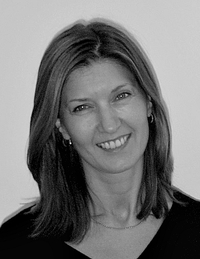
Clara Benson image


Please welcome historical mystery author Clara Benson!

Clara Benson is the author of the Angela Marchmont Mysteries and Freddy Pilkington-Soames Adventures – traditional English mysteries in authentic style set in the 1920s and 30s. One day she would like to drink cocktails and solve mysteries in a sequinned dress and evening gloves. In the meantime she lives in the north of England with her family and doesn’t do any of those things.


Interview 


  1.    What was your path to becoming a writer?

–          I started out as a translator (Italian to English, since you asked), but I always thought I would write a book at some point, and eventually I decided that if I was going to do it I’d better get on with it! It took four years to write my first, in between moving, having kids, house renovations, etc, and I’m surprised I ever got it finished, to be honest. But once it was done and published and people were buying it, that spurred me on to write more. Now I can’t imagine doing anything else.


  1.    What do you enjoy most about historical mysteries?

I love the innocence of them! We’ve all read all the mysteries these days, so it’s difficult to truly surprise the reader, and nowadays the solution is far more likely to hang on a microscopic piece of forensic evidence than on anything else. But I love the fact that in historical mysteries the detective can sweep in, point at someone and say, “The clock said 6.05 instead of 6.08, and your train ticket was dated Wednesday not Tuesday, which proves you are the murderer! Inspector, arrest this man!” And the murderer always snarls and says, “Damn you, you’re as cunning as the devil!” And they arrest him and take him away and it’s all wrapped up in a nice neat bow.


Bow yellow blue box image gift


  1.    Why do you write English mysteries set in the 1920’s and 30’s?

–          Because that’s what I like to read. I’m a huge fan of Golden Age mystery writers – Agatha Christie, Dorothy L Sayers, Josephine Tey and so on, and I wanted to try and write something similar to the stories they wrote that I love so much.


  1.    Who is Angela Marchmont and why choose her as a protagonist?

–          Angela Marchmont is something of an enigma to start with, and we don’t know much about her except that she’s a wealthy, fashionable and independent woman in her late thirties who’s a bit secretive about her past. As the series continues, we find out more about her, and by the final two books there are a few revelations as all her secrets come out! I didn’t exactly choose her – she kind of developed herself along the way. She was meant to be older and more eccentric, but she had her own ideas, and emerged as a younger and much more charming character than I expected!


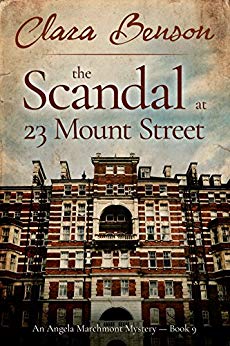
The Scandal at 23 Mount street image


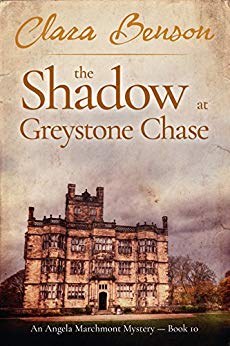
The Shadow at Greystone Chase image


  1.    What makes her a good detective?

–          She’s curious by nature, and has a questioning mind. She’s smart, obviously, but also very cool, logical and level-headed. She’s quite good at cutting through the red herrings and getting to the solution.


  1.    Tell us about the Freddy Pilkington-Soames series.

–          Freddy was an occasional sidekick of Angela’s, and he was such a strong character I thought he deserved his own series. He’s younger than Angela – only in his early twenties – and he works (I use the word loosely) as a reporter for an early tabloid newspaper, the Clarion. He’s hedonistic, chaotic, very full of himself, and prone to getting into awkward situations. In his attempts to solve a mystery he can often be found dangling off a rooftop, getting into a fight, or kissing someone else’s girlfriend – not always through any fault of his own.


A Conspiracy in Clerkenwell image


A Case of Duplicity in Dorset image


  1.    What was your experience transitioning from Angela Marchmont mysteries to writing Freddy Pilkington-Soames?

–          It’s quite different writing Freddy, as he’s a lot more active than Angela – partly because of his job – so I have to think of a lot of places for him to go, rather than just weekend country house parties. In addition, he’s a bit of an unruly sort, so I have to think up difficult situations for him to get out of. He’s a bit of a smart alec too, so I spend a lot of time rewriting his dialogue to make it wittier!


  1.    How do you conduct research for your books?

–          This is one of the best parts of writing! Although I’m not one for packing a lot of historical detail into my books, I do like to get things right, so I’ve read quite a few history books about the period, and I also make fairly heavy use of the Times Digital Archive (through my library) and the British Newspaper Archive (paid subscription). I’m a big stickler for using the correct language of the period, and for that I use the online version of the Oxford English Dictionary (also via the library), which shows when words were first used. Then of course there’s Google and Wikipedia…


get the facts


  1.    What’s the historical background of A Case of Duplicity in Dorset?

–          None, I’m afraid! It all came out of my own head, although I did get some inspiration for Belsingham from some grand stately homes near where I live, most notably Nostell Priory and Harewood House.


  1.  Who are your favorite mystery authors?

–          As I said, I’m a big fan of Golden Age authors, but I’ve read all kinds of mystery writers, from Ruth Rendell and PD James to Sue Grafton, Patricia Cornwell and Kathy Reichs. Unfortunately, I don’t get to read many new mysteries these days, as I find it interferes with the writing, so I find myself going back to the old favourites time and time again.


Opened book with flying letters


  1.  If you had to write in another genre which would it be?

–          I do occasionally branch out into romantic suspense, and I have a few ideas for future books in that genre which I will write when they pass a law to add more hours to the day…


  1.  What’s next for you?

–          I had a bit of a go-slow year last year, as I felt I needed to recharge after several years of frantic writing activity, but I’m well and truly back in the saddle now – possibly too much, as I’m busy trying to write two books at once! One is a historical novel set during World War 2, which is much more serious and sombre in tone than my usual style, and the other is Book 5 in the Freddy series, entitled A Case of Suicide in St. James’s, in which Freddy investigates the apparent suicide of a young man at a society ball. This one is turning out to be fun, and I hope to get it finished very soon!


Thanks Clara! 

www.clarabenson.com | Goodreads | Amazon


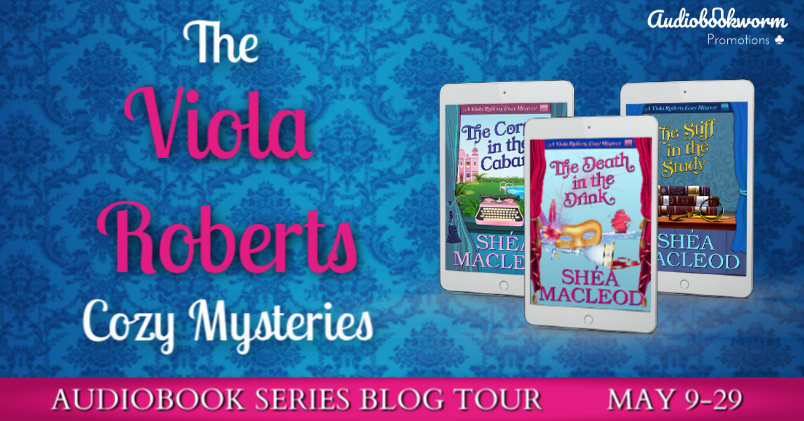
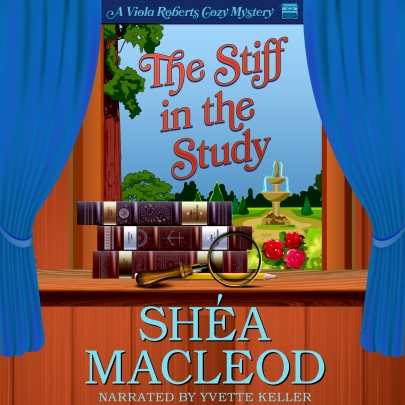
Audiobook Blog Tour: The Stiff in the Study by Shea Macleod


Viola Roberts Banner


Stiff in the study image Viola Roberts book 2


About Audiobook #2


Author: Shéa MacLeod

Narrator: Yvette Keller

Length: 4 hours 20 minutes

Publisher: Shéa MacLeod⎮2017

Genre: Cozy Mystery

Series: The Viola Roberts Cozy Mysteries, Book 2

Release date: May 17, 2017


Synopsis: Viola Roberts is at it again! The sleepy seaside town of Astoria, Oregon is the last place you’d expect to find a dead body. That is until the director of the local museum turns up dead in the study and Viola’s friend, Portia, is accused of the crime. Viola ignores her looming deadline and bout of writer’s block and sets out with her best friend, Cheryl, to solve the murder. From starting riots at local dive bars to breaking into crime scenes, Viola will stop at nothing to prove Portia innocent even if it means putting herself in the cross-hairs of the killer.


Buy Links for Audiobook #2

Buy on Audible


Mystery Letterpress


I’ve come to love the hilarious adventures of Viola Roberts and her sidekick Cheryl. Listening to this audiobook reminded me of the Golden Girls, or Laverne and Shirley from the old days of television. They feed off one another, complement each other. Narrator Yvette Keller plays the part perfectly. Her voice characterizations are on the money and color each personality just enough draw you into the story.


stars 4 image with hand.jpeg


Shea Macleod image


About the Author: Shéa MacLeod


Shéa MacLeod writes urban fantasy post-apocalyptic sci-fi paranormal romances with a twist of steampunk.  Mostly because she can’t make up her mind which genre she likes best so she decided to write them all.

After six years living in an Edwardian town house in London just a stone’s throw from the local cemetery, Shéa headed back to her hometown of Portland, Oregon. She plans to live out her days eating mushroom pizza, drinking too many caramel lattes, exploring exotic locales, and avoiding spiders.

Shéa is the author of the Viola Roberts Cozy Mysteries and the bestselling Lady Rample Mysteries.


WebsiteTwitterFacebookInstagram


www.rewindphotography.com Santa Barbara Wedding Photographer
http://www.rewindphotography.com Santa Barbara Wedding Photographer


About the Narrator: Yvette Keller


Yvette Keller’s first job as a narrator was reading aloud to keep her little brother out of trouble. Her favorite party trick is reading words upside down. Little kids need to see the pictures. Yvette lives in her beloved home town of Santa Barbara, using a lifetime of vocal stamina in her home studio. She produces technical VO industrials for Mesa Steps Consulting clients in addition to audiobooks. A lifetime of reading and speaking has proven one thing: Yvette loves stories. She is thrilled to be making books accessible and engaging through her narration work.


WebsiteTwitterFacebook


Inside The Murder Mile with Lesley McEvoy


The Murder Mile image


Evil never dies…


Interview


What was it like writing your first book?

Writing is something I’ve done all my life. Over the years, I’ve written quite a few manuscripts – my first serious attempt was submitted in 1980! I still have it in a box in my office. So in a way, I don’t view this as my first book – it’s just the first one that I’ve managed to get published! What I can say is what it was like making the conscious decision to write seriously and with purpose, rather than simply as a hobby that I loved. Previously I’d had to fit my writing around life. Bringing up a family, building a career and then a business – the kind of things we all do, but which makes writing consistently and productively very difficult. In 2017 I attended the Harrogate Crime Writing Festival and met and chatted to several successful authors, agents and publishers. It left me with the feeling, that if I was going to give getting published my best shot, then I had to make the commitment to write full-time – or as near to that as possible. My manuscript for ‘The Murder Mile’ had been something I’d picked up and put down sporadically for a few years. Halting the process when ‘life’ got in the way. I came away from Harrogate determined to treat writing as my ‘Day Job’, and set myself the target of having it ready for the next Harrogate Festival in July of 2018. It wasn’t an easy decision by any means. I still needed to make a living and needed an income. But I worked out the minimum I could manage on, and then committed to working from home as much as possible to maximise my writing time. I run a private therapy practice locally, as well as my corporate work, and the practice became the mainstay of my income during the following year. Fate ‘tested’ my decision when I was offered major contracts, which would have taken me away for months at a time. Something I knew would derail my writing plans. So I gritted my teeth and turned them all down.

It was fabulous being able to think of each day as a ‘writing day’. I tried to be disciplined and get into my office around 10am and work until I really couldn’t write anymore, but I rarely finished before 6pm or 7pm. I finally knew what it must feel like to be a ‘proper’ writer and I absolutely loved it.


Impossible concept with hand pressing a button


What were the most challenging aspects?

Getting into the discipline of making sure that I wrote productively every day. By Productively, I mean, writing words that actually moved the plot along. Developed characters, scenes and plotlines. I realised that giving myself the luxury of a full day of writing was great – but it was too easy to disappear down the rabbit hole of research and not actually do the writing. I know some would-be authors who get so hooked on research that they never actually complete their book.

‘The Murder Mile’, required quite a bit of research in places, but if I was ‘in the zone’ and the words were really flowing – instead of stopping when I hit something I needed to look up, I would just put a note to myself in red which said “Insert [Whatever it was] here later”. Then carry on with the storyline that was flowing.

Another challenge is when I’d hit what others refer to as ‘Writer’s block’. I don’t know how that feels to other authors, but for me those were days when I would stare at the page and literally not know how to start or move things forward at all. My imaginary friends just weren’t talking to me some days. On those occasions I would go back a couple of chapters and re-read what I’d written and do a running edit. Changing words, looking for mistakes and oiling the ‘clunky’ bits. Invariably once I got to where I’d finished the day before, I’d found my voices again and it began to flow. If that didn’t happen, then at least I was comforted by the fact that I’d spent the day productively editing the manuscript and cleaning things up, which saved time at the end.


Challenge dial red letters image.jpeg


What’s your creative approach to writing?

For me a plot always begins with a ‘What if?’ I hear a story on the news or read something in the paper and think ‘that’s interesting….I wonder what if…?’ It can bubble away for weeks, months or in the case of ‘The Murder Mile’ several years. Percolating and fermenting until it drips out to form the words on the page. I also always start with the end in mind. Once I know how it will end and I have the ‘How done it’, I start to develop the rest. I’ve heard other authors use the terms ‘Plotter or Panster’. Which means do you plot it all out before you begin and have the complete story arc? Or do you fly by the seat of your pants and just hold on for the ride? I suppose if my experience with this book is anything to go by, I do a bit of both. Sometimes I have a plan, but then the characters say or do something I hadn’t foreseen and that leads us down a completely new path – and it’s often much better than the one I had planned out. I love it when the characters take on a life of their own and start to run things. I just watch it unfold, as if it’s a movie, and write down what I’m seeing. That’s a great feeling and I know at that point that it’s really working and the characters I’ve created have taken on a life of their own. Magical!


What helped you the most in learning how to write a novel?

A lot of authors I’d met were members of writing groups or had done creative writing courses or had a background in journalism. And at first I thought maybe that was the secret? Maybe you had to have that kind of formal training in order to write a book that publishers would want. Happily I’ve since discovered that isn’t the case – which is just as well as none of those things apply to me.

My answer is rather simple. For me at least, reading is and has always been the key to learning how to write. How can you write books if you never read them? How do you even know what you would want to write in the first place, if you don’t know the type of books you enjoy reading?

I read on 2 levels. The first is for the enjoyment of it. Then I think about what worked in the book? How did the writer create suspense / drama? How did they make sure you wanted to turn the page? Take it apart and examine the mechanics of it or of a particular aspect of it that grabbed you, and see how it was done. I do that all the time. Not just with books, but with films / TV programs or even lyrics in a song. I analyse them and look at the nuts and bolts of how they were put together and what made it work – or not work.

Writing is a craft and like any other craftsman practice makes perfect. So as well as reading, I learned how to write a novel, by doing it. Over and over. Not for profit, but just because I loved the process. In reading the kind of novels I aspired to write and studying the work of the best authors in my chosen genre. Like studying the work of the great masters.


Reading book woman image in sun


What does Jo McCready do as a Forensic Psychologist?

Forensic Psychologists generally are involved with the assessment and treatment of criminal behaviour. They work with prisoners and offenders, as well as Police and other professionals involved in the judicial and penal systems.

Most people are familiar with the role in programmes like ‘Criminal Minds’ and ‘Cracker’, which concentrate on the  part they play in criminal profiling. In The Murder Mile, Jo McCready is one of the small number of ‘Celebrity’ Profilers. She has come to public attention by appearing on TV documentaries about serial offenders and subsequently writing books about her cases. She has also been involved in the past in helping to bring killers and serial rapists to justice through her profiling skills. She works as an independent consultant to the police who call her in to advise on offender behaviour and draw up profiles of offenders to assist them in their investigations.

Jo has a wealth of experience in the Criminal Justice System and working with killers, many of whom she helped to track down or gave evidence as an expert witness at their trials, which help secure their convictions. Her database of facts and criminal cases, built up over many years and her knowledge of criminal psychology, helps her to look at a scene and draw conclusions about the possible offender, which the police can use to narrow down the type of people they are concentrating on in their investigation.



Forensic


Who was Martha Scott and why was she seeing Jo Mcready?

Martha Scott is a young woman who has been admitted to a psychiatric unit, suffering from severe anxiety and depression. She’s haunted by nightmares of a time when, as a heroin addict she believes she murdered prostitutes by stabbing them. When Jo McCready is called in to help her unlock the memories of what actually happened, she unlocks an ‘alter ego’ who claims to be Jack the Ripper and thanks Jo for setting him free to kill again. Shortly after, Martha is found murdered in the same way as Jack the Ripper’s first victim in 1888 and a sequence of serial killings begin, replicating the murders of the Victorian Era ‘Jack’.


How do you unlock a repressed memory?

It’s believed that the unconscious mind (which is the repository for all our experiences and memories) can block, or prevent a person accessing a memory, because it’s associated with a traumatic event. A kind of protection mechanism to prevent further damage to a person’s mental health. Such memories can be accessed during hypnotherapy, and if they are a result of trauma, the therapist needs to be one specially trained in the treatment of trauma and probably Post Traumatic Stress. In short, the process has to be done with a therapist. It’s not something you can do on your own. In the book, Jo McCready has become an authority on memory resolution after trauma, and has written books about it. So she is called in to see if she can help Martha, who seems to be suffering from the condition.



Memories in the Brain -3D


How did the plot for The Murder Mile develop?

When I tell people about my book, one of the first things I’m asked is where the idea came from? I suppose the short answer is that it sprang from the job I do. I’m a behavioural analyst – a profiler by trade. But it was during my work in the psychotherapy practice that the idea for the book first presented itself. I was a newly qualified hypnotherapist and I was treating a lady for anxiety. She wanted hypnotherapy to help her to relax. My client was in a deep state of hypnosis, when suddenly, her eyes flew open and she turned her head slowly to look at me. The bright blue eyes I had noticed during our therapy session, had turned into black dots that stared coldly into mine. I couldn’t believe what I was seeing. But then she spoke to me. Gone was the soft gentle voice of the lady I had met earlier. Out of the petite body of this frail woman, came the deep guttural voice of an old man!

If anyone else had described this encounter, I wouldn’t have believed them. But the transformation in front of my eyes was as real as it was shocking.

The ‘man’ I was engaging with now, told me that his spirit was inhabiting her body. He said he liked it there and warned me to “back off” and leave them alone. I found myself entering into a bizarre conversation with this alter ‘personality’, during which he threatened to kill me if I interfered or ‘exorcised’ him. Needless to say, I left him exactly where he was!

On bringing my client back from her hypnosis session, it became apparent that she was blissfully unaware of the presence of her dark companion, and I certainly didn’t enlighten her!

As I said earlier my ideas spring from a central question, which is – “What if?” I found myself replaying that hypnosis session and asking…”what if an alter ego appeared during therapy like that and threatened to commit murder now that he was ’free’”?

What if a series of murders began – replicating exactly what the alter personality had promised to do? There had only been two people in the room that night. Only two people who could know what was said…what if one of those people became his first victim? The therapist would be the only one left…she would have to work out how that could happen.

It would be the ultimate “locked room” mystery, but it would be a locked mind instead and the therapist would have to find the key to explain it.

It was an intriguing premise, but I wanted to write crime fiction – not ghost stories, so I knew I had to come up with a way of making it a ‘flesh-and-blood’ killer committing the crimes. How could that be possible in this scenario? It bubbled away for a few years and as I became more experienced and gained more knowledge in the field of psychology and hypnotherapy, I started to formulate a ‘How done it’. Once I had that, it was obvious that the protagonist would have to be the Psychologist and so Jo McCready was born. Then the rest fell into place.


Idea process image with woman.jpeg


What’s DCI Callum Ferguson’s role in the story?

Callum Ferguson is a Detective Chief Inspector in the West Yorkshire Police. He is the senior investigating officer into Martha’s murder. He and Jo McCready met the previous year when Jo was called in as a Forensic Psychologist to assist in a case he was involved with. Callum and Jo had a romantic history in the past, which simmers below the surface during their time together on the Jack the Ripper copycat case featured in The Murder Mile.


What’s the relationship like between Police Intelligent Unit profiler Liz Taylor and Jo McCready?

Liz Taylor-Caine is West Yorkshire Police’s own Forensic Psychologist. She is younger and less experienced than Jo McCready and seriously resents Jo’s involvement in the current case. Jo tries not to tread on Liz’s toes, but Liz is bitter and it soon becomes clear that she will do anything to undermine Jo. Although Jo tries to maintain a professional relationship with the other woman, it is safe to say that the two are definitely not friends and allies.


About Lesley McEvoy


Lesley McEvoy was born and bred in Yorkshire in the North of England and has had a passion for writing all her life. The writing took a backseat as Lesley developed her career as a Behavioral Analyst / Profiler and Psychotherapist – setting up her own Consultancy business and therapy practice. She has written and presented extensively around the world for over 25 years specializing in behavioral profiling and training, with a wide variety of organisations. The corporate world provided unexpected sources of writing material when, as Lesley said – she found more psychopaths in business than in prison! Lesley’s work in some of the UK’s toughest prisons was where she met people whose lives had been characterized by drugs and violence – a rich source of material for the themes she now writes about.


Lesley McEvoy


William Bernhardt Discusses His New Legal Thriller – The Last Chance Lawyer


The Last chance lawyer image


Getting his client off death row could save his career… or make him the next victim.


Interview 


What was your creative process for creating Daniel Pike?

I thought it would fun write some more legal thrillers. After nineteen Ben Kincaid novels, I was ready for a break, but with a few years off to write poetry and nonfiction about writing, it seems fun again. I wanted Dan to be a modern man, very in tune with the zeitgeist, smart, fun to spend time with–but not perfect. Perfect people are boring. I can’t relate. Dan has a special skill for rooting out the truth–useful for a criminal lawyer. He’s a bit quirky–wears sneakers to court, carries a backpack rather than a briefcase, lives on a boat. But he has a passion for justice, for preventing the government from railroading innocents, and as the book develops, you’ll see why.  


What makes him the last chance lawyer?

After a disastrous event early in the book, he joins a new team of lawyers that take their cases from the mysterious Mr. K, who sends them cases no one else can handle (at least not as well). K pays Dan’s salary, not the clients, so money is not the main focus. Dan becomes a lawyer for those who, due to finances or other circumstances, have few options.


Last chance lawyer image


How is he different than  lawyer Ben Kincaid in your other series?

Dan is everything Ben was not, at least when he started. Dan is confident, showy, outgoing, and successful. Ben was a dogged bur usually effective lawyer. Dan is a showboat. What he learns in this novel is how to be more than a showboat.


“Daniel Pike would rather fight for justice than follow the rules.” What is justice from his point of view?

When Dan talks about justice, he means correcting the imbalance in the modern judicial system. Dan knows from experience that the criminal justice system is stacked in favor of the prosecution. We may say people are presumed innocent, but in truth, most people assume the accused are guilty until it is proven otherwise. The threat of incarceration is so great people plea bargain to crimes they didn’t commit. Dan tries to bring the system back into balance.  


Man in prison


What is the relationship between the objective rule of law and an attorney’s subjective use of it?

I’m not sure what you mean by “the subjective use of it.” The law is the law. Legislators write it, and judges apply it. The defense lawyer’s job is to hold the jury to the law, which says they cannot convict unless guilt has been proven “beyond a reasonable doubt,” which is a high standard. And meant to be.


What can you tell us about the kind of case he’s undertaking?

At first, Dan is representing a nine-year old immigrant who will be deported, because temporary protected status has been revoked for those from her country (after decades), unless she is adopted. Then the prospective adoptive mother is accused or murder.  


What were some challenges while writing this book, or beginning a new series?

Unlike when I started with Ben, I planned this to be a series from the start. You will see some of the threads sewn into the first book. This is a self-contained novel, but there are elements planted that will expand and combine to form a much larger story over the course of many books.


What’s next?

In July, the second Daniel Pike book (which I’ve already finished). Court of Killers.


William Bernhardt image


William Bernhardt is the author of forty-seven books, including the bestselling Ben Kincaid series, the historical novels Challengers of the Dust and Nemesis, two books of poetry (The White Bird and The Ocean’s Edge), and the Red Sneaker books on fiction writing. His most recent novel is The Last Chance Lawyer, the first in a new series of legal thrillers featuring rebel lawyer Daniel Pike.

In addition, Bernhardt founded the Red Sneaker Writers Center to mentor aspiring writers. The Center hosts an annual writers conference, small-group seminars, a monthly newsletter, a phone app, and a bi-weekly podcast. More than three dozen of Bernhardt’s students have subsequently published with major houses. He is also the owner of Balkan Press, which publishes poetry and fiction as well as the literary journal Conclave. He has published many new authors as well as prominent authors like Pulitzer-Prize-winner N. Scott Momaday, and Grammy-Award-winner Janis Ian.


WilliamBernhardt.com