What Is Suspense by Crime Writer Sue Coletta

Suspense film. Serie géneros cinematográficos.


What is Suspense?


Suspense arises from our readers anticipation of what’s about to occur. They worry, even fear, what will happen to the characters they love.

To build suspense, we need to raise our readers concern over how our POV characters’ plans can go array. Ever hear this comment when talking books with a friend? Nothing really happened so I stopped reading. I’ve put down numerous books for the same reason, and some by authors who are household names, authors who should know better. But that’s the thing about suspense. It’s not easy to hold our readers hostage for 300 pages. By employing the following techniques we have a better shot of grabbing them by the throat. Then it’s just a matter of not letting go.


“Show that something terrible is about to happen, then postpone the resolution to sustain the suspense.” ~ Writer’s Digest


Promise Word on Green Puzzle.


Promises, Promises

Every book makes a promise to the reader. The difference between concept and premise is, something happens to the main POV characters that disrupts their lives. If you’re not familiar with the difference between concept and premise, there’s no one better to learn from than Larry Brooks. He has several posts on the subject, including this 3-minute workshop video.

Rather than asking yourself, “What should happen next?” Try: “What can I promise that’ll go wrong? Problems that will bring my characters to their knees.”

The central dramatic story question promises an intriguing quest.

By making promise after promise, we keep our readers engaged. Don’t tell the reader, of course. Instead, hint at the trouble to come; tease the reader into finding out. Do it right away, too. We need to establish our CDSQ on page one. If we can accomplish it in the first paragraph, all the better.

Every promise, no matter how minor, should either setup or pay off a future scene. Once a promise is paid, make another. The largest promises, like the central dramatic story question, should be paid off in the climax.

For an example of a CDSQ, let’s look at Wings of Mayhem.

After unknowingly stealing his trophy box, can Shawnee Daniels a forensic police hacker by day; cat burglar by night, stop the serial killer who’s destroying her life before he murders everyone she loves?

If your story drags, it’s often due to the lack of tension and/or suspense. In other words, you haven’t made your reader worry enough. How can we fix a dragging plot? By making bigger, more important, promises. Promises that will devastate our hero and secondary characters. Promises they might never recover from.


Strategy on Pocket Watch Face.


Don’t Give Away Too Much Too Soon

This is a story killer. Don’t explain what’s happening, or why. Trust the reader to figure it out on their own. I realize it’s not always easy. After all, we know what will happen next (at least we should), and we can hardly wait for the reader to find out.

Trust me on this. Keep it to yourself for as long as possible.

No info. dumps! Just because we know our characters’ backgrounds does not mean our readers need to know it. Share what’s relevant to the story, or enough about the POV characters so the reader can empathize with them. Sprinkle the information throughout the story rather than dumping it all at once.


Characters’ Goals

“To create powerful suspense, make your hero face her greatest fear, and risk losing the thing that matters most to her.” ~ Dan Brown

No matter how we try to build suspense, if our readers don’t care about our characters, we’re sunk. Contrary to belief, the reader doesn’t have to like our characters, but they do need to empathize with them. That’s the key word: empathy.

For three-dimensional characters, we need to know their backgrounds, flaws, world views, religious beliefs, causes they support/protest, fears, concerns, mannerisms, dialect, profession, childhood, history with other characters, how they look, how they act in difficult situations, how they dress, nervous tics, scars, tattoos, favorite music, food, I could go on and on. We don’t need to show all these things, but we do need to know our characters as well as ourselves in order to slip into their skin.

To build suspense the character must have goals that really matter to them. What does she want it, and why? What happens if she doesn’t get it? What’s standing in her way? A strong hero needs a strong opponent. If our character is more timid, then we better make sure she desperately needs to achieve her goal. If she doesn’t do X, then Y will happen. Y is bad. The reader doesn’t want Y to happen. Hence, they stiffen up and pay attention. Bam! You’ve just built suspense.


“A murder is not suspense. An abduction with the threat of a murder is.” ~ Brian Klems


Violence, Where and When?

I love this quote from Brian Klems, because it’s so true. The act of violence isn’t suspenseful. The snapping of twigs as our character stumbles through the darkened forest, knowing the killer could attack at any moment is suspenseful. Or the squeaky floorboard on the second floor when the character is home alone. The phone ringing in the middle of the night. A knock at the one door the character never uses. Footfalls gaining on the character when they’ve wandered off the hiking trail. Tires screeching around the corner, the headlights appearing in the rear view mirror seconds later. The click of a shotgun in the deadly quiet milieu. A single flame that shoots from the tip of a lighter in the dark. The possibilities are endless.


Sentence Rhythm

Our sentence rhythm should match the reader’s emotion. Many of us do this automatically. Ever notice when you’re writing a suspenseful scene how you’ll pound the keyboard? When you’re slowing the pace, your fingers glide over the keys. Same holds true for sentence rhythm. Fragmented, staccato sentences quicken the pace. Long, run-on sentences tend to slow it down. As with most things in writing, though, there’s an exception. You can use run-ons to increase suspense if you vary the sentences with shorter ones.


Example from MARRED:

Adrenaline masked my pain, and I sprinted from room to room, closed and secured all the windows and double-checked the locks on the front and back doors, bolted upstairs, and pressed my foot on the sliders’ security bar. Colt and Ruger watched me zip around the house, not knowing what was wrong. Ruger gave up and laid his head on crossed paws while Colt bounded over and stayed on my heels.

When I returned to the kitchen table, the phone rang again. My gaze locked on the handset, and I froze. Colt’s face ping-ponged between me and the phone. He put the pieces together in his mind, trotted over, and knocked the receiver off the cradle, gently clasped the handset in his lips and carried it to me. By using his training to aid me, he was trying to help, but at that moment, it was the last thing I wanted him to do.

I didn’t speak.

Mix staccato and fragmented sentences with longer sentences to create an overall effect of balance and maintain rhythm in your writing. Is every sentence in the scene the same length? The reader will fall asleep.


SCENE - 3d rendered headline


Scene and Sequel Structure and Motivation-Reaction Units

I’ve discussed these subjects several times, so I won’t repeat the tips here. You can find a couple of the posts here: Importance of MRUsScene and Sequel in Action.


Start Late, End Early 

Start each scene with a story question, intrigue, or conflict. Our goal is to arouse the curiosity of our reader. Keep them guessing. (Start late) If we make it easy on them, and answer all their questions at once, there’s no reason for them to keep reading.

We can’t wrap up our scene in a nice little bow, either. That’ll undo everything we’ve worked so hard to accomplish, to hook them in the first place. Rather, end on a note of uncertainty, or with a new challenge. (End early)


Scene Cuts or Jump Cuts

This is a cinematic technique that can work in any genre. Create a series of short, unresolved incidents that occur in rapid succession. Stop at a critical point and jump to a different scene, maybe at a different time and place, maybe with different characters.  For example, we could pick up a scene where we left off earlier. Or switch from protagonist to antagonist. Or from one tense scene to another. Rapid alternations keep the reader in a state of suspense.


Micro-Tension

Micro-tension is the moment-by-moment tension that keeps readers in suspense over what’ll happen in the next second. The Fire in Fiction by Donald Maas is a fantastic resource that discusses micro-tension. When the emotional friction between characters reaches a boiling point we’ve built suspense. Keep in mind, the characters don’t have to be enemies. Husband and wife. Tension between partners. Parent and child. Micro-tension is added in numerous ways. An easy way is with dialogue.



Sue Coletta author pic


Member of Mystery Writers of America, Sisters in Crime, and International Thriller Writer, Sue Coletta is a bestselling, award-winning author of psychological thriller/mysteries. In 2017, Feedspot awarded her Murder Blog as one of the Top 50 Crime Blogs on the net. Sue’s also the communications manager for Forensic Science and the Serial Killer Project. She’s also a proud member of the Kill Zone, where she blogs every other Monday. Learn more about Sue and her books at


Website | Amazon | Goodreads | Twitter | Facebook

 

Writing, Rewriting, and Craft with Elena Hartwell

Colorful creative word


Writing, Rewriting, and Craft

By Elena Hartwell

As a novelist and playwright, I’m often asked where I get my ideas. Almost every writer I know gets this question, and I think we all feel the same. Ideas are never the problem. That’s the easy part. Ideas are a dime a dozen. The hard part, the magic part, is turning the idea into a polished, final manuscript.


The writing process varies wildly from author to author. Some write extensive, detailed outlines. Others sit down with an idea and write scenes on the fly. A number of writers fall somewhere in between, while they may not outline, neither do they sit down and write completely organically. They might write a synopsis or outline a chapter in advance.


The various combinations of these methods all work, depending on the writer and the project. There is no “wrong” way to write a novel. The “how” a writer works isn’t why their manuscript sells or doesn’t sell. The primary reason an author’s work has not yet sold is a lack of craft.


People who lack craft skills rarely sit down to write a novel. Or if they do, they can start, but never finish. Or if they do finish, they don’t rewrite. Or if they do rewrite, they quit after a single pass. Or, if they do continue to rewrite, they aren’t aware enough of craft to recognize the flaws in their own work. You get the picture. The problem is the writer stops too soon.


As a writing coach—I do one-on- one manuscript critiques as well as teaching workshops—there are some fundamental issues I see repeated in early drafts, over and over. These same issues show up in my own work, and probably on some level, in the early drafts of every writer out there. So the first thing aspiring writers can do to increase their chances of writing a successful manuscript, is learn how to identify these problems.


Coaching sign


The first is a lack of clear objectives, obstacles, and stakes. It’s not enough to have a dead body to write a mystery. Someone has to investigate the murder. The person investigating the murder has to need to solve the crime. If they don’t need to solve the crime (objective) there’s no tension about the investigation. If the solution doesn’t matter to the investigator, it won’t matter to the reader.


The sleuth also can’t solve the crime easily, that’s not dramatic. Various impediments (obstacles) have to appear, one after the other, to prevent the protagonist from catching the killer. The more the investigator has to overcome, the more satisfying to the reader when they do.


Lastly, it has to matter (stakes). For example, the protagonist with an internal struggle, coinciding with their investigation, is far more interesting than someone who simply goes through the motions of solving a crime.


The more important solving the case is to the protagonist, the more dangerous or difficult the journey, and the greater the importance to find the guilty party, the more invested a reader will be. That’s what keeps a reader turning pages.


The 3d guy got over the challenge


Complex protagonists will also have personal objectives, obstacles, and stakes to go along with their investigation. For example, a crumbling marriage, a child in danger, or overcoming an addiction are common tropes within the genre. When we know an investigator has to choose between catching a killer and saving their marriage, the stakes are high and we breathlessly turn each page waiting to see what the character chooses.


Another common error I find is a lack of structure. All stories have an underpinning structure. While there are variations to that structure, for the most part, especially in crime fiction, we start with the world as we know it, which is disrupted by a specific event, followed by rising action, where events pile one on top the other, each more important than the one that went before. This ends with a climactic scene, with the maximum danger to our hero or heroine, followed by a glimpse into the new world order for our characters.


If any of these parts are missing, the story can feel unfinished. For example, if we don’t have some sense of what the character’s life was before the intrusion, we don’t know what they are putting at risk. The “world before” can often be well hidden, it might not appear in the first chapter, but later in reflections the character makes as the story progresses, but usually a reader can identify it if they look for it.


The middle of a manuscript might falter if a lot of exciting things happen at the beginning, then nothing exciting follows. Rising action is important, because it builds dramatic tension, making it impossible to put the book down.


Under construction


Lastly, an ending can feel unsatisfying if we have no sense of the outcome. Readers don’t need everything tied up in a bow, but they do want the primary threads to be resolved enough to know what the character’s lives will be like after they read “the end.”


Dialogue can also be difficult to master. One of the most common problems I see is when authors have their characters say exactly what they feel and exactly what they mean. That doesn’t ring true. People lie all the time. We lie because it’s expedient, it benefits us in some way, it keeps us from hurting others, or we don’t want to get in trouble. We rarely say what we mean, we obfuscate, we dither, we agree out loud when disagreeing feels like a mistake. Dialogue works best when each character speaks distinctly from the others, through word choice, sentence length, grammatical accuracy, and the use of slang.


If a writer can identify just these specific problem areas in their own writing, their next draft will be a much tighter, more polished manuscript. It can feel overwhelming to try to identify and fix all the issues I’ve outlined at one time. My recommendation for writers is to choose one aspect and rewrite just for that. Heighten the stakes in one rewrite. Focus solely on dialogue for the next. Breaking down the process into smaller chunks can make each rewrite a more successful venture. This will help the writer get through a series of rewrites rather than attempting one and feeling like the mountain is too high to climb. My final piece of advice. Don’t give up. That’s the only difference between a published author and an unpublished one.


Elena Hartwell author photo with horse


Elena Hartwell was born in Bogota, Colombia, while her parents were in the Peace Corps. Her first word was “cuidado.” At the age of nine months, she told two men carrying a heavy table to be careful in their native tongue. She’s been telling people what to do ever since. After almost twenty years in the theater, Elena turned her playwriting skills to novels and the result is her first book “One Dead, Two to Go,” followed by “Two Heads Are Deader Than One.” “Three Strikes, You’re Dead.” For more information on Elena, please visit elenahartwell.com or like her Facebook Page ElenaHartwell/Author. You may get to see cute pictures of her dog and her horses.


Amazon | Goodreads | Website | Twitter | Facebook



A Special Talk with Bestselling Author Steven James

Whispers and secrets


I had opportunity to ask a few questions from one of my favorite authors and storytellers, Steven James. If you haven’t heard of Steve yet; he’s the critically acclaimed author of the Patrick Bowers Files, the Blur Trilogy, the Jevin Banks series, as well as books on the writing craft.

Steven James also teams up with another Bestselling author, Robert Dugoni, who both are instructors at the Novel Writing Intensive Retreat.


Other notables…

  • Steven hosts a great podcast called the “The Story Blender” where he interviews leading storytellers in film, print, and web.
  • His book Story Trumps Structure won a storytelling award.
  • Has twice served as Master Craftfest instructor at ThrillerFest a premier training event for suspense writers.
  • International Thriller Award Finalist, Retailers Choice Award Finalist, Suspense Magazine Book of the Year, Best Crime Thriller Christy Award, and multiple Christy Awards.


So if you haven’t been on the bandwagon yet, hop on in!


Three  pug chihuahua mix - chug-  puppies  in a red wagon


From your recent interviews on the Storyblender which things have stood out to you? Or what have you learned?

A couple of moments pop to mind. When I was interviewing Sandra Brown, she mentioned asking herself the question “What do I know that readers don’t?” and, I believe, in her book she tries only to reveal this on the last page. I thought that was a great question to ask. When I spoke with Hollywood producer Steve La Rue, I asked him who was the main character in the X Files, one of the shows that he championed. He told me that it was Scully because she’s the one who’s transformed throughout the series. This is something that I had believed myself and it was informative to have him confirm it. It’s hard to choose, as our guests have been wonderful, and the interviews are always informative, not just to listeners but also to me.


e-Learning Concept. Computer Keyboard


In Every Wicked Man, do you have any thoughts on how the next case affects Patrick Bowers?
 
Every Wicked Man is really a story that ties together the prequel series with the chess series, completing the narrative circle. Although Patrick certainly has his work cut out for him tackling the case in this book, it’s a much more intimate look at his relationship with Christie, his wife, and Tessa, his stepdaughter, as he steps into the role of being a father-figure for her.
According to your experience as a storyteller and reader how would you define the imagination?
What an interesting question. I’m not sure how to define the imagination, but I certainly try to appeal to it through the stories that I tell and write. I feel like one of the best ways to do so is through sharing instances where people can identify with either the emotion of an experience or the truth that the story conveys. Very often, humor comes in pointing out truth that people haven’t noticed yet. Sometimes this can be done through exaggeration, but when an audience or when readers identify with something, nod their heads and say “yes, that’s true” or “yes, I’ve experienced that,” then you’ve made the connection to their beliefs and their imaginations.
Are  you pumped for the upcoming ITW online Thriller school?
I’m always excited to share insights that I’ve learned over the last twenty years of being a writer, but this event holds a special place for me because it is targeted at those who write suspense or thrillers just as I do. Another great opportunity that your tribe might be interested in is the Character Conference I’m teaching in October in Atlanta with a couple of other mystery/suspense writers (www.characterconference.com). For anyone who signs up through this interview, if they use the code ALUMNI, they can receive a $25 discount on the registration cost. 

Gabriela Pereira Interviews Jane Friedman – The Business of Writing

podcast


Episode 194: The Business of Writing — Interview with Jane Friedman

This podcast originally appears on DiyMFA.com April 11, 2018 Length: 39 min.


Gabby P


Gabriela Pereira is the Instigator of DIYMFA.com, the do-it-yourself alternative to a Masters degree in writing. While undercover as an MFA student, she invented a slew of writing tools of her own and developed a new, more effective way for writers to learn their craft. She dubbed it DIY MFA and now her mission is to share it with the world. Teaching at conferences and online, Gabriela has helped hundreds of writers get the MFA experience without going to school. She also hosts DIY MFA Radio, where she recreates the MFA speaker series in podcast form.


DIY MFA


******


Jane Friedman


Jane Friedman has 20 years of experience in the publishing industry, with expertise in digital media strategy for authors and publishers. She’s the co-founder and editor of The Hot Sheet, the essential publishing industry newsletter for authors, and the former publisher of Writer’s Digest. In addition to being a professor with The Great Courses and the University of Virginia, she maintains an award-winning blog for writers at JaneFriedman.com.

Jane has delivered keynotes on the future of authorship at the San Francisco Writers Conference, The Muse & The Marketplace, and HippoCamp, among many other conferences. She speaks regularly at industry events such as BookExpo America and Digital Book World, and has served on panels with the National Endowment for the Arts and the Creative Work Fund.


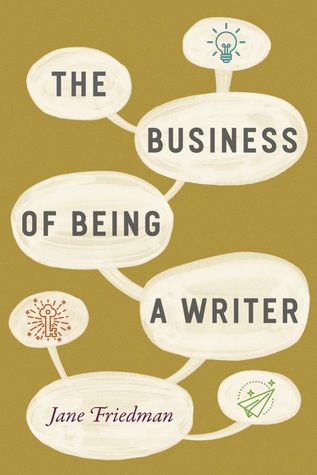
The Business of being a Writer Jane Friedman


Amazon | Goodreads


If you are a writer looking for the business education you feel you never received, I hope this book provides the missing piece. While I try to be encouraging, and want you to feel capable and well informed, I don’t sugarcoat the hard realities of the business. When you decide to pursue a writing career, you’ll experience frustration, again and again, and not just in the form of rejection letters. But it helps to know what’s coming and that your experience is normal. Writers who are properly educated about the industry typically feel less bitterness and resentment toward editors, agents, and other professionals. They are less likely to see themselves as victimized and less likely to be taken advantage of. It’s the writers who lack education on how the business works who are more vulnerable to finding themselves in bad situations.


Jane Friedman

Twitter | Website | Amazon | Facebook | Goodreads


Free Master Class: Connect with Readers, Build your Platform

Build your platform 2 Gabby


Monday, April 2nd at 1pm ET


In this live broadcast, you’ll learn…


  • My go-to technique or identifying your audience, so you can get off the content hamster wheel and connect with your reader authentically and with integrity.


  • How to identify your core message as a writer, so your platform has focus and intention.


  • Who your ideal reader is so you can envision that person while you write and revise your book, and…


  • How to identify actual potential readers because imaginary readers don’t buy books.


  • What the Breadcrumb Technique is and how to use it to research your potential readers, so that even if you have no platform, you can “borrow readers from more established writers.


Build your Platform 3 Gabby


What are you waiting for?

Sign up now and you’ll get a an instant cheat sheet download,
plus email updates about the live broadcast.

When: Monday, April 2nd at 1pm ET

Sign up now


Sign Up website pin label icon


Gabby P


Gabriela Pereira is the Instigator of DIYMFA.com, the do-it-yourself alternative to a Masters degree in writing. While undercover as an MFA student, she invented a slew of writing tools of her own and developed a new, more effective way for writers to learn their craft. She dubbed it DIY MFA and now her mission is to share it with the world. Teaching at conferences and online, Gabriela has helped hundreds of writers get the MFA experience without going to school. She also hosts DIY MFA Radio, where she recreates the MFA speaker series in podcast form.

Before becoming a writer, Gabriela has done lots of wild and nerdy things like: playing violin at Carnegie Hall, singing madrigals in full Renaissance garb, designing toys for kids ages toddler to tween, and taking applied topology and number theory “just for kicks.” Despite her varied interests, Gabriela’s main passions have always been teaching and design. Now at DIY MFA she can bring these two elements together. Her favorite thing to do is come up with new dastardly plans and innovative resources for writers.


Facebook | Goodreads | Twitter | Website


DIY MFA Gabby P


Amazon | Goodreads


Masterclass


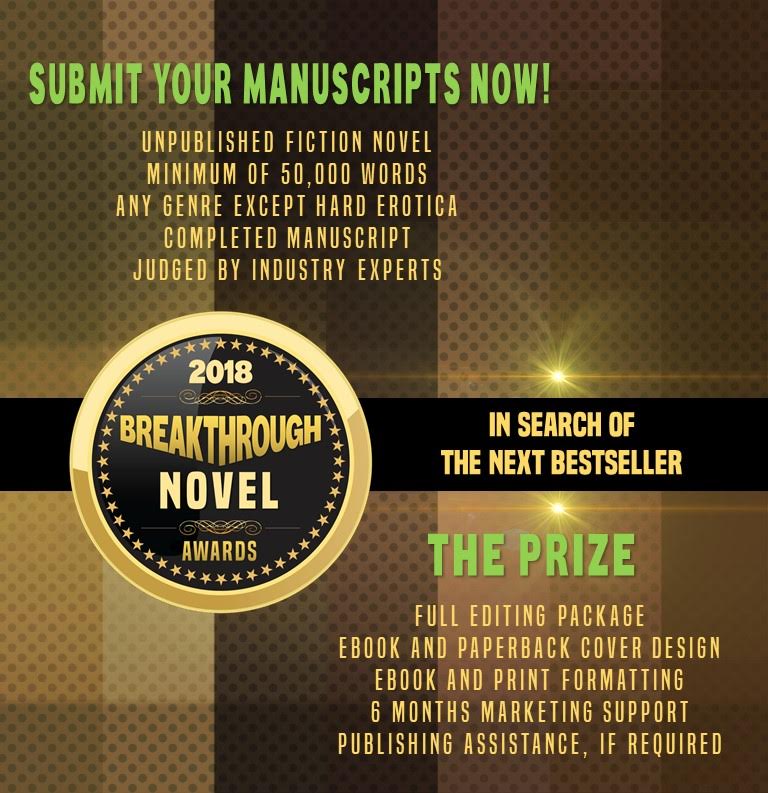
2018 Breakthrough Novel Awards: Join the Competition

Breakthrough Novel Award logo


IN SEARCH OF THE NEXT BESTSELLER…


Breakthrough Novel Awards 2018


CONTEST RULES 

Elimination round will end on May 15, 2018 and entrants who will progress to the Final Round will be notified. One winner will be announced on June 15, 2018.


Join the competition: BREAKTHROUGH NOVEL AWARDS 2018


Trophy number one


Could your manuscript be the next bestseller?


Join the competition


How sampling a range of genres can help your writing


Sam boush


Reading it all How

sampling a range of genres can help your writing
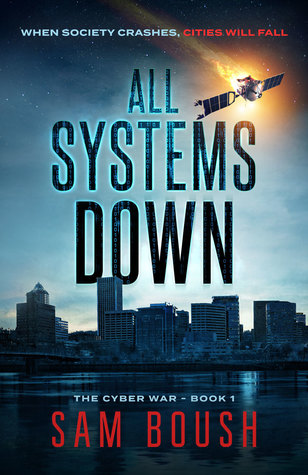
By Sam Boush, author of All Systems Down


Most of us have a favorite genre. We read cozy mysteries. Or romance. Or thrillers. We write in these categories also. And we rarely step out of the warm, comfortable embrace of the fiction we know and care about into  other genres.

But we should.

Reading across genres helps us write better in our own. It can help us develop deeper characters, build better suspense, and create a richer, more realistic world to draw in the reader.

Here are four genres you should be reading to improve your writing.


Genre books


Westerns

When you think “Western” you might think about a lawman who comes in from the East. Or Tumbleweed. Or the Cowboys and Indian tropes.

But the best part about Westerns have nothing to do with those things. Instead, the real meat is in the villains.

We read about wickedness without consequence. Bad guys who do terrible things and make the reader seethe. And when we read a Western, it’s often this despicable antagonist who keeps us flipping page-after- page to reach the conclusion where, inevitably, justice prevails and the villain is driven off or killed.

One publisher called my antagonist “not very scary” and “almost clownish.” So what did I do? I swung by the library for a few Westerns and rewrote the villain. And it worked. After All Systems Down was published, Kirkus called my bad gal, “The most striking character… a terrifying villain.”

If your book has an antagonist who just isn’t bad enough, I strongly recommend reading this genre, to learn how to craft a truly repugnant but- believable bad guy. It worked for me.


Western


Romance

Even in non-Romance- genre fiction, readers like to see sparks. Emotion. Steamy love. You don’t have to be writing bodice-ripping scenes to benefit (though if you are writing sex scenes, you absolutely need to avoid ending up on the Telegraph’s list of bad ones.)

The kind of romance that enters your book may just be in how a husband looks at his wife from across the room. Or how a woman’s imagination takes flight when she hears a stranger at the door. But no matter how small, a little bit of romantic energy can charge up your writing. And Romance books can help.


Romance


Thriller

A ticking clock. A racing heart. Intrigue. These attributes of a thriller can give your writing a sense of urgency. Readers will turn pages faster, sweating sometimes, eager for an outcome.

If your work in progress doesn’t quite get your readers feeling like they’re straddling a kicking bull, maybe you should read how some of the great thriller writers build suspense by keeping readers on the edge of their seats as the plot builds to a climax.


thriller


Non-Fiction

A solid foundation in reality will allow you to create believable scenes and circumstances. Whether you’re writing about a character who loves old cars, a conversation with an arborist, or
cyber war, every conversation, thought and action can have more resonance if it’s well
researched.

Michael Crichton investigated DNA extensively to write Jurassic Park. Tom Clancy researched submarines. Harper Lee studied the legal system. And you, also, should be poring over non-fiction books so you get the details right, no matter what you’re writing about.

Personally, non-fiction is my favorite genre. Not only does it allow the writer to craft a world that meets expectations, but by learning new and interesting facts in this category we are able to surprise the reader with unexpected information.

No matter what you’re writing, looking outside your genre can add depth and intricacy. And if you’re feeling really adventurous, don’t be afraid to play genre-roulette at your local library. Give yourself five minutes to pick out three random books. Check them out and don’t read them until you’re home. This is a great way to kick writer’s block to the curb and maybe create depth in your secondary characters the reader could never have predicted.


Sam boush


Sam Boush is a novelist and award-winning journalist. He has worked as a wildland firefighter, journalist, and owner of a mid-sized marketing agency. Though he’s lived in France and Spain, his heart belongs to Portland, Oregon, where he lives with his wife, Tehra, two wonderful children, and a messy cat that keeps them from owning anything nice. He is a member of the Center for Internet Security, International Information Systems Security Certification Consortium, and Cloud Security Alliance.


Website | Facebook | Twitter | Linkedin


All Systems Down


Amazon | Goodreads | Barnes & Noble


Thanks Sam!

Join the Ficitonary Finish Your Novel Contest

Fictionary FYNC


Did you make a New Year’s Resolution to finish your novel and get published? Enter Fictionary’s Finish Your Novel Contest and your dream could come true. With FriesenPress.


Contest Details: http://bit.ly/2D3WrkC

-Kristina
award-155595_960_720

Join Fictionary’s Finish Your Novel Contest

ENTER

Author kristinastanley-75
Photo by Kimberley Rae Sanderson
Kristina Stanley CEO
Finish Your Novel!


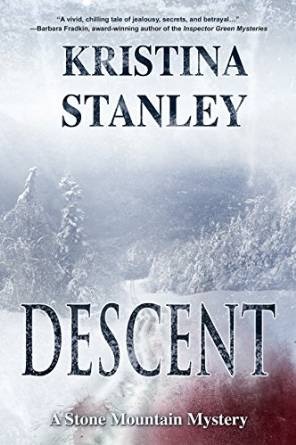
Kristina Stanley is the author of the Stone Mountain Mystery Series. Her books have garnered the attention of prestigious crime writing organizations in Canada and England. Crime Writers of Canada nominated her first novel for the Unhanged Arthur award. The Crime Writers’ Association nominated her second novel for the Debut Dagger. Her first short story was published in the Ellery Queen Mystery Magazine.


Kristinastanley.com | Facebook | Twitter | Amazon


Descent


Blaze


Avalanche


Look the other way


Writing Combat, After Combat by John Mangan


OLYMPUS DIGITAL CAMERA


Writing Combat, After Combat


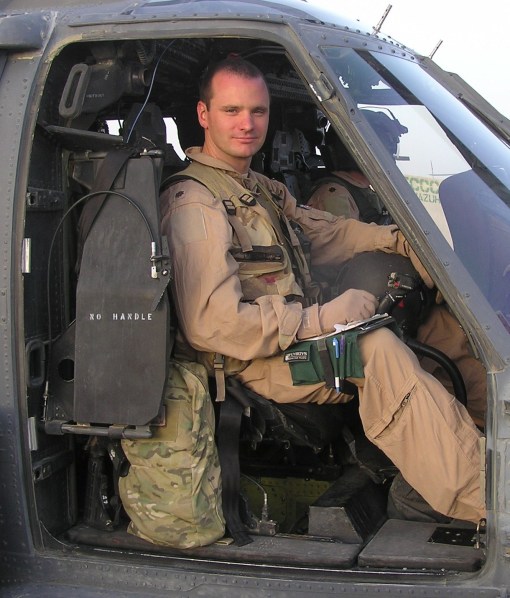
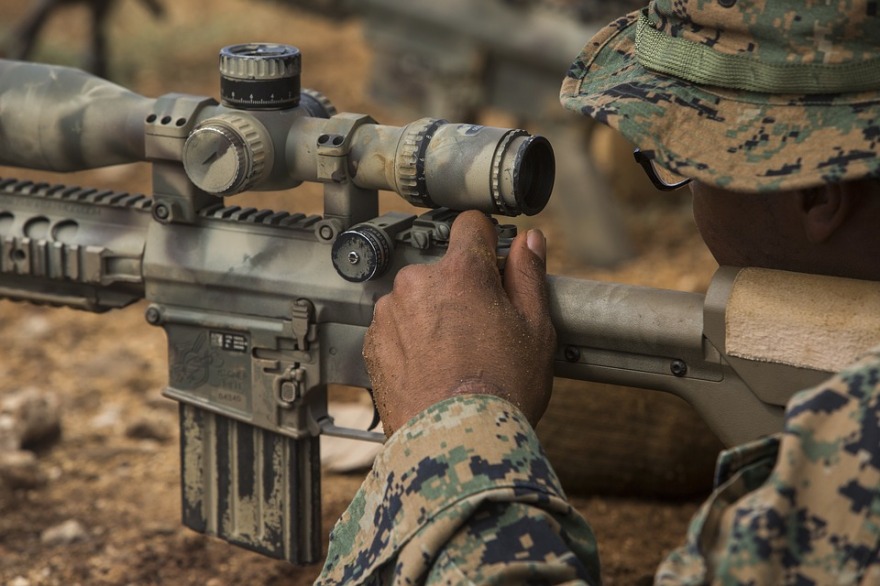
Like many young men I was raised on a steady diet of thrillers and military action novels. After devouring hundreds of books, ranging from Tom Clancy’s techno wizardry, to Robert Ludlum’s classics, and The Outrider series by Richard Harding, I figured that I had combat figured out. After all, I’d read thousands of action scenes that described in excruciating detail every conceivable combat move, gunshot, reload, judo chop, wound and scream. I’d lived through numerous dogfights, firefights, fistfights, bombings and ambushes. I’d sighted down my rifle, pulled the
4.5 lb match grade trigger, felt the recoil, and watched as my 62 grain, boat tailed hollow point bullet impacted a target, center of mass, at 3200 FPS. I was ready.

 
Then I was in combat, and what I realized within the first 30 seconds was that all those books had gotten it wrong. Phenomenally, epically wrong. Contrary to what I’d read, the experience of combat wasn’t just a linear series of physical events; instead, it was an enormously personal, tidal wave of primordial impulses and scalding, mind blanking fear. My  favorite authors hadn’t only missed the mark, they’d been shooting in the wrong damn direction.


aim


In retrospect, trying to understand combat by reading a thriller is like trying to understand sex by reading a medical textbook. Yes, you will arrive at a detailed understanding of what goes where, and who does what to whom, but ultimately, you won’t see the human side of the game. This is what separates pornography from explicit romance; One depicts a series of discreet physical acts, the other communicates a subjective human experience. Perhaps that’s the crux of the issue; one depicts, the other communicates. Like love, grief, or joy, combat is a complex emotional phenomenon that leaves a deep and wrenching impact upon the people who experience it.

 
So what was combat like? Imagine that you are on a rafting trip with your friends, thoroughly enjoying the adventure as you explore a new stretch of river. Suddenly, you enter whitewater and the raft begins bucking and spinning. You are tossed about and spray drenches you, but you find it exhilarating because your team responds as a well trained unit, working together, guiding the raft successfully through the chaos. You are going to make it. You are in control. Right up to the moment that you aren’t…


combat


With a heave the raft overturns and you are thrown into the river. You and your team are now being swept along by the power of events far beyond your control, smashing into each other and off of rocks, rolling through rapids and tumbling off of falls. Your actions become base and instinctual, you reach for your comrades, hold your breath, stroke for the surface, and try to guild yourself around obstacles both seen and unseen. But you intuitively know that the best of your efforts are merely token gestures and that you are being carried along by a force more powerful than any single man caught up in it. This force has a will of its own and your attempts to influence it are more illusion than anything else. You will be released at the time of its choosing, not yours. For me, that was combat; being immersed in a force that was terrifyingly intimate, unknowable and beyond any measure of control.

 
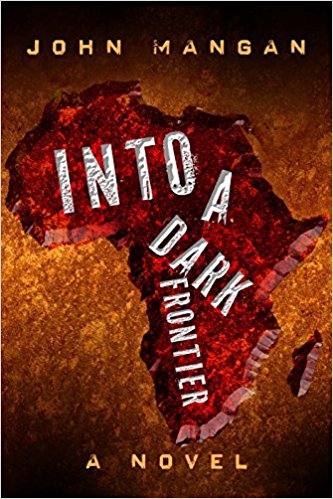
So how did that experience guide the creation of Into a Dark Frontier? First and foremost, I think readers have grown numb to elaborate scenes describing combat in excruciating detail. In today’s world of hyper violent entertainment, the firing of a gun has become routine, the spattering of blood trite, the death of a human meaningless. That doesn’t mean that an artist should shy away from depicting violence, for it is part of the human experience. But how do you do it in a way that stirs your audience, leaves a lasting impression and advances the story? Strangely enough, I think that the poets of old did it best.


While eulogizing World War I in his epic poem, “The Second Coming”, W.B. Yeats didn’t even mention the horrors of trench warfare, instead, he said that a “blood dimmed tide is loosed, and everywhere the ceremony of innocence is drowned,” and “what rough beast, its time come round at last, slouches toward Bethlehem to be born?” In one short poem the entire terrible spirit of 1914-1918 is laid bare before you. By omitting physical details, Yeats swept away the clutter and unearthed the soul of the event, not only of the war itself, but what it meant for the future of humanity.

 
But a poet’s verse doesn’t always have to span continents and nations; Tennyson spoke of “men that strove with gods.”

 
Sir Walter Scott described, “The stern joy that warriors feel in foemen worthy of their steel.”

 
And who could forget Henry V’s blood curdling speech to the people of Harfleur?
(Edited for brevity)


The gates of mercy shall be all shut up
And the fleshed soldier, rough and hard of heart
In liberty of bloody hand shall range
With conscience wide as hell mowing like grass
Your fresh fair virgins and your flow’ring infants
While your pure maidens fall into the hand
Of hot and forcing violation.

 
O’erblows the filthy and contagious clouds
Of heady murder, spoil and villainy.
If not, why, in a moment look to see
The blind and bloody soldier with foul hand
Defile the locks of your shrill-shrieking daughters,
Your fathers taken by their silver beards


And their most reverend heads dashed to the walls,
Your naked infants spitted on pikes
While the mad mothers with their howls confused
Do break the clouds, as did the wives of Jewry

At Herods bloody-hunting slaughtermen


Just look at those incredible words! Foul hands, slaughtermen, shrill-shrieking, and heady murder. Not only is the poet allowed to paint with a more vivid palette, they are also given the freedom to strip away irrelevant physical details until they find not only the humanity of an event, but its enduring meaning as well. I think that combat, like love, is too complex and forceful to be restrained by the rules of prose. That is why lovers turn to music and poetry to express themselves. Perhaps warriors can as well.


“I think that combat, like love, is too complex and forceful to be restrained by the rules of prose.”


So who describes combat best in these modern times? My favorites are Cormac McCarthy, Charles Frazier, Anthony Loyd and James Salter. They are masters of lyrical prose, telling a sharp and detailed story that swerves into poetry at times and then back again before you even have time to hear the rumble strips. The beauty of their words are a counterpoint to the horrors they describe and I find myself drawn to their stories again and again.


excellent


Having said all this, am I satisfied with the action scenes in my novel Into a Dark Frontier? No, I am not. There’s a sentence here and there that I am proud of, maybe even a paragraph or two. I have a long way to go, but I’m confident that I’ll get there someday, and that’s what keeps me writing.


Into a Dark Frontier


Amazon | Goodreads


Have a reply for John? Tell us in the comments.


John Mangan
Author of Into a Dark Frontier
www.JohnManganBooks.com


Demystifying The Writing Process & Overcoming Writer’s Block


the-writers-process


Never stop learning, because life never stops teaching


Continue reading “Demystifying The Writing Process & Overcoming Writer’s Block”