Historical Mystery with Karen Charlton Author of the Detective Lavender Series

Murder in Park Lane image


London, 1812. At a fashionable address in leafy Mayfair, a far cry from Detective Stephen Lavender’s usual haunts, a man is found dead in his room. He has been brutally stabbed, but the door is locked from the inside and the weapon is missing.

The deceased is David MacAdam, an Essex businessman with expensive tastes. As Lavender and Constable Ned Woods travel between London and Chelmsford seeking to understand MacAdam’s final hours and unearth the grisly truth, they uncover a tangled web of deceit behind his stylish facade. The unusual circumstances of MacAdam’s death are nothing compared to the shady nature of his life and it seems the house on Park Lane is at the heart of a dark conspiracy.

But when a second body turns up, everything they think they’ve learned is thrown into doubt. Can Lavender and Woods find out who’s behind these shocking murders before more lives are ruined?


Amazon | Goodreads | B&N


Interview


What motivated you to begin writing historical mysteries?


Many moons ago, I used to write murder mystery weekends for Raven Hall Hotel near Scarborough and I’d always been interested in crime fiction. While researching my husband’s family ancestors we discovered that he had a Regency gaol-bird roosting in his family tree; his 6 x Great-grandfather was Northumberland’s most notorious burglar. Following a massive robbery at Kirkley Hall and a very controversial trial, Jamie Charlton he was finally sentenced to transportation to New South Wales. I quickly realised that if I didn’t write about this miscarriage of justice in book, I would never fulfil my ambition to be a writer because the perfect plot had just landed in my lap. I wrote Jamie’s story in my debut novel, Catching the Eagle.

While researching this first novel, I was fascinated to discover that a Bow Street Principal Officer called Stephen Lavender had been brought up from London to investigate the Kirkley Hall Mystery. I had no idea at the time that Bow Street officers were hired out like private investigators to solve mysteries in the provinces. When it came to choosing a detective for a new crime series set in Regency London, Lavender was the perfect choice. I’d become quite fond of him and his genial sidekick, Constable Ned Woods and especially enjoyed writing the banter between the two men.


Start image with road.jpeg


What impressed you to write about Detective Stephen Lavender?

I enjoy writing about a real officer who was busy solving crime at the start of the nineteenth century. This was an age without forensics and fingerprints; crimes were solved with intelligent deduction and steady, plodding police work that left no stone unturned. I’ve found a lot of information about Lavender and his cases reported in the newspapers of the time and sometimes the real-life crimes he solved have inspired the plot of my novels.


What was the historical background of London 1812?


1812, the year of Murder in Park Lane, the fifth novel in the series was in the era we call the The Regency Period.  Mad King George III was the King and Napoleon Bonaparte was still terrorising Europe although Arthur Wellesley, the future Duke of Wellington, was now chasing him out of the Iberian Peninsula back to Paris. It was an era of dashing, scarlet-clad cavalry officers, women in pretty bonnets and floaty muslin gowns and a massive expansion of the British Empire. We’d lost the American colonies but Britain still had India and the powerful East India Company was opening up the Asian sub-continent, stripping it of its riches and shipping them back to London in massive cargo ships.  London was the biggest and richest city in the world and the British navy dominated the high seas.


London 1812 image


Who is David MacAdam and what role does he play in the story?


David MacAdam, an Essex businessman with expensive tastes, is the victim in Murder in Park Lane. His body is found in mysterious circumstances in his bed chamber in a lodging house in leafy Mayfair. He’d been stabbed to death but his door was locked on the inside and there was no sign of the murder weapon in the room. But as Lavender and Woods soon discover, the unusual circumstances of MacAdam’s death are nothing compared to the shady nature of his life and it seems the house on Park Lane is at the heart of a dark conspiracy. MacAdam was a man of secrets.


What is Park Lane?

Park Lane is a major road in the City of Westminster in London. It runs from Hyde Park Corner in the south to Marble Arch in the north. Hyde Park was opened in the 16th century for wealthy Londoners to enjoy and the houses that overlook it on Park Lane have been some of the most-sought after properties in London ever since. Park Lane is the second most expensive property on the London Monopoly board.


Partk Lane image.jpeg


What was the police department like during this time period?

There was no official police force in the United Kingdom at this time. The British police force wasn’t formed until 1829.  In the Regency Period, crimes were usually investigated by local magistrates and a few police constables attached to their office. They used the reward system or a string of informers (usually fellow criminals) to track down the villains but both of these systems were notoriously unreliable and justice wasn’t always achieved or fair in Britain at this time. The officers at Bow Street Magistrates’ Court and Police Office in London had the best reputation in the country for crime solving and, as I’ve explained above, their Principal Officers, including Stephen Lavender, were often hired out to help provincial magistrates or wealthy private landowners solve difficult crimes.


Tell us some interesting facts from researching for Murder in Park Lane.

While researching the manufacture and export ready-to-wear male garments for this novel, I was particularly intrigued by the sheer scale of trade between Britain and the United States during this period when we were supposed to be at war with each other (The War of 1812).

As most lovers of Regency fiction will be aware, women’s fashion of this era was highly ornate and dependent on a precise fit, so ready-to-wear garments for women weren’t widely available. However, the relatively simple, flattering cuts and muted tones of men’s fashion made proportionate sizing possible in mass production. I learnt from my research that by the late 1700s, the English city of Bristol, was home to over 200 businesses that exported hats, gloves, drawers, pants, stockings, shirts, jackets, and footwear, mostly to the United States. When you consider the vast array of other businesses manufacturing items for export to America in Bristol – and in London and the other cities of Britain – the breathtaking scale of our trans-Atlantic trade becomes clear.


OLYMPUS DIGITAL CAMERA


About Karen Charlton


Karen Charlton writes historical mystery and is also the author of a nonfiction genealogy book, ‘Seeking Our Eagle,’ and the joint author of the cosy chicklit series, ‘The Silver Sex Kittens’. She has published short stories and numerous articles and reviews in newspapers and magazines. An English graduate and ex-teacher,
Karen has led writing workshops and has spoken at a series of literary events across the North of England, where she lives. Karen now writes full-time and is currently working on the sixth Detective Lavender Mystery for Thomas & Mercer.

A stalwart of the village pub quiz and a member of a winning team on the BBC quiz show ‘Eggheads’, Karen also enjoys the theatre, and she won a Yorkshire Tourist Board award for her Murder Mystery Weekends.

Find out more about Karen’s work at http://www.karencharlton.com


Sibel Hodge Discusses Her Writing Process

Sibel Hodge image.jpg


INTERVIEW


Is your creative approach to writing each novel the same or does it vary?

I often get asked whether I plan out my plot in advance before I start writing. Urgh, the dreaded P word, I think! I hate plotting. Absolutely hate it!

There are some authors who won’t type a single letter until they’ve got every inch of their plot structure finely tuned in advance. Some authors know their characters intimately before they begin writing, down to what they just had for breakfast. And I wish I could be like that, I really do. I think it could make my job a whole lot easier. But I’m definitely a fly by the seat of my knickers kind of girl! If I get too hung up spending a lot of time plotting in advance, I tend to lose my creativity. I start thinking about it too much and get nowhere. I think I must suffer from some kind of plot dyslexia, because as soon as I pull out a pad and pen and start trying to come up with vast plot notes, the words swim in front of my face in a blur and my brain turns to mush. Is there such a thing as plot-o-phobia?

But unfortunately, plotting is a necessary evil if you want to write a novel. Without a plot, it’s just words on the paper. Your plot should encompass all sorts of things: goals of the characters, conflict, crises, turning points, climax, resolution. And everything you write should advance the plot, although I personally think when writing comedy, you can get away with a few extras in there!

When I wrote my debut romantic comedy, Fourteen Days Later, I didn’t have a clue about any kind of plot, or characters, or structure. All I knew was that my heroine had to do a fourteen-day life-changing challenge, where she completed a new task every day. I knew my ending, but I didn’t have a clue what happened anywhere else. Hmm…slight problem, I hear you say! Well, yes, but as soon as I started tapping out the words on the keyboard it all developed naturally. My characters invented their own plot as they went along.

So far, so good, but what about the next novel? Surely this must’ve been some bizarre fluke, and I’d have to actually think of a plot in advance for the next one. Well, yes and no. My second novel was a comedy mystery. Because of the mystery element, I did need to know a few things before I started. Otherwise how would I weave in all the clues? So this time I did actually write an eency weency plot before I started. It was about three lines for each chapter of things I needed to happen. That was it, though, and I still didn’t have hardly any of my “clues” in there. But again, it all seemed to come together as I wrote it. Creative or crazy? I’m not sure which.

With my third novel, I was getting really stressed trying to plot. I read about different techniques like the Snowflake method and using index cards or graphs, even plotting software, but the plot-dyslexia was kicking in big time! Robert McKee’s Story is an excellent book, by the way, for plotting. (It’s for screenplays but works just as well for novels). But none of it helped me in writing a plot in advance. I wrote a few lines for the first two chapters and after that, nada! So once again, I just started to write and my characters invented their own story. The voices in my head just tell me to do things.

My fourth novel was also a mystery, so again I thought I’d need to at least write some lines of plot to allow for my clues. And this time I did it! Hurrah, I wrote out my plot in advance, doing a storyboard of a paragraph per chapter of things I needed to include. In a lot of ways it was easier to write in this way, but that was the only time I’ve ever managed it.

In my world (which is sometimes scary!) my plot advances on its own, with one scene logically following on from the next. I’m very much character driven. And what works for one author won’t work for another. Even what works for one novel won’t always work for another. However you choose to write a novel or story is very personal. Who knows whether I’ll finally get to write an advanced detailed plot for another novel. Watch this space and I’ll let you know!


Creativity dial image.jpeg


What do you normally begin with?

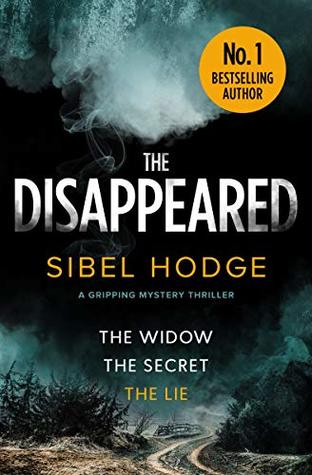
I usually have a single line idea. For example, with The Disappeared it was that Nicole’s husband died in a plane crash in Africa, but ten months later she receives a letter that could only have come from him. So what happened to him out there? Sometimes I can think of an idea and start on it the next week. Sometimes it has to fester for a year or so to be mixed with another idea.


Name some things that has helped your craft as a writer.

Reading. For me, it’s the number one thing that’s helped me understand the craft, to see what I think works or doesn’t work, to understand a writer’s voice that I’m a fan of, and to hone my skills. Then you have to write, write, write! Even if it’s a project that’s never going to be published, it’s all about practice and learning, like anything in life. Also passion is important. If you believe in something so strongly, it will shine through in what you do and motivate you to carry on.


What are the most challenging aspects of writing?

Every single word! Because one word leads to another and another, which eventually becomes a story (hopefully!). Because I’m not a plotter I can’t relax with my work in progress until I have a first draft and I know for sure I’ve got a story to work with.


Challenge sign image with blue sky.jpeg


How do you incorporate pacing in your books?

Chapter length, sentence and paragraph structure, and using multiple points of view are all methods I use to increase or decrease pacing.


How would you define a Psychological thriller?

A story that messes with your head or emphasises the psychological and emotional states of the character(s). I love psychological thrillers with unreliable narrators, where their motivations or emotions are questionable or you don’t know who to trust.


What motivated you to write about them?

With The Disappeared it was a documentary I watched, but, unfortunately, I can’t tell you the name now as it will give away the whole story in advance! But I do mention it in my author note at the end of the novel.

When I’m writing I see the scenes playing out in my head, exactly like watching a film. Often they’re accompanied by actors who I think my characters are like or would portray them perfectly. One movie that was also a backdrop in my mind as I was writing this novel was Blood Diamond. And, yes, Leonardo DiCaprio also featured in there, too, who I admire, not just because he’s a hugely talented actor, but because of his work with The Leonardo DiCaprio Foundation that does amazing things for both wildlife and the environment.

Most of my thrillers are inspired by real life events, and research for The Disappearedincluded reading hundreds of online articles from NGOs, government organisations, humanitarian groups, and investigative journalists. I also read many books on the subjects covered in the novel. When I’m writing, I have notes everywhere—snippets of dialogue, character traits and names, statistics, one sentence reminders of things I need to include, and much more. This book was no different, and I had about a hundred pieces of A4 paper filled with the stuff that I had to, somehow, turn into something readable. Fingers crossed readers will experience something that’s both thrilling and exciting, but also authentic and sympathetic to the subject matter.


In the Disappeared, how did get to know your characters?

I don’t know much about my characters at the beginning of the novel (unless I’m using repeat characters from other books). They always evolve as I’m writing the story.


Disappeared image Sibel Hodge


Who is Nicole Palmer and what motivates her?

She’s an ordinary woman who’s become unexpectedly widowed. A primary school teacher who believes her husband died in a plane crash in Africa ten months before. But she’s also stronger than she thinks, independent, brave, with a fierce motivation to find out what really did happen to her husband when she realises not everything is as it seems. And she’s about to be tested to the limit.


Sibel Hodge


Sibel Hodge image


Award Winning and International Bestselling Author

Website

Twitter

Facebook


Leave a comment below to enter for a chance to win a free e-book of The Disappeared by Sibel Hodge! 


Historical Mysteries with K.B. Owen

KB Owen


INTERVIEW


What do you enjoy most about writing historical mysteries?

I’ve always enjoyed reading historical mysteries, and writing them feels much the same (though more work, haha). I love stepping back into a different time, whether it’s through research or while plotting within the worlds of my characters. I’ve known them all for so long now, after seven books in one series and three books in another.


How important is the setting in historical fiction?

Since the term “setting” indicates both place and time, I would say that setting is absolutely crucial to historical mysteries. A given time period will influence and constrain the main characters of a story in terms of travel, communication, the interpretation of evidence, their comportment while out in society, and so on.


Setting bridge colorful image.jpeg


What is the Pinkerton Agency?

It was the first major private investigation and security agency, founded by Scotsman-turned-American Allan Pinkerton in 1855. The icon is an open eye that reads “We Never Sleep,” hence the term “private eye.” The Pinkertons were mostly men, and the work was both subtle (acting as covert operatives and infiltrating criminal organizations) and brutish (strike-breaking and security). Pinkertons have broken up criminal syndicates, protected President Lincoln in one early attempt called the Baltimore Plot (this was before the Secret Service guarded presidents), thwarted bank robberies and train robberies…the list goes on.

There were a few women operatives—Kate Warne being the most notable of them—and their assignments were more of the covert variety, which is where my protagonist, Pen Hamilton, comes in.

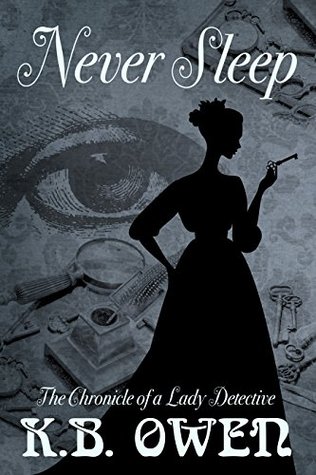
In Never Sleep: The Chronicle of a Lady Detective #1, describe the nature of Penelope’s relationship with her estranged husband.

If it were a Facebook designation, it would read: It’s Complicated. As the Chronicles continue, I reveal more of their past, both the good and the bad. Frank Wynch is a recovering alcoholic and that of course makes any relationship difficult. The two love each other after a fashion, but whether they can make it work is another question—especially on Pen’s side, as she’s quite guarded around him. In Never Sleep, Frank asks Pen to help him with a case. It’s the first time they’ve spent any time together since their separation. She agrees, despite her discomfort—she wants to secure a job in her own right at the Pinkerton Agency, and the successful outcome of the case with Frank would make that possible.

By the way, any interested readers can get a free ebook of NEVER SLEEP when they sign up for my book news (twice yearly) newsletter: Subscribe


Never Sleep KB Owens


In The Mystery of Schroon Lake Inn: the Chronicle of a Lady Detective #2, who is William Pinkerton and what is his role in the story?

William Pinkerton, son of the agency’s founder Allan Pinkerton, runs the Pinkerton Chicago office by this time. He assigns this case (and others) to Pen. He gets a bit more involved this time around, as he comes up with a disguise Pen can use to better infiltrate the inn and keep an eye on the guests. Pen has never posed as a spirit medium before…can she pull it off? She’d have to be truly clairvoyant to know….


In The Case of the Runaway Girl: The Chronicle of a Lady Detective #3, what is Penelope going up against?

Pen is up against quandaries that are both professional and personal in book #3. Professionally, she’s navigating the powerful worlds of big business and back-room politics (with some anarchists thrown in) as she works to keep the two young ladies in her charge safe from unscrupulous people.

Personally, there is the complication of another love interest in the form of the dashing, somewhat-reformed Phillip Kendall. He’s very interested in Pen and she’s drawn to him despite herself, even though she doesn’t fully trust him. Is he truly reformed, or is he out for himself?


Dilemma with block letters image with man.jpeg


What are some interesting historical facts of the 1880’s?

That’s quite an open-ended question, but I’m happy to share a fun backstory I picked up while researching THE CASE OF THE RUNAWAY GIRL. Several scenes from that book take place at the Corcoran Gallery of Art in Washington, DC (now the site of the Renwick Gallery). The building was so grand in its heyday and housed such a wonderful collection it was dubbed “The American Louvre.”

William Corcoran, a very wealthy businessman with southern sympathies, had acquired an extensive art collection and in 1859 commissioned the gallery to be built to house it all. The site was prime real estate, at the corner of Pennsylvania Avenue and 17th Street.

However, when the Civil War started, things got too hot for him, so he decided to move himself and his family to Europe to wait out the war. The Corcoran Gallery was mostly completed by then, though not the interior. The Quartermaster Corps seized Corcoran’s building to use as a supply depot for the Union Army, and proceeded to finish the interior with cheap materials and partition the space into storage rooms and offices.

William Corcoran returned after the war and wanted his gallery back. It was returned to him in 1869, but not the back rent that he claimed he should be paid. He worked with the original architect to have all the modifications ripped out and the gallery completed, which opened in 1874.

If you want to read more, I recommend American Louvre by Charles J. Robertson (D. Giles Ltd, 2015).


What’s next for you?

I just finished book #7 of the Concordia Wells mysteries…UNSEEMLY FATE. By the time this interview comes out, it will be released!


UnseemlyFate.jpg


Beware of rich men bearing gifts…

It’s the fall of 1899 and the new Mrs. David Bradley—formerly Professor Concordia Wells of Hartford Women’s College—is chafing against the hum-drum routine of domestic life.

That routine is soon disrupted, however, by the return to Hartford of the long-hated but quite rich patriarch of her husband’s family, Isaiah Symond. His belated wedding gift is a rare catalogue by artist/poet William Blake, to be exhibited in the college’s antiquities gallery.

But when Symond is discovered in the gallery with his head bashed in and the catalogue gone, suspicion quickly turns from a hypothetical thief to the inheritors of Symond’s millions—Concordia’s own in-laws. She’s convinced of their innocence, but the alternatives are equally distressing. The gallery curator whom she’s known for years? The school’s beloved handyman?

Once again, unseemly fate propels Concordia into sleuthing, but she should know by now that unearthing bitter grudges and long-protected secrets to expose a murderer may land her in a fight for her life.


Available May 1st at these online retailers:

Amazon: Amazon

BN, Apple, Kobo: books2read.com


KB Owen


About K.B. Owen


K.B. taught college English for nearly two decades at universities in Connecticut and Washington, DC, and holds a doctorate in 19th century British literature.

A mystery lover ever since she can remember, she drew upon her teaching experiences to create her amateur sleuth, Professor Concordia Wells. There are seven books in the Concordia Wells Mysteries so far.

K.B. also has another series, about the adventures of a lady Pinkerton in the 1880s, entitled Chronicles of a Lady Detective. There are three novellas/novels in the Lady Detective series so far.


Amazon | Goodreads | Twitter | Website


Writing Historical Mystery with Rhys Bowen

Rhys in LA 2006


Interview with Rhys Bowen


I had the wonderful opportunity of interviewing historical mystery author Rhys Bowen regarding her writing, and more specifically, the 12th book of the Royal Spyness series – Four Funerals and Maybe a Wedding.


Four Funerals and Maybe a Wedding ebook image


In the days leading up to her wedding to Darcy O’Mara, Lady Georgiana Rannoch takes on the responsibilities of a grand estate, but proving she can run a household just may be the death of her in the new Royal Spyness Mystery from the New York Times bestselling author of On Her Majesty’s Frightfully Secret Service.

If only Darcy and I had eloped! What I thought would be a simple wedding has been transformed into a grand affair, thanks to the attendance of the queen, who has offered up the princesses as bridesmaids. Silly me! I thought that withdrawing from the royal line of succession would simplify my life. But before Darcy and I tie the knot in front of queen and country, we have to find a place to live as man and wife…

House hunting turns out to be a pretty grim affair. Just as we start to lose hope, my globetrotting godfather offers us his fully staffed country estate. Mistress of Eynsleigh I shall be! With Darcy off in parts unknown, I head to Eynsleigh alone, only to have my hopes dashed. The grounds are in disarray and the small staff is suspiciously incompetent. Not to mention the gas tap leak in my bedroom, which I can only imagine was an attempt on my life. Something rotten is afoot—and bringing the place up to snuff may put me six feet under before I even get a chance to walk down the aisle…


Amazon | Goodreads | Audible


AUDIOBOOK REVIEW


Four Funerals and Maybe a Wedding is book #12 in the Royal Spyness series set in 1930’s London. An absolute blast to read and very entertaining on many levels. Told in the point of view of Lady Victoria Georgiana Rannoch, the story unravels seamlessly until the very end. I was very captivated by the humorous tone and style of writing by Rhys Bowen. I listened to the audiobook version and laughed out loud several times! The ability to capture each character within the time period was very impressive. Lady Georgiana, affectionately “Georgy” is so adorable as she plans for her wedding, prepares a new home, and attempts to solve a mysterious murder. This review is based on the audiobook version with exceptional new series narrator Jasmine Blackborow.


INTERVIEW


What do you love most about writing history?

Rhys: I love writing about the 1930’s in the Royal Spyness series because it was such a fascinating time, poised between two world wars. A time of great contrasts, haves and have-nots, Fascism and Communism fighting for control of Europe and of course my delicious Royal scandals. My big stand alone novels take place in WWI and II, times of heightened emotion, of good vs evil and the comforting knowledge that good prevailed.

And for historical mysteries all those lovely motives: I love Another but I am not free etc!


“History will be kind to me; for I intend to write it.” – Winston Churchill


Do you have a certain method for researching a story?

Rhys: it all starts with a sense of place. I do my background reading of the true historical framework then I have to go to the place and experience it myself


Research text on keyboard button


How important is setting for historical fiction writers?

Rhys: for me setting drives many of my stories. NAUGHTY IN NICE. TIME OF FOG AND FIRE. Etc etc

And it’s important to get every detail right. I read biographies, accounts of battles, diaries, study old maps


What’s the historical context behind Four Funerals and Maybe a Wedding?

Rhys:  it was high time that my protagonist got married. It is summer 1935 and as she goes to Ascot with Queen Mary and King George she realizes the king does not look well. He will, of course, die that winter. And I’m looking forward to stories when the Prince of Wales becomes king.


Wedding engagement pic


Who is Lady Georgiana Rannoch’s godfather and what role does he play in the story?

He is Sir Hubert Anstruther, a mountaineer and explorer. Her mother was once married to him and she has fond memories of the childhood days at his house. He was fond of her and wanted to adopt her. She was one of three heirs but the other two came to bad ends in the first book of the series,


What did inheriting a country estate detail back then?

Rhys: she hasn’t inherited it as he is still alive. This is lucky as if Sir Hubert had died she’d have to pay a fortune in death duties ( estate taxes)

I imagine this is an informal arrangement between them with the understanding that the estate will be legally hers when he dies.


west dean


Describe the emotional state of Lady Georgiana and Darcy O’Mara as they prepare for marriage.

Goodness, they are British! They don’t have emotional states. They just get on with things!  Actually Georgie in naturally excited. Darcy seems to be taking it in his stride. Georgie can’t believe that everything is going right for once… This is before the various roadblocks appear.


What were weddings like in that time period?

Much simpler than now. An afternoon ceremony, then cake, champagne, a few speeches and the couple drives off on their honeymoon.


Champagne wedding


What’s next for you?

I have just published another stand-alone, THE VICTORY GARDEN.


Victory Garden image


IN August another Georgie novel, this time set in Kenya. It’s called LOVE AND DEATH AMONG THE CHEETAHS. Pre-order now and available August 6, 2019. 

AND I’m just finishing a book about Queen Victoria.

Not idle!


Rhys in LA 2006


“I’m a New York Times bestselling mystery author, winner of both Agatha and Anthony awards for my Molly Murphy mysteries, set in 1902 New York City.

I have recently published two internationally bestselling WWII novels, one of them a #1 Kindle bestseller, the other selling almost half a million copies to date.

I also write the Agatha-winning Royal Spyness series, about the British royal family in the 1930s. It’s lighter, sexier, funnier, wicked satire. It was voted by readers as best mystery series one year.

I am also known for my Constable Evans books, set in North Wales, and for my award-winning short stories. “

I was born and raised in England but currently divide my time between California and Arizona where I go to escape from the harsh California winters

When I am not writing I love to travel, sing, hike, play my Celtic harp.


Website | Amazon | Goodreads | Twitter


Interview with William L. Meyers

William L. Myers Jr image


William L. Myers Jr. – A Killer’s Alibi – Book Review & Interview


A Killers Alibi image


For attorney Mick McFarland, the evidence is damning. And so are the family secrets in this twisty legal thriller from the Amazon Charts bestselling author of A Criminal Defense.

When crime lord Jimmy Nunzio is caught, knife in hand, over the body of his daughter’s lover and his own archenemy, he turns to Mick McFarland to take up his defense. Usually the courtroom puppeteer, McFarland quickly finds himself at the end of Nunzio’s strings. Struggling to find grounds for a not-guilty verdict on behalf of a well-known killer, Mick is hamstrung by Nunzio’s refusal to tell him what really happened.

On the other side of the law, Mick’s wife, Piper, is working to free Darlene Dowd, a young woman sentenced to life in prison for her sexually abusive father’s violent death. But the jury that convicted Darlene heard only part of the truth, and Piper will do anything to reveal the rest and prove Darlene’s innocence.

As Mick finds himself in the middle of a mob war, Piper delves deeper into Darlene’s past. Both will discover dark secrets that link these fathers and daughters–some that protect, some that destroy, and some that can’t stay hidden forever. No matter the risk.


Amazon | Goodreads | Audible


BOOK REVIEW


This is top notch for legal thrillers and crime drama. Never a dull moment. The ride begins from the first scene when Philly crime boss Jimmy Nunzio is caught red handed with the dead body of his daughter’s lover. Criminal defense attorney Mick McFarland is never really on his feet on this one. The case blindsides him from the beginning and never lets up. Then there’s Mick’s wife, Piper who investigates an innocence project case to free a young woman from a murder case. Two cases. Two dire situations. A legal thriller laced with tension, an intricate plot, a full cast of characters–But at its core it’s about one thing, family.


INTERVIEW


*What kind of person is attorney Mick McFarland that made him your protagonist?

            In crafting Mick, I set out to build a character who is basically a good guy, who wants right to prevail over wrong, but who, in the pursuit of right, will do whatever is necessary, including things that are wrong. As an attorney, Mick is a thinker, a planner, and very Machiavellian. He enjoys the “game” and excels at it.


Lawyer at work image sitting.jpeg


*What can you tell us about the kind of case Mick is undertaking?

            Mick is in an interesting situation. His client is Philly crime lord Jimmy Nunzio—a man used to calling the shots. A Machiavellian manipulator. A man like Mick himself in many ways. What this means for Mick is that he isn’t the alpha dog as he is with most of his clients, and he finds himself having to dance with Jimmy Nunzio, for control of the case.


Moral dilemma ahead signage


*What is your method of creating characters and how do you bring out their flaws?

            I create characters by outlining them only in very general terms and then placing them into the story—putting them under stress–and watching how their flaws appear. I remember reading once that stress and conflict reveal character; you only find out core character by putting someone to the test. So, I make sure that my protagonists, and my antagonists, too, are under real threat.


*Tell us about Mick’s wife, Piper.

            Piper’s evolution is an interesting one. When I wrote, “A Criminal Defense,” the first book in “The Philadelphia Legal Series,” I started out with the plan simply to make a two-dimensional “wife” character for the main protagonist, Mick. But whenever I wrote Piper into a scene, she asked for more, she told me “I have more to contribute here.” By the end of the book, Piper was a fully-formed character with her own agenda, secrets and fears. In “A Killer’s Alibi,” Piper plays an even more important role—as a driving force behind one of the two main plot lines. She really comes into her own. (And, spoiler alert, in the fourth book, which I’m finishing now (in which Mick is imprisoned on charges or murder), Piper becomes THE driving force in Mick’s defense team.


A Killers Alibi image


*Is the innocence project she’s involved with commonplace in law firms today? Would her official position be an investigative attorney?

            Most law firms which do innocence project work do so under the auspices of, for example, the Pennsylvania Innocence Project. Larger law firms do have pro bono practices and some have attorneys devoted solely to pro bono work.


“No man knows the value of innocence and integrity but he who has lost them.” – William Godwin


*What can you tell us about the kind of case Piper is taking?

            Piper is leading the charge on behalf of Darlene Dowd, a young woman who was convicted of killing her sexually abusive father fifteen years earlier. Piper learns there is exculpatory evidence the jury never heard and she has to go on a hunting expedition to find the woman who has that evidence. But the woman has secrets of her own, and has been in hiding for years. It takes all of Piper’s will and resourcefulness to win the woman over and see that Darlene gets a fair hearing in court. But nothing is black and white in my books and Piper has to pay a price.


Evidence


*Now for one of my favorite questions. What is justice?

            Justice is like pornography: difficult to define but you know it when you see it.  When something happens to a character (good or bad) and it feels right to you, that’s justice.  The character, of course, may disagree with you— fictional characters, like real people, believe they are good guys, whether they are or aren’t. Along these lines, a word to the wise: if someday you find yourself standing before St. Peter, the one thing you should never say is I want what’s coming to me.


*What is a jury consultant?

A jury consultant:

A jury consultant is an expert hired by an attorney to help the attorney pick a jury favorable to his side. The jury consultant helps the attorney with questions to ask potential jurors and also helps to create a profile of the type of juror the consultant believes would be most favorable to the attorney’s client. A jury consultant also counsels the attorney on how to present the case, and how to conduct himself or herself in court.


Jury image courtroom


*In Piper’s case, how many appeals are permitted for someone on death row?

The number of appeals:

There are two avenues to appeal a conviction. One is simply a direct appeal of the jury verdict. Here, you’re saying the judge committed errors in allowing prejudicial evidence that should not have been allowed into the record. Or you can argue the judge erroneously disallowed evidence that would have been favorable to the defendant that should have been allowed. Another branch of appeal is done through the Post-Conviction Relief Act, which allows a defendant to petition for a new trial based upon newly-discovered evidence.


William L. Myers Jr image


William L. Myers, Jr. is the No. 6 best-selling author for Amazon Kindle in 2017 for his debut novel, A Criminal Defense. That was the first in what has become the Philadelphia Legal Series. The third book in that series, A Killers Alibi debuts February 19, 2019.

A Killer’s Alibi has had rave early reviews including New York Times Bestselling author, Bill Lasher—

“William Myers’ riveting new novel is not just a crackerjack legal thriller, it is a wrenching portrayal of a whole range of farther-daughter relations, showing how they can damage, how they can nourish, how they go dangerously off track. A story not to be missed.”

Born in 1958 into a blue-collar family, Mr. Myers inherited a work-ethic that propelled him through college and into the Ivy League at The University of Pennsylvania School of Law. From there, Mr. Myers started his legal career in a Philadelphia-based mega defense firm. After ten years defending corporate America, he realized his heart wasn’t in it. So, with his career on the fast track to success–he gave it all up and started his own firm. It was time to start fighting for the common guy.

That was twenty-five years ago and since then, he has focused on representing railroad employees and other honest, hard-working people who have been injured by others. He has represented thousands of clients in his tenure and has become a highly-regarded litigation attorney up and down the Eastern Seaboard.


Amazon | Goodreads | Twitter | Website


Book Review: The Eighth Sister by Robert Dugoni

Eighth sister


A pulse-pounding thriller of espionage, spy games, and treachery by the New York Times bestselling author of the Tracy Crosswhite Series.


Former CIA case officer Charles Jenkins is a man at a crossroads: in his early sixties, he has a family, a new baby on the way, and a security consulting business on the brink of bankruptcy. Then his former bureau chief shows up at his house with a risky new assignment: travel undercover to Moscow and locate a Russian agent believed to be killing members of a clandestine US spy cell known as the seven sisters.

Desperate for money, Jenkins agrees to the mission and heads to the Russian capital. But when he finds the mastermind agent behind the assassinations—the so-called eighth sister—she is not who or what he was led to believe. Then again, neither is anyone else in this deadly game of cat and mouse.

Pursued by a dogged Russian intelligence officer, Jenkins executes a daring escape across the Black Sea, only to find himself abandoned by the agency he serves. With his family and freedom at risk, Jenkins is in the fight of his life—against his own country.


Amazon | Goodreads | Audible


Popcorn image entertainment.jpeg


Get out the popcorn this one is awesome!


It’s been a while since I lost sleep reading a book, but I kid you not, The Eighth Sister is a pageturner in every sense of the word. It gripped me right from the beginning and wouldn’t let go until the final word. Spy games, counterintelligence, dilemma, betrayal, legal drama—it has it all. Former CIA case officer Charles Jenkins left the agency under unpleasant circumstances while working in Mexico city. Now much later, an old colleague pays him a visit when his security consulting firm is struggling due to financial distress. He is presented with a mission to locate a Russian agent linked with a U.S spy cell—The seven sisters—located in the highest levels of the Russian government. I can’t say too much more you’ll just have to read it. What an epic story! I sure hope Robert Dugoni continues this storyline with future books because there’s definitely room for it.


Awesome block letters dark background.jpeg


“[Dugoni] has outdone himself here, serving up a double-barrelled blast of action mixed with espionage in what’s perhaps his most unputdownable thriller yet…Treason, moles, and plenty of misdirection…Robert Dugoni’s The Eighth Sister is a high-stakes game between spies, and he doesn’t take his foot off the gas pedal for a second.”—The Real Book Spy


“Exhilarating…A tightly written, flawlessly executed espionage novel that takes the reader on a refreshingly unique, white-knuckle journey through the byzantine world of modern intelligence.” —Steven Konkoly, USA Today bestselling author


Number 5, stars and laurels isolated on white background. 3D illustration


Robert Dugoni image


Robert Dugoni is the New York Times, #1 Amazon, and #1 Wall Street Journal Bestselling Author of the Tracy Crosswhite series: My Sister’s Grave, Her Last Breath, In the Clearing, The Trapped Girl and Close to Home, as well as the short prequels The Academy and Third Watch. The police procedural featuring Seattle Homicide Detective Tracy Crosswhite has kept Dugoni in the Amazon top 10 for more than three years and sold more than 4 million copies. He is also the author of the critically acclaimed The Extraordinary Life of Sam Hell, released April 2018. Dugoni’s first series featured attorney David Sloane and CIA agent Charles Jenkins.

He is the winner of the Nancy Pearl Award for fiction, a two-time nominee for the Harper Lee Award for Legal Fiction, A two-time nominee for the Mystery Writer’s of America Edgar Award and a two-time nominee for the International Thriller of the year. His non-fiction expose, The Cyanide Canary, was a 2004 Best Book of the Year. He is published in more than 30 countries and two dozen languages.

You can sign up for his newsletter at:
http://www.robertdugoni.com and message him on facebook, twitter and instagram



Writing with Author S.W. Frontz

20190328_210813.png


Interview with S.W. Frontz


SW Frontz image


S.W. Frontz is the author of the Land’s End Series. When The Morning Comes, Don’t Look Back, Closer Than Yesterday, and Sins of the Father are books one, two, three, and four respectively, and all are available in both paperback and kindle on Amazon.

Frontz won the grand prize in the 2017 Top Female Author for Don’t Look Back, which was also a semi finalist in the Golden Quill Awards and a finalist in the fiction category of the Books Excellence Awards. Frontz was also one of fifty winners in both 2017 and 2018 “50 Great Writers You Should Be Reading” contest. When the Morning Comes was nominated in the 2018 Top Female Author Awards and Closer Than Yesterday was a finalist in the 2018 Golden Books awards.


www.swfrontzauthor.com



writing-process-video_hd.original


How do you approach writing a book, outlining or intuitively?

Intuitively.  Ideas float around in my head, and I write sections out of order.  What really helps is when I have a cover and a title in mind.


What comes first, plot or character?  

I usually know before I finish the previous book which character I’m going to write about in the next.


Quote Truman Capote.png


What was your process in creating Robin Drexel?  

Robin went through a couple of personality changes before she became the Robin in Sins of the Fathers.  I kept changing her until I found the one I liked.


Describe a typical writing day.  

I have no typical writing days. Depends on my mood.


Why did you choose Sins of the Fathers for your book title?

The storyline and title changed twice before it became Sins of the Fathers.  I was visiting family and I saw this old church in Gloucester, Va, and knew immediately it would be on the cover, which led to a title, which led to the plot that became Sins of the Fathers.


Sins of the Fathers title blue background.png


What did you learn from your research?  

I learned about different statutes of limitations of crimes in different states, and the penalties for them.


What was the hardest part of writing this book?

Always the hardest part-making myself sit down and write, then the editing.


What would you say to a struggling writer?  

Not to give up. My first novel took 3 years to write.  Sins of the Fathers took a year and a half. Books 2 and 3 were easy-six months for each.


Persistence letters dark background.jpeg


Book Review: What I’ve Done by Melinda Leigh

What I've Done


Morgan Dane’s new client has blood on her hands—and no recollection of what happened—as the #1 Amazon Charts bestselling series continues.


Haley Powell wakes up covered in blood, with no memory of the night before. When she sees a man lying in the backyard, stabbed to death, she has only one terrified thought: What have I done?

Agreeing to take the case as a favor to her PI friend Lincoln Sharp, Morgan must scale a mountain of damning circumstantial and forensic evidence to prove her client innocent. Haley couldn’t appear more guilty: her bloodstained fingerprints are on the murder weapon, and she has no alibi. But Morgan can’t shake the feeling that this shocked young woman has been framed.

Someone out there is hell-bent on sabotaging her defense, targeting Morgan, her partner, and especially Haley. Someone who will stop at nothing—and whose next move will be deadly.


Amazon | Goodreads | Audible


Review - 3d rendered headline


Morgan Dane rocks. I always enjoy reading this series.
Criminal defense attorney Morgan Dane’s new client Haley Powell will prove to be an extremely challenging case. Private investigators Lincoln Sharpe and Lance will have their hands full with this one. Melinda Leigh deliver’s once again with a great story full of twists and turns. Never a dull moment, action packed, full of suspense, and keeps you on your toes. Great series and I’d recommend it to anyone.


Five stars with circle image


Morgan Dane book #5 is now available!


Secrets never Die iamge


The #1 Amazon Charts bestselling series continues as Morgan Dane and PI Lance Kruger fight for the innocence of a young murder suspect—if only they could find him.

When a retired sheriff’s deputy is shot to death in his home, his troubled teenage stepson, Evan, becomes the prime suspect. Even more incriminating, the boy disappeared from the scene of the crime.

Desperate to find her son, Evan’s mother begs PI Lance Kruger for help. She knows her son is innocent. Kruger and defense attorney Morgan Dane want to believe that too, but the evidence against the boy is damning. Just as the trail goes cold, another deputy vanishes. His shocking connection to Evan’s stepfather throws the investigation into chaos as Lance and Morgan fear the worst…that Evan is the killer’s new target.

With so many secrets to unravel, will Lance and Morgan find him before it’s too late?


Amazon | Goodreads | Audible


Storytelling with Steven James & Lynn Constantine

Podcast mic dark background.jpeg


Bestselling author Steven James hosts Lynn Constantine on the Story Blender Podcast


Lynn Constantine image


This podcast originally appears on thestoryblender.com Feb. 19, 2019. Duration: 55 min.


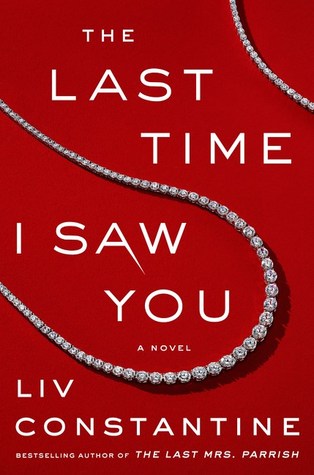
Lynne Constantine is a coffee-drinking, Twitter-addicted fiction author always working on her next book. She is the international bestselling co-author of THE LAST MRS. PARRISH written under the pen name Liv Constantine. Her next book, THE LAST TIME I SAW YOU, comes out on May 7th.


The Last Time I Saw you image


The internationally bestselling author of The Last Mrs. Parrishfollows that success with an addictive novel filled with shocking twists about the aftermath of a brutal high-society murder.

Dr. Kate English has it all. Not only is she the heiress to a large fortune; she has a gorgeous husband and daughter, a high-flying career, and a beautiful home anyone would envy.

But all that changes the night Kate’s mother, Lily, is found dead, brutally murdered in her own home. Heartbroken and distraught, Kate reaches out to her estranged best friend, Blaire Barrington, who rushes to her side for the funeral, where the years of distance between them are forgotten in a moment.

That evening, Kate’s grief turns to horror when she receives an anonymous text: You think you’re sad now, just wait. By the time I’m finished with you, you’ll wish you had been buried today. More than ever, Kate needs her old friend’s help.

Once Blaire decides to take the investigation into her own hands, it becomes clear that all is not as it seems in Baltimore high society. As infidelity, lies, and betrayals come to light, and tensions rise to a boiling point, she begins to alienate Kate’s friends and relatives with her relentless, accusatory questions, as she tries to find Lily’s killer. The murderer could be anyone—friend, neighbor, loved one. But whoever it is, it’s clear that Kate is next on their list. . .

In The Last Time I Saw You, Liv Constantine takes the lightning pace of The Last Mrs. Parrish and raises the stakes, creating an exquisitely tension-filled and absorbing tale of psychological suspense in which innocent lives—and one woman’s sanity—hang in the balance.


Amazon | Goodreads | Website


Liv Constantine authors


Liv Constantine is the pen name of USA Today, Wall Street Journal, and international bestselling authors and sisters Lynne Constantine and Valerie Constantine, co-authors of the Reese Witherspoon book club pick, THE LAST MRS. PARRISH. Separated by three states, they spend hours plotting via FaceTime and burning up each other’s emails. They attribute their ability to concoct dark story lines to the hours they spent listening to tales handed down by their Greek grandmother. Their next book, THE LAST TIME I SAW YOU, will be released on May 7, 2019.


livconstantine.com


stevenjames.net


thestoryblender.com


RED Hotel: A Q&A with Gary Grossman and Ed Fuller

CORRECT RED HOTEL Cover


BOOK RELEASE DAY – RED Hotel by Gary Grossman & Ed Fuller


A Q&A WITH THE AUTHORS


ED FULLER:

What was the primary motivation for writing a thriller before you met Gary Grossman? 

Growing up, I loved the James Bond books and movies. The adventure and the characters were exciting.  Then, over my 40 years with Marriott, I experienced a number of global crises situations that felt like they could have even come from Bond.  Along the way – a long way – 22 years as President of International for Marriott, I learned through kidnappings, evacuations, dealing with drug cartels, and foreign governments that crisis management was absolutely critical.  Since retiring from Marriott I decided to combine my realities with my early fantasies. RED HOTEL was born.


Gun barrel


ED FULLER:

What was your experience writing fiction versus non-fiction?

While I was still working with Marriott, I wrote a book “You Can’t Lead with your Feet on the Desk.” It was a business book that reflected my experiences and philosophies.  It was published by Wiley in the US, China, and Japan.  The reason I sought partnership with Gary Grossman was based on my lack of experience as a fiction writer.  So the way it works is I contribute stories and strategy and Gary applies the glue, creativity, and through-line that binds our stories, characters, and the overall international plot.


GARY GROSSMAN:

After meeting Ed Fuller what potential did you see in his story concept?

Gary Grossman – Initially, I wondered what would I have in common professionally with the former President of Marriott International.  After all, I was a thriller writer, he was a global executive with the responsibility over thousands of peoples’ lives and careers. I worked in fiction.  He worked in reality. But then we met and in the first thirty seconds I realized Ed was as much in the anti-terrorism business as the hotel business. He extracted his teams in Cairo and Tripoli during the fall of Mubarak and Gaddafi.  Company hotels were bombed. He dealt with drug cartels, kidnappings, and high-level officials in foreign governments around the world. Then I asked Ed who he had on speed dial. He told me. Dramatically. And I realized we could work together and create a wonderful plot fictionalizing Ed’s real life experiences.  


CLAP-THRILLER


GARY GROSSMAN:

How did you co-create Dan Reilly?

Dan does real life things, but in a fictional world.  Where Ed didn’t carry a gun, we gave one to Dan for a key scene.  But there’s so much of Ed in Dan. Key was focusing on Ed Fuller’s creation of the color code threat assessment levels he implemented at Marriott that we adapted for RED HOTEL.  So, as you meet Dan Reilly in print, you’ll understand a great deal about Ed Fuller’s remarkable career.


GARY GROSSMAN:

Tell us more about him and what makes him your protagonist?

Dan Reilly has contacts in the international intelligence community, just as Ed does.  For the sake of RED HOTEL, that pits him against a master assassin in the employ of the president of the Russian Federation.   The background for the entire plot deals with the president and his desire to rebuild the old Soviet bloc on Russia’s western front.   Fiction for RED HOTEL, but a real and present danger for NATO and the West.


Word Nato


GARY GROSSMAN:

What kind of terrorists is he dealing with?

Spoiler alert.  The terrorists are actually agents of Russia.  But that’s for Dan Reilly and his team to figure out.  So right now, consider yourself head of the protagonist.  But there are more surprises in RED HOTEL to discover.


GARY GROSSMAN:

What are the stakes if they’re aren’t stopped?

The clock is ticking for Russia to make a dramatic and bold move.  To expand Russia’s existing borders into western Europe. So throughout RED HOTEL, all the Russian president needs is the right provocation.  That’s when and where Dan Reilly must step in.


Time running out image.jpeg


GARY GROSSMAN:

Describe how you came up with the title, Red Hotel.

The RED in RED HOTEL refers to the highest threat level in the color code system created by Ed Fuller at Marriott and Dan Reilly in the thriller.  RED means the property looks and feels more protected, and in Ed’s experience, the more visible the defenses against terrorists, the more likely bad guys are to move on.


GARY GROSSMAN:

What’s next for you?

Ed and I are nearly finished with the first draft of the sequel to RED HOTEL.  It picks right up from where the first book leaves off. So, stay tuned and thanks for deep diving into RED HOTEL.  We hope you’ll enjoy it.

# # #


Ed Fuller Color Image


ED FULLER is a hospitality industry leader, educator, and author of the international Top 20 bestselling business book, You Can’t Lead with Your Feet on the Desk, published by Wiley. He is president of the Irvine, California-based Laguna Strategic Advisors, a global consortium that provides business consulting services to corporations and governments. Fuller is a director of the Federal Bureau of Investigators National Academy Associates Foundation (FBINAA). He has served as a Board Executive of several Charity Boards and Three University Boards. His 40-year career with Marriott included serving as CMO and several regional operational positions which was capped by his role as president and managing director of Marriott International for 22 years. As worldwide chief, he directed and administered corporate expansion of 555 hotels in 73 countries and $8 billion in sales. During that time, he oversaw the creation of Marriott International’s Global Security Strategy. Fuller served as a captain in the U.S. Army and was decorated with a Bronze Star and Army Commendation medals.


Gary Grossman book photo_uprez


Gary Grossman is a multiple Emmy Award winning television producer and author of the bestselling international political thrillers Executive Actions, Executive Treason, Executive Command, Executive Force, and Old Earth. He has also written two highly regarded non-fiction books on TV history. Grossman has been published by Dell/Delacorte, Byron Preiss Publishing, Diversion Books, Harlequin, Arlington House, and CBS/Popular Library. He has produced for NBC News, served as a columnist for the Boston Herald American, written for the Boston Globe and the New York Times. Grossman is Contributing Editor to Media Ethics Magazine and has produced more than 10,000 television programs for 40 networks. He’s a member of ITW, the International Thriller Writers Association and the Military Writers Society of America.


RED Hotel

REDHotel.com