
Melissa F. Miller Talks Writing and the Sasha McCandless Series

Melissa F Miller


Interview with Melissa F Miller


What’s a typical writing day like for you?

I don’t really have a typical writing day—although I wish I did! In addition to being a writer, I homeschool my three kids, so my writing days often vary depending on what learning we’re doing on a given day. That said, I try to write early in the morning most days. My word count varies and I often “binge write” toward the end of a first draft, sometimes writing 12,000 or more words in a (long) day. Every time I start a new book, I tell myself this is the one where I’ll write a consistent, reasonable amount each day. So far, it hasn’t happened. Maybe the next book will be the magic one!


Your story premises are very intriguing. What’s your creative approach for a story?

Thanks! My approach varies from series to series, but in my Sasha McCandless series, I develop the premise of each book around a legal principle that will be central to the case Sasha takes on and a corresponding personal issue or event that happens in Sasha’s personal life. So, in Intentional Acts, Sasha has a client who may be liable for  releasing customers’ private data because of the deliberate actions of a rogue employee. The case intersects with her personal life and she grapples with her husband’s decision to conceal something troubling from her (his intentional act).  I find it really satisfying to merge the strands of the two plots and explore the various facets of a theme from different angles.


Do you write character arcs?

Hmm, sort of. My thrillers are plot driven, but my plots are character driven, if that makes sense. So I always know how my characters are going to be challenged and grow over the course of the events in the book, but I don’t write detailed arcs. Likewise, I have planned character arcs for my main characters over the span of a series. Mainly, I do this intuitively. But I’m currently reading Lisa Cron’s Wired for Story: The Writer’s Guide to Using Brain Science to Hook Readers from the Very First Sentence, which is inspiring me to be explicit in my thinking about my character arcs.


Name the best virtues of Sasha McCandless in her job as a civil attorney.

Sasha’s greatest strength as a lawyer is her perseverance. She’s stubborn and determined, which serves her well as a litigator. She also has a natural ability to tease out connections between seemingly disparate pieces of evidence and to see the patterns in facts. And, of course, she can get by on very little sleep (and large amounts of coffee), which comes in handy when she has a court deadline looming!


Leo Connelly seems like a jack of all trades. Did you learn anything new about him while writing this book?

Leo’s such a fun character to write. As you note, he is something of a jack of all trades. Because he works for a fictional federal government ‘shadow’ agency, his jurisdiction and mission is wide-ranging, allowing him to coordinate with agents from so many different parts of the national security apparatus. In Intentional Acts, he’s put to an ethical/moral test. Without spoiling the plot, I can say his choice didn’t surprise me. What did surprise me was that he took some smaller actions he knew might cause an issue in his marriage, but he did them anyway because he believed he was in the right.  (Apologies for being so cryptic—I don’t want to give anything away!)


What kind of case is Sasha undertaking?

In this book, her client is a nonprofit organization that has two problems. One, the federal government wants it to turn over confidential user information; and, two, a former employee has leaked private user data online. Sasha needs to help them resist the information request and avoid liability for the leak.  Sasha’s case intersects with her husband’s work when a man whose identity was leaked is murdered and the evidence suggests Leo killed him as part of a national security operation.


This book has great dilemmas. What was most challenging in writing it?

The trickiest bit was writing the Project Storm Chaser scenes from Leo’s viewpoint. Because I do write multiple point of views, I needed to be fair to the reader in sharing the information Leo would have. But I had to do it in such a way that I wouldn’t tip my hand and undermine the suspense as Sasha learned the truth about what was happening. There was delicate balance between revealing and concealing that I hope I succeeded in navigating!


What’s next for you?

I’m finishing up Crossfire Creek, the fifth book in my Aroostine Higgins thriller series.  In Crossfire Creek, Aroostine (a former lawyer turned tracker) searches for a mother and daughter who disappeared from their home without a trace and who have a very compelling reason to stay missing.

I have four ongoing series (three thriller series and one light mystery), and I try to write at least one book per year in each series. My Aroostine Higgins thrillers and my Bodhi King forensic thrillers are both spin-offs of the Sasha McCandless series. Aroostine and Bodhi were characters in Sasha’s books before they got their own series; so even though the three series are distinct and separate, they exist in the same world.  I really enjoy writing within the little universe I’ve created!


Intentional Acts image


After seven years together, she knows him better than anyone. Doesn’t she?

In the newest entry in this fast-paced USA Today bestselling series, wife-and-husband team Sasha and Leo find themselves on opposite sides of an explosive situation.

Sasha’s up to her elbows in a data privacy matter. Her client could be on the hook for breaching the privacy of hundreds of customers. All because a rogue employee intentionally leaked personal information for reasons known only to him.

Meanwhile, Leo’s busy with a high-stakes case of his own. He’s been ordered to neutralize a national security threat to the country, but he has his doubts about the strength of the evidence against the target.

As Leo vets the information he’s been given, Sasha learns that federal law enforcement has an interest in her civil matter. Because they both take their duties of confidentiality seriously, neither realizes that their cases are intertwined. Until one of the affected customers in Sasha’s case is murdered … and the evidence points to Leo as the killer.

Sasha’s not about to turn in her own husband, so she tails him instead. She only hopes what she finds will clear his name, not destroy their marriage.


Amazon |Goodreads


About Melissa F. Miller

USA Today bestselling author Melissa F. Miller is a former attorney who traded the practice of law for the art of telling stories.

She is the author of more than two dozen bestselling legal thrillers, suspense thrillers, romantic comedic mysteries, and forensic thrillers. All her work shares two common threads: pulse-pounding, tightly plotted action and smart, unlikely heroines and heroes.

Her books feature such diverse protagonists as a pint-sized attorney and mother of twins who’s trained in Krav Maga; a Native American government investigator who relies on her heritage to guide her when the chips are down; a Buddhist forensic pathologist who refuses to harm any living creature; and a trio of twenty-something sisters just starting out in their careers who find murder and mayhem wherever they go.

She’s edited medical, scientific, and technical journals, as well as educational books; clerked for a federal judge; worked for major international law firms; and run a two-person law firm with her lawyer husband.

Now, powered by coffee, she writes crime fiction and homeschools her children. When she’s not writing, and sometimes when she is, Melissa travels around the country in an RV with her husband, three kids, and their cat.

To find out when Melissa releases a new book, visit www.melissafmiller.com and sign up for her email newsletter.


Who’s In Charge Here?  Getting Jurisdiction Correct in Your Writing

JURISDICTION -   3D stock image of Red text on white background


Who’s In Charge Here?  Getting Jurisdiction Correct in Your Writing

By Micki Browning


I recently picked up a novel that featured an FBI agent as a first responder to a burglary investigation at a city residence. The author immediately lost her credibility with me and I put the novel aside. Why? The Feds are about four levels too high for the job. Can federal agents investigate a burglary? Absolutely. Are they the first responder in a city? No.

At some point, a story you’re writing will likely involve a law enforcement character. It may be on a traffic stop, in response to a crime, an encounter in a coffee shop, in another character’s school, or over the neighboring fence. Our nation has more than 750,000 law enforcement officers, so for art to mimic life, there are a couple of things you need to know.


What is Jurisdiction?

Jurisdiction is easiest to imagine as geographical boundaries, but is best thought of in terms of power. Jurisdiction defines the statutory authority of a government agency—in this case, law enforcement—to act and investigate based on the location of the incident, the type of crime, or the dollar amount at stake.


Who are you going to call?

Most people don’t worry about jurisdiction. If they need help, they dial 911 and then wait for help. As the master manipulator of your novel, however, you are the dispatcher and it’s up to you to decide who goes. Need a quick response? Local police almost always arrive first.


911 emergency number


The Locals

The backbone of law enforcement is the patrol force. New York City employs approximately 38,00 officers. A rural agency may only employ a single peace officer. Throw in a county agency and your first responder could be an officer, marshal, or deputy.

So how do you know the difference? If you are writing about an actual agency, it’s easy. Find a computer. Nearly all agencies have a wealth of information regarding size, jurisdiction, rank structure and community outreach on their websites. Photos will reveal the types of vehicles they drive, how they dress and the color of their uniform (which varies considerably).

Every county has a sheriff’s office. The sheriff is an elected official and is statutorily required to provide public safety for the county. Deputy sheriffs perform the patrol grunt work. They also carry out civil law responsibilities, such as serving subpoenas.

By comparison, cities often operate their own municipal police departments. An appointed Chief of Police runs the agency, and the first responders are referred to as officers. But police agencies are expensive to administer, and many cities contract for public safety services from the county sheriff. Likewise, most towns and villages contract from the county, although some operate their own office, and may be called marshals.

On very rare occasions, cities and counties combine agencies, for example the Miami-Dade Police Department and the agencies in San Francisco and Denver. Usually this occurs when the city and county share the same geographical boundaries.


Polizei - Hintergrund - Banner


State Agencies

State agencies differ across the nation—and it gets murky fast. Many states have multiple public safety agencies that focus on either investigation or enforcement. Other states run one agency with different divisions.

California combines these functions under the umbrella of one massive agency. Remember the television show CHPs? Well, they do a lot more than ride motorcycles. In addition to patrolling the state’s highways, they also staff a Protective Services Division tasked with capitol, dignitary, judicial and governor protection. The agency oversees the State and Regional Threat Assessment Centers, Counterterrorism and Threat Awareness Section, and the Emergency Operations Center.


State Agencies image black background


Federal Agencies

Think state agencies are confusing? Wait until the Feds get involved. The Department of Homeland Security, the U.S. Marshals Service, the Drug Enforcement Administration, and of course, the Federal Bureau of Investigations are familiar names. But don’t forget the Bureau of Alcohol, Tobacco Firearms and Explosives, United States Park Police, or everyone’s favorite, the Transportation Security Administration.

Involving federal agencies in a story typically requires more than casual research. Introducing a character as an officer from the FBI will mark you as a rube. While it is true that they are sworn peace officers, the FBI hierarchy is paved with agents, not officers. And just when you think you may have it all figured out, here’s a curveball. Law enforcement officers in the TSA are Federal Air Marshals. The U.S. Marshals Service, the oldest federal law enforcement agency, is the enforcement arm of the Federal Court System. Their enforcement officers are called U.S. marshals (as opposed to a town marshal). Confused yet?


US government concept acronym


Who is the best?

That’s an easy one. It depends on what you need. Every agency thinks it’s the best. Law enforcement is remarkably similar to a family—complete with sibling rivalry, petty jealousies, and intense loyalty. Some departments welcome assistance; others not so much. The truth? The world is shrinking. People are far more mobile, crimes cross borders, and the Internet links continents. Law enforcement cannot be conducted in a vacuum. Departments rely on each other.

Federal task forces give smaller agencies the opportunity to tackle major issues in their communities. The US Immigration and Customs Enforcement Agency launched a task force to address Internet child exploitation. They also assist with cyber crimes, human trafficking and smuggling investigations. The Marshals Service routinely spearheads fugitive task forces. The Drug Enforcement Agency partners with local law enforcement on narcotic task forces.


Two groups of people pulling line, playing tug of war. Teamwork


Truth is stranger than fiction

Jurisdiction can be tricky. Regardless of genre, the takeaway for authors is that with a little bit of background information, the truth can be manipulated to fit your story needs. The author at the beginning of the article could have legitimately had an FBI agent respond to a burglary investigation with a few easy tweaks. If the responding local officer noticed something in the home indicative of a federal issue—such as a tie to a bank robbery suspect, a terrorist threat, or if the investigation grew to include a kidnapping that crossed state lines—then the FBI would become involved. There’s even a way to legitimize a responding FBI agent. Set the crime on a Native American Indian Reservation. Some tribal nations have their own agency, but for those that don’t, the FBI holds jurisdiction.

In the end, the criminal justice system is a tangled network of agencies with overlapping jurisdictions and operational goals. But the people who make up those agencies are remarkably similar. Every officer swears to uphold the public trust, and they share a common goal. They tend to be strong-willed, opinionated and honorable. By virtue of law, they have enormous authority, and what they do with it can make great fiction.

This article has been updated. The original version appeared in The Florida Writer April 2015.


Micki Browning 600px photo


An FBI National Academy graduate, Micki Browning worked in municipal law enforcement for more than two decades and retired as a division commander. She is the author of the award-winning Mer Cavallo Mystery series set in the Florida Keys. Her debut novel, Adrift, was an Agatha Award finalist for Best First Novel. It won both the Daphne du Maurier Award for Excellence and the Royal Palm Literary Award prior to its publication. Her latest thriller, Beached, was released in January 2018. It won the Royal Palm Literary Award for both Best Mystery and the Book Book of the Year.

Micki also writes short stories and non-fiction. Her work has appeared in dive magazines, anthologies, mystery magazines and textbooks. She lives in South Florida with her partner in crime and a vast array of scuba equipment she uses for “research.”


www.mickibrowning.com


The Elements of a Bestselling Thriller: Top Tips for Authors


Bestseller neon sign on brick wall background.


The Elements of a Bestselling Thriller: Top Tips for Authors

by Adam Durnham


When it comes to conjuring ideas for a thriller or mystery, authors should create perspectives that are relevant to current readers with a special attention to market trends. What are the possible elements of a bestselling thriller? Read to know more.

After reading a gripping mystery or thriller, do you find yourself thinking about how interesting it was? If you’re an author, there are elements to bestselling thrillers that can help your readers stay on the edges of their seats.

In order to do this, authors may want to strike a balance between the foundational elements of their work and current trends in thrillers and mysteries. Here are some top tips for authors who are planning to create pieces in these special genres.


Pick the type of thriller or mystery genre that you want to create

Thriller or mystery novels are broad categories on their own. It is important to know who your target readers are. Knowing your target audiences will help you determine the literary subgenre that you will use. Some thriller subgenres include:


  • Psychological thrillers: These thrillers include themes relating to psychological or mental health conditions. The protagonist or the perpetrators in such stories might have mental health issues.
  • Mystery thrillers: These thrillers feature mysteries that revolve around a crime, accident, or another incident. The protagonists in these works find and analyze clues throughout the stories.
  • Science fiction thrillers: These popular thrillers incorporate science fiction topics. Authors may be particularly creative with this subgenre, which may include futuristic themes such as aliens, monsters, human cloning, and entirely new worlds.


Developing clear ideas about your subgenres gives you a laser-sharp focus on the elements that you want to place in your story. The focus helps readers feel that your characters, settings, plot twists, and other crucial parts of your work are thematic and fit together cohesively.


Choose relevant themes

Theme is quite different from your subgenre. It unifies your story and gives something for your readers to think about as they progress through your story. This is helpful if you want to create a thriller or mystery novel, since you want to provide puzzle pieces that the readers can think about as they approach the end.


Consider using thriller or mystery story themes that people find relatable. They can involve problems such as mental health, addiction rehab, crime, or social injustices. These themes can bring value to your readers, especially if your readers advocate for such topics. Your book has a better chance at reaching the best-seller lists if many of your readers have firsthand experience with or knowledge of your themes.


Successful writers pay attention to what is happening in the larger culture. When topics about mental health, addictions, crime, or social problems appear in the news, books and movies associated with these relevant themes also appear.


Plot your story before beginning to write

Before starting your first chapter, consider creating an outline of your thriller or mystery to develop your plot. Outlines are important for many types of work, but they are especially crucial for thrillers and mysteries because those genres include large amounts of action. Creating a well-plotted story can help you avoid unnecessary fluff and irrelevant elements in your writing.


Your plot should include a buildup of conflict, and your characters’ goals and motivations should be consistent with your themes. Thrillers or mysteries can start at the middle of the action to create a thrilling atmosphere that you can heighten for effect.


Experiment with multiple points of view

One sign of a great author is his or her flexibility in presenting the points of view of various characters. Some bestselling thrillers and novels shift between the viewpoints of the protagonists and the villains in the stories instead of presenting the story entirely in the third person perspective.


Shifting between multiple points of view depends on your theme and other elements of your story. But multiple viewpoints can greatly benefit mystery and psychological thrillers. They can showcase the depth of the story and portray the intrinsic motivations, thoughts, and actions of the characters.


Create interesting plot twists

To develop an interesting plot twist, you need to get inside the minds of readers. One element of bestselling thrillers or mystery novels is that many plot twists can appear quite predictable at the beginnings of stories yet profound and surprising at the ends of the same pieces.

You can create these puzzle pieces to appear one way at the beginning and middle of your stories while creating a sense of jeopardy and conflict. Such story construction encourages readers to exercise their common sense and typical thought processes as they proceed through the plot.

When they encounter your story’s plot twist, readers may be surprised and pleased when your writing reveals your actual story. This shift is what makes the story gripping and exciting for readers. Well-written plot twists are one of your greatest tools as an author of mysteries or thrillers.


Ready, set, write!

If you keep in mind these elements of writing a bestselling novel, you can stay on top of your game. Great authors create solid foundations for their stories, incorporate creativity, and understand trends that matter to readers.


Golden Best Seller Award Over Black Paper Background


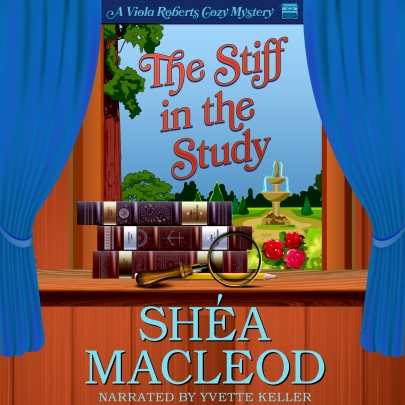
Audiobook Blog Tour: The Stiff in the Study by Shea Macleod


Viola Roberts Banner


Stiff in the study image Viola Roberts book 2


About Audiobook #2


Author: Shéa MacLeod

Narrator: Yvette Keller

Length: 4 hours 20 minutes

Publisher: Shéa MacLeod⎮2017

Genre: Cozy Mystery

Series: The Viola Roberts Cozy Mysteries, Book 2

Release date: May 17, 2017


Synopsis: Viola Roberts is at it again! The sleepy seaside town of Astoria, Oregon is the last place you’d expect to find a dead body. That is until the director of the local museum turns up dead in the study and Viola’s friend, Portia, is accused of the crime. Viola ignores her looming deadline and bout of writer’s block and sets out with her best friend, Cheryl, to solve the murder. From starting riots at local dive bars to breaking into crime scenes, Viola will stop at nothing to prove Portia innocent even if it means putting herself in the cross-hairs of the killer.


Buy Links for Audiobook #2

Buy on Audible


Mystery Letterpress


I’ve come to love the hilarious adventures of Viola Roberts and her sidekick Cheryl. Listening to this audiobook reminded me of the Golden Girls, or Laverne and Shirley from the old days of television. They feed off one another, complement each other. Narrator Yvette Keller plays the part perfectly. Her voice characterizations are on the money and color each personality just enough draw you into the story.


stars 4 image with hand.jpeg


Shea Macleod image


About the Author: Shéa MacLeod


Shéa MacLeod writes urban fantasy post-apocalyptic sci-fi paranormal romances with a twist of steampunk.  Mostly because she can’t make up her mind which genre she likes best so she decided to write them all.

After six years living in an Edwardian town house in London just a stone’s throw from the local cemetery, Shéa headed back to her hometown of Portland, Oregon. She plans to live out her days eating mushroom pizza, drinking too many caramel lattes, exploring exotic locales, and avoiding spiders.

Shéa is the author of the Viola Roberts Cozy Mysteries and the bestselling Lady Rample Mysteries.


WebsiteTwitterFacebookInstagram


www.rewindphotography.com Santa Barbara Wedding Photographer
http://www.rewindphotography.com Santa Barbara Wedding Photographer


About the Narrator: Yvette Keller


Yvette Keller’s first job as a narrator was reading aloud to keep her little brother out of trouble. Her favorite party trick is reading words upside down. Little kids need to see the pictures. Yvette lives in her beloved home town of Santa Barbara, using a lifetime of vocal stamina in her home studio. She produces technical VO industrials for Mesa Steps Consulting clients in addition to audiobooks. A lifetime of reading and speaking has proven one thing: Yvette loves stories. She is thrilled to be making books accessible and engaging through her narration work.


WebsiteTwitterFacebook


William Bernhardt Discusses His New Legal Thriller – The Last Chance Lawyer


The Last chance lawyer image


Getting his client off death row could save his career… or make him the next victim.


Interview 


What was your creative process for creating Daniel Pike?

I thought it would fun write some more legal thrillers. After nineteen Ben Kincaid novels, I was ready for a break, but with a few years off to write poetry and nonfiction about writing, it seems fun again. I wanted Dan to be a modern man, very in tune with the zeitgeist, smart, fun to spend time with–but not perfect. Perfect people are boring. I can’t relate. Dan has a special skill for rooting out the truth–useful for a criminal lawyer. He’s a bit quirky–wears sneakers to court, carries a backpack rather than a briefcase, lives on a boat. But he has a passion for justice, for preventing the government from railroading innocents, and as the book develops, you’ll see why.  


What makes him the last chance lawyer?

After a disastrous event early in the book, he joins a new team of lawyers that take their cases from the mysterious Mr. K, who sends them cases no one else can handle (at least not as well). K pays Dan’s salary, not the clients, so money is not the main focus. Dan becomes a lawyer for those who, due to finances or other circumstances, have few options.


Last chance lawyer image


How is he different than  lawyer Ben Kincaid in your other series?

Dan is everything Ben was not, at least when he started. Dan is confident, showy, outgoing, and successful. Ben was a dogged bur usually effective lawyer. Dan is a showboat. What he learns in this novel is how to be more than a showboat.


“Daniel Pike would rather fight for justice than follow the rules.” What is justice from his point of view?

When Dan talks about justice, he means correcting the imbalance in the modern judicial system. Dan knows from experience that the criminal justice system is stacked in favor of the prosecution. We may say people are presumed innocent, but in truth, most people assume the accused are guilty until it is proven otherwise. The threat of incarceration is so great people plea bargain to crimes they didn’t commit. Dan tries to bring the system back into balance.  


Man in prison


What is the relationship between the objective rule of law and an attorney’s subjective use of it?

I’m not sure what you mean by “the subjective use of it.” The law is the law. Legislators write it, and judges apply it. The defense lawyer’s job is to hold the jury to the law, which says they cannot convict unless guilt has been proven “beyond a reasonable doubt,” which is a high standard. And meant to be.


What can you tell us about the kind of case he’s undertaking?

At first, Dan is representing a nine-year old immigrant who will be deported, because temporary protected status has been revoked for those from her country (after decades), unless she is adopted. Then the prospective adoptive mother is accused or murder.  


What were some challenges while writing this book, or beginning a new series?

Unlike when I started with Ben, I planned this to be a series from the start. You will see some of the threads sewn into the first book. This is a self-contained novel, but there are elements planted that will expand and combine to form a much larger story over the course of many books.


What’s next?

In July, the second Daniel Pike book (which I’ve already finished). Court of Killers.


William Bernhardt image


William Bernhardt is the author of forty-seven books, including the bestselling Ben Kincaid series, the historical novels Challengers of the Dust and Nemesis, two books of poetry (The White Bird and The Ocean’s Edge), and the Red Sneaker books on fiction writing. His most recent novel is The Last Chance Lawyer, the first in a new series of legal thrillers featuring rebel lawyer Daniel Pike.

In addition, Bernhardt founded the Red Sneaker Writers Center to mentor aspiring writers. The Center hosts an annual writers conference, small-group seminars, a monthly newsletter, a phone app, and a bi-weekly podcast. More than three dozen of Bernhardt’s students have subsequently published with major houses. He is also the owner of Balkan Press, which publishes poetry and fiction as well as the literary journal Conclave. He has published many new authors as well as prominent authors like Pulitzer-Prize-winner N. Scott Momaday, and Grammy-Award-winner Janis Ian.


WilliamBernhardt.com


Interview with Marc Rainer Author of the Jeff Trask Crime Drama


Mob Rules Jeff Trask


MOB RULES: A Jeff Trask Crime Drama


Assistant United States Attorney Jeff Trask moves from Washington, D.C., to Kansas City, where he begins an investigation into an international drug ring smuggling the deadly combination of fentanyl and heroin from the southern border to the Eastern Seaboard. In this case, Trask is fighting a rival whose criminal genius rivals Trask’s own intellect, and—while Trask is bound by the legal code and his own set of morals—the mob boss on the other side of this battle is unencumbered by such restrictions. The investigation forces Trask to choose whether to operate within the legal system ot to venture outside it in order to bring down the murderous kingpin.


Amazon | Goodreads | Website


AUTHOR INTERVIEW

MARC RAINER


Mob Rules has a very compelling plot. What was your creative approach to writing it?

As with all my books, I try to mix in quite a few real experiences from 30 years as a federal prosecutor with a plot that is also generated by one or more real cases, changing the names to protect the guilty as well as the innocent. I’m trying to return realism to the crime drama genre. Nobody outrunning machine gun fire or doing superhero stuff or solving the world’s biggest case alone. As in most avenues of life, it’s teamwork that’s essential and that wins for law enforcement. I hop into the heads of my characters and just keep asking myself what each character would do next in the real world. I try not to rush from one mental outline point to the next.


Team blocks image with sunset.jpeg


What was behind the move from Washington, D.C. to Kansas city for Jeff Trask?

That was also somewhat autbiographical. After a few years in DC, I transferred to Kansas City, where I spent the last 25 years of my career as a federal prosecutor. I was tired of “the swamp” in my real life, and actually got tired of fighting it even in my fictional alter ego. It was time to move, both for me and foor Jeff Trask.


Kansas city image.jpeg


What kind of investigation and what is he dealing with there?

Kansas City has always had a Mafia problem. I was assigned to the organized crime strike force unit when I got to Kansas City, and worked in that unit for a dozen years. It was this unit that made the case agains the Mafia in Vegas, the case upon which the movie “Casino” was based. (They ran that investigation before I arrived.) Trask has the same experience, and his first big case pits him against the mob in KC. The Mafia has always had its own weird and perverse set of loyalty codes, hence the title: “Mob Rules.”


Who else is helping Jeff on the investigation?

An old friend from the Air Force JAG named Cam Turner who is also a federal  prosecutor (a character based upon a real friend who paved the way for my transfer to KC), and a blended team of federal agents and Kansas City police detectives.  Since KC straddles the stateline between Missouri and Kansas, the investigative team includes detectives from both Kansas City, Missouri, and Kansas City, Kansas. I worked several major cases with the KCMO Police Department’s Career Criminal Unit, and that unit is prominently featured in the book. The cooperation between local and federal authorities was a very pleasant change from DC, where all the investigative agencies were constantly stabbing each other in the back. We had a little of that in Kansas City, but nothing like what I saw in Washington.


Task Force image.jpeg


What did you enjoy most about writing this book?

This book probably has more humorous episodes included than did all the previous novels put together. That dark cop humor is an essential ingredient in writing a realistic police procedural, because it’s an essential ingredient in police life and culture. All the funny scenes were taken from my time in KC, and all—believe it or not—were real, as I indicated in the author’s notes at the end of the book. Even the funny truth is usually stranger than fiction. At any rate, it was nice being able to build in a few laughs for the audience instead of having to stay in “hard-boiled” or “gritty” mode the entire time.


Marc Rainer image


Marc Rainer is a former prosecutor in the federal and local courts of the District of Columbia and the Western District of Missouri (Kansas City), and a former circuit prosecutor for the US Air Force’s Judge Advocate General (JAG) Corps. A graduate of the US Air Force Academy, he has more than thirty years eperience in the prosecution of major cases. He is married to a former Air Force OSI Special Agent, and lives in a suburb of a major American city. The first book in his Jeff Trask crime drama series, Capital Kill, has been ranked #1 in Amazon’s kindle store’s mystery series sales rankings.


MarcRainer.com


Writing Crime Fiction with Gretta Mulrooney

Crime word on paper typewriter image.jpeg


Interview with Gretta Mulrooney


*Why do you write crime fiction?


I write crime fiction because I’m fascinated by motive, secrets, guilt, revenge and betrayal. The genre allows me to cover all kinds of social and cultural issues.  Psychopaths and serial killers don’t interest me. I prefer domestic murders involving people driven to breaking point by rage and disappointment. After all, most people are killed by family members. I like the past breaking into the present and taking revenge – a dish much better eaten cold. A number of my novels have female protagonists and killers. I’m tired of reading about male crime towards women and the world is full enough of that in real life. I reckon that women can be more subtle and strategic in planning to kill and in playing the long game, so you’ll find that theme in some of my books. My crime novels to date have featured a male private detective because I like playing with that genre. I’m now writing a novel with a female police inspector. I love reader feedback and try to respond to everyone who gets in touch.


*What fascinates you about motive, secrets, guilt, revenge etc.?

I’ve studied psychology and I enjoy considering what propels emotions and actions when writing crime. Guilt and anger are often two sides of the same coin and I like dissecting how these combined emotions can lead to violence and murder. Also, I like to track how every action has a consequence, particularly when the past comes back to bite a character.


Close up of angry man with steam coming out from his ears


*What’s your writing process like?

I’d call my writing process organic. I do very little planning. I have the kernel of a plot, create the characters and see where they lead. I often don’t decide on the perpetrator until I’m near the end. Sometimes I’ve changed my mind about who did it at the last minute.


*What can you tell us about what you’re currently working on?

I’m currently working on my seventh novel about private detective Tyrone Swift. I’m also working on an idea for a novel about a female police detective. I’m having fun with that because I’m creating a fictitious town.


Gretta Mulrooney Author Photo png


AUTHOR BIO

I was born and educated in London, of Irish parents. I studied for a degree in English Literature at the University of Ulster, Magee college in Derry. I have worked in education and social care.

I started writing in my thirties and I published four books for children and teenagers with Poolbeg Press, Dublin; A Can of Worms, A Nest of Vipers, A Den of Thieves and I Love You-Te Quiero. These books are available on Amazon.

I have published five literary fiction novels.

Araby and Marble Heart were published by Harper Collins to critical acclaim. They have been translated into Dutch and Spanish.  These books are available on Amazon. They are being reissued in May 2016 by Fourth Estate as Kindle and paperbacks.

Fire and Ice, Out of The Blue and The Apple of Her Eye were published by Robert Hale. These books are available on Amazon.

Out of The Blue was published by Joffe Books as an e book and paperback in February 2016 and is available on Amazon.

Lost Child was published by Joffe Books as an e book and paperback in March 2016 and is available on Amazon. (This was previously published as Fire and Ice by Robert Hale.)

Coming of Age was published by Joffe Books as a e book and paperback in April 2016 and is available on Amazon. (This was previously published as The Apple of Her Eye by Robert Hale.)

I have always been an avid reader of crime fiction and psychological thrillers. I have started a series of crime novels featuring charismatic private detective Tyrone Swift.

The Lady Vanished was published as an e book and paperback by Joffe Books in December 2015 and is available on Amazon.

Blood Secrets, the second novel featuring private detective Tyrone Swift, was published as e book and paperback in spring 2016 and is available on Amazon.

Two Lovers, Six Deaths, the third Tyrone Swift novel, was published as an e book and paperback in December 2016 by Joffe Books and is available on Amazon.

Watching You, the fourth Tyrone Swift novel, was published as an e book and paperback in June 2017 by Joffe Books and is available on Amazon.

Low Lake, the fifth Tyrone Swift novel, was published as an e book and paperback in March 2018 by Joffe Books and is available on Amazon.

Bound By Lies is a boxset trilogy of the first three  novels in the Tyrone Swift series. It was published as an e book and paperback in June 2017 by Joffe Books and is available on Amazon.


YOUR LAST LIE cover


Amazon | Goodreads | Website


Audiobook Blog Tour: The Body in The Cabana by Shea Macleod

Viola Roberts Banner


“Fun and fresh, with a twisty, clever plot that will have you turning pages right to the end.” -Cheryl Bradshaw, New York Times and USA Today bestselling author of the Sloane Monroe mysteries.


Body in the Cabana


About Audiobook #1

Author: Shéa MacLeod

Narrator: Yvette Keller

Length: 4 hours 47 minutes

Publisher: Shéa MacLeod⎮2016

Genre: Cozy Mystery

Series: The Viola Roberts Cozy Mysteries, Book 1

Release date: Aug. 29, 2016


Synopsis: Sassy, snarky Viola Roberts quit her boring accountant job to pursue her dream of writing novels, even if it meant eating ramen noodles every day. Now that her career has taken off, she’s headed to a writers’ conference at an exotic Florida resort complete with white-sand beaches and swaying palm trees, where she plans to lounge in the shade drinking frosty beverages with little umbrellas. And, of course, no sojourn to tropical climes would be complete without her boozy, wise-cracking best friend, Cheryl.

When Viola discovers the diva of the author world dead (as a doornail) of unnatural causes, the police immediately consider Viola their prime suspect. But when the head detective turns a gimlet eye on Viola’s best friend, the author has had enough! Along with help from hunky fellow writer Lucas Salvatore, Viola is determined to ascertain who killed the corpse in the cabana before she or Cheryl winds up in jail. Or worse.

Buy Links for Audiobook #1

Buy on Audible


Time for Review with bookstack image.jpeg


This is one of the best cozy mysteries I’ve read in recent memory. The ever curious, Sassy Viola Roberts and her wise-cracking friend Cheryl, are quite the pair. Together they make a big splash when Viola discovers the body of a bestselling, well-hated writer named Natasha. With lots of enemies in her wake naturally there’s a lot of suspects to weed out to discover the real killer. I typically don’t like stories that feature a writer as the protagonist such as Viola Roberts, but this was so well done I loved it.  Very entertaining and absolutely hilarious!

Narrator Yvette Keller does a phenomenal job of characterizing each character, especially bringing to life Viola’s point of view. Her and Cheryl sounded like completely different persons which is critical for listeners of audiobooks. That’s also a big reason why I enjoy listening to the audio version versus the ebook.


Number 5, stars and laurels isolated on white background. 3D illustration


Shea Macleod image


About the Author: Shéa MacLeod


Shéa MacLeod writes urban fantasy post-apocalyptic sci-fi paranormal romances with a twist of steampunk.  Mostly because she can’t make up her mind which genre she likes best so she decided to write them all.

After six years living in an Edwardian town house in London just a stone’s throw from the local cemetery, Shéa headed back to her hometown of Portland, Oregon. She plans to live out her days eating mushroom pizza, drinking too many caramel lattes, exploring exotic locales, and avoiding spiders.

Shéa is the author of the Viola Roberts Cozy Mysteries and the bestselling Lady Rample Mysteries.


WebsiteTwitterFacebookInstagram


www.rewindphotography.com Santa Barbara Wedding Photographer


About the Narrator: Yvette Keller


Yvette Keller’s first job as a narrator was reading aloud to keep her little brother out of trouble. Her favorite party trick is reading words upside down. Little kids need to see the pictures. Yvette lives in her beloved home town of Santa Barbara, using a lifetime of vocal stamina in her home studio. She produces technical VO industrials for Mesa Steps Consulting clients in addition to audiobooks. A lifetime of reading and speaking has proven one thing: Yvette loves stories. She is thrilled to be making books accessible and engaging through her narration work.


WebsiteTwitterFacebook


Interview with William L. Meyers

William L. Myers Jr image


William L. Myers Jr. – A Killer’s Alibi – Book Review & Interview


A Killers Alibi image


For attorney Mick McFarland, the evidence is damning. And so are the family secrets in this twisty legal thriller from the Amazon Charts bestselling author of A Criminal Defense.

When crime lord Jimmy Nunzio is caught, knife in hand, over the body of his daughter’s lover and his own archenemy, he turns to Mick McFarland to take up his defense. Usually the courtroom puppeteer, McFarland quickly finds himself at the end of Nunzio’s strings. Struggling to find grounds for a not-guilty verdict on behalf of a well-known killer, Mick is hamstrung by Nunzio’s refusal to tell him what really happened.

On the other side of the law, Mick’s wife, Piper, is working to free Darlene Dowd, a young woman sentenced to life in prison for her sexually abusive father’s violent death. But the jury that convicted Darlene heard only part of the truth, and Piper will do anything to reveal the rest and prove Darlene’s innocence.

As Mick finds himself in the middle of a mob war, Piper delves deeper into Darlene’s past. Both will discover dark secrets that link these fathers and daughters–some that protect, some that destroy, and some that can’t stay hidden forever. No matter the risk.


Amazon | Goodreads | Audible


BOOK REVIEW


This is top notch for legal thrillers and crime drama. Never a dull moment. The ride begins from the first scene when Philly crime boss Jimmy Nunzio is caught red handed with the dead body of his daughter’s lover. Criminal defense attorney Mick McFarland is never really on his feet on this one. The case blindsides him from the beginning and never lets up. Then there’s Mick’s wife, Piper who investigates an innocence project case to free a young woman from a murder case. Two cases. Two dire situations. A legal thriller laced with tension, an intricate plot, a full cast of characters–But at its core it’s about one thing, family.


INTERVIEW


*What kind of person is attorney Mick McFarland that made him your protagonist?

            In crafting Mick, I set out to build a character who is basically a good guy, who wants right to prevail over wrong, but who, in the pursuit of right, will do whatever is necessary, including things that are wrong. As an attorney, Mick is a thinker, a planner, and very Machiavellian. He enjoys the “game” and excels at it.


Lawyer at work image sitting.jpeg


*What can you tell us about the kind of case Mick is undertaking?

            Mick is in an interesting situation. His client is Philly crime lord Jimmy Nunzio—a man used to calling the shots. A Machiavellian manipulator. A man like Mick himself in many ways. What this means for Mick is that he isn’t the alpha dog as he is with most of his clients, and he finds himself having to dance with Jimmy Nunzio, for control of the case.


Moral dilemma ahead signage


*What is your method of creating characters and how do you bring out their flaws?

            I create characters by outlining them only in very general terms and then placing them into the story—putting them under stress–and watching how their flaws appear. I remember reading once that stress and conflict reveal character; you only find out core character by putting someone to the test. So, I make sure that my protagonists, and my antagonists, too, are under real threat.


*Tell us about Mick’s wife, Piper.

            Piper’s evolution is an interesting one. When I wrote, “A Criminal Defense,” the first book in “The Philadelphia Legal Series,” I started out with the plan simply to make a two-dimensional “wife” character for the main protagonist, Mick. But whenever I wrote Piper into a scene, she asked for more, she told me “I have more to contribute here.” By the end of the book, Piper was a fully-formed character with her own agenda, secrets and fears. In “A Killer’s Alibi,” Piper plays an even more important role—as a driving force behind one of the two main plot lines. She really comes into her own. (And, spoiler alert, in the fourth book, which I’m finishing now (in which Mick is imprisoned on charges or murder), Piper becomes THE driving force in Mick’s defense team.


A Killers Alibi image


*Is the innocence project she’s involved with commonplace in law firms today? Would her official position be an investigative attorney?

            Most law firms which do innocence project work do so under the auspices of, for example, the Pennsylvania Innocence Project. Larger law firms do have pro bono practices and some have attorneys devoted solely to pro bono work.


“No man knows the value of innocence and integrity but he who has lost them.” – William Godwin


*What can you tell us about the kind of case Piper is taking?

            Piper is leading the charge on behalf of Darlene Dowd, a young woman who was convicted of killing her sexually abusive father fifteen years earlier. Piper learns there is exculpatory evidence the jury never heard and she has to go on a hunting expedition to find the woman who has that evidence. But the woman has secrets of her own, and has been in hiding for years. It takes all of Piper’s will and resourcefulness to win the woman over and see that Darlene gets a fair hearing in court. But nothing is black and white in my books and Piper has to pay a price.


Evidence


*Now for one of my favorite questions. What is justice?

            Justice is like pornography: difficult to define but you know it when you see it.  When something happens to a character (good or bad) and it feels right to you, that’s justice.  The character, of course, may disagree with you— fictional characters, like real people, believe they are good guys, whether they are or aren’t. Along these lines, a word to the wise: if someday you find yourself standing before St. Peter, the one thing you should never say is I want what’s coming to me.


*What is a jury consultant?

A jury consultant:

A jury consultant is an expert hired by an attorney to help the attorney pick a jury favorable to his side. The jury consultant helps the attorney with questions to ask potential jurors and also helps to create a profile of the type of juror the consultant believes would be most favorable to the attorney’s client. A jury consultant also counsels the attorney on how to present the case, and how to conduct himself or herself in court.


Jury image courtroom


*In Piper’s case, how many appeals are permitted for someone on death row?

The number of appeals:

There are two avenues to appeal a conviction. One is simply a direct appeal of the jury verdict. Here, you’re saying the judge committed errors in allowing prejudicial evidence that should not have been allowed into the record. Or you can argue the judge erroneously disallowed evidence that would have been favorable to the defendant that should have been allowed. Another branch of appeal is done through the Post-Conviction Relief Act, which allows a defendant to petition for a new trial based upon newly-discovered evidence.


William L. Myers Jr image


William L. Myers, Jr. is the No. 6 best-selling author for Amazon Kindle in 2017 for his debut novel, A Criminal Defense. That was the first in what has become the Philadelphia Legal Series. The third book in that series, A Killers Alibi debuts February 19, 2019.

A Killer’s Alibi has had rave early reviews including New York Times Bestselling author, Bill Lasher—

“William Myers’ riveting new novel is not just a crackerjack legal thriller, it is a wrenching portrayal of a whole range of farther-daughter relations, showing how they can damage, how they can nourish, how they go dangerously off track. A story not to be missed.”

Born in 1958 into a blue-collar family, Mr. Myers inherited a work-ethic that propelled him through college and into the Ivy League at The University of Pennsylvania School of Law. From there, Mr. Myers started his legal career in a Philadelphia-based mega defense firm. After ten years defending corporate America, he realized his heart wasn’t in it. So, with his career on the fast track to success–he gave it all up and started his own firm. It was time to start fighting for the common guy.

That was twenty-five years ago and since then, he has focused on representing railroad employees and other honest, hard-working people who have been injured by others. He has represented thousands of clients in his tenure and has become a highly-regarded litigation attorney up and down the Eastern Seaboard.


Amazon | Goodreads | Twitter | Website


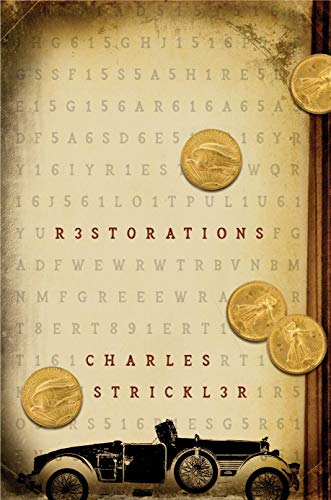
Blog Tour: Restorations by Charles Strickler

Restorations image


When Miles West discovers a mysterious treasure in an old car he acquires, he thinks his broken life is on the mend. But the 1928 Stutz Black Hawk Boat Tail Roadster contains a secret that has remained hidden for almost ninety years, left there by the infamous bank robber “Lefty” Webber. Jewels, old gold pieces and a coded journal force Miles to dig into the past. With the assistance of the resourceful Bramley Ann Fairchild, West sets out on an adrenaline-fueled adventure. They must evade ruthless Mafia boss Carlo Bello, who seeks to acquire the car and the treasure for himself, no matter the cost. Will West unravel the decades old mystery, rescue his friend, and help a man restore his family name? Or will he simply become another victim of the Roadster’s murky history?


Amazon | Goodreads | B&N


Stutz-Black-Hawk-Boat-Tail 1928


Restorations by Charles Strickler is an excellent story and a well written mystery all centered on an old 1928 Stutz Blackhawk Boat tail roadster. But this is no ordinary classic. This Stutz is a modified mob car with secret compartments housing a decades old treasure and coded journal linked to the mafia.  I loved the simple yet resilient Miles West and his assistant Bramley. I found myself transported into their lives in the peaceful countryside. Well, sort of peaceful.


four wooden stars for christmas


Charles Strickler


About the Author

Charles Strickler is a native Virginian. He graduated from Virginia Tech where he also met his future bride Mary. An entrepreneur with work experiences that range from the barnyard to the Board Room, Charles brings a unique perspective to his mysteries. Like many others, the only mystery that Charles does not like is Polycystic Kidney Disease. PKD is a genetic disease affecting 200,000 people per year. While there is no cure yet, the PKD Foundation continues to fund promising research to discover treatments that can slow the progression and eventually end PKD.