Cozy Historical Mysteries with Lee Strauss

Lee Strauss image


Interview with Lee Strauss

Author of the Higgins & Hawke and Ginger Gold mysteries


* I love the historical cozy concept of Higgins & Hawke. Why the 1930’s in the city of Boston?

Higgins & Hawke is a spin off series from The Ginger Gold Mystery series which is set in 1920s England. Both leads originally met in Boston and lived in London in the same house. Haley Higgins exits the Ginger Gold series when her brother in Boston is murdered. Higgins & Hawke begins seven years later. Since I was already writing about the 1920s with Ginger Gold, I wanted a change of scenery and tone. The 1930s is a very interesting time in world and American history.



1930s image.jpeg


*What’s your experience writing cozy mysteries versus other genres?

I’ve been writing cozy mysteries for two years now. Before that wrote in a myriad of genres including YA, romance, and science fiction. When I finally settled on cozy historical mystery, I found my “home.”


*How important is the setting in historical mysteries?

I would say very. The historical backdrop is almost like a character in itself. Readers love the details and historical trivia. Otherwise, you might as well stick to a contemporary setting.


*What’s the historical background of Boston in the 1930’s?

That is a loaded question. Like the rest of the country, its citizens were suffering from the great depression. There were large sections specific to ethnicity, especially Italians, Irish and Jewish, who didn’t exactly get along. As the war grew closer, anti-semitism became a real problem. It’s one of the reasons I gave Samantha Hawke a Jewish mother-in-law; to make those problems real.
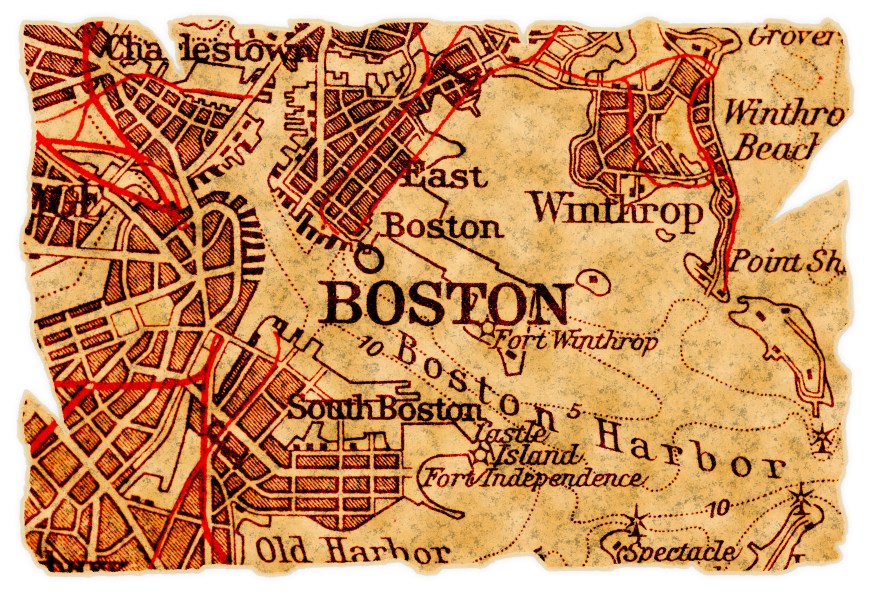


Boston old map


*What was the relationship like between Dr. Haley Higgins and her brother Joe?

Joe was the third of 3 boys and Haley the last and only girl. They were close in age, and Haley was largely a tomboy, so they were very close as children.


*What are the duties of the city’s pathologist assistant?

Like the title suggests, the assistant is supposed to assist the chief medical examiner in instances where a death may be suspicious or the cause of death undetermined. In Haley’s case she steps in for the chief most of the time. You’ll have to read it to find out why. πŸ™‚


*Describe the relationship between Dr. Haley Higgins and Investigative reporter Samantha Hawke.

In the beginning Haley can’t help but feel suspicious. She has a history of bad rapport with the press, especially from when her brother’s case was new. However, as the book progresses, she sees Samantha as someone much like herself: a woman trying to make it in a man’s world, and they form a friendship.


Man and woman holding hands at a table


*In the Ginger Gold mysteries how did you select your settings?

It was pretty simple. I adore all the British mystery authors and TV shows and I wanted to set a mystery there.


*Do you have plans for more Ginger Gold books?

Yes. The 9th book, Murder at the Boat Race, is releasing in June.


Murder aboard the flying scotsman Ginger gold


*What’s a typical writing day like?

It’s typical in that it’s never typical! But if I had to drill it down I’d say I tackle the business part of being a writer in the mornings and write in the afternoons. I really should flip that around, but that’s usually how it lands.


*What are the most challenging aspects of writing for you?

My husband and I started snowbirding this year, and so the warm weather, palm trees and beautiful beach is a huge distraction! Β It’s a challenge I’m prepared to take on.


*How do you manage multiple writing projects?

I write one book at a time. I can’t plot and plan for future books, but when it’s time to write, I focus fully on the story in front of me.
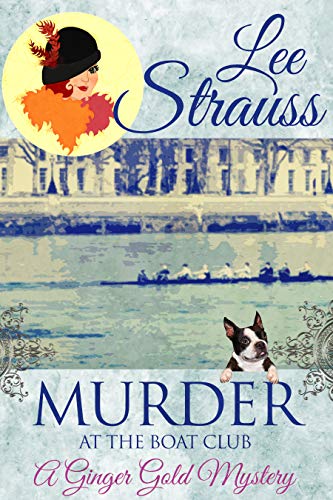


Murder at the boat club Ginger gold


Ginger Gold Mystery Book 9 Murder at the Boat Club: A Cozy 1920’s Murder Mystery will be out JUNE 28, 2019 – Pre-orderΒ HERE


Death on the Tower Higgins and Hawke mystery lee strauss


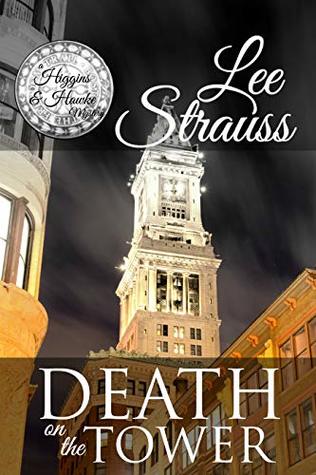
The most recent Higgins & Hawke Mystery isΒ Death on the Tower: A 1930’s Cozy Historical Murder MysteryΒ 


Death by Treason . . .

When the body of a British National is found at the base of the common house tower in Boston, assistant medical examiner, Dr. Haley Higgins has no reason to believe it wasn’t suicide.

That is until Investigative Reporter Samantha Hawke gets an anonymous tip: the victim, a Mrs. Olivia Gray, was pushed from the seventh floor to her death.

The question is why?

Haley and Samantha work together to unravel secrets that go back to a time that no one wants to remember ~ when shameful acts were sanctioned, and death licked at everyone’s heels.

What did Mrs. Gray know, and who wanted to silence her?


Lee Strauss image


As Lee Strauss, I’m a bestselling author of The Ginger Gold Mysteries series (cozy historical mystery), A Nursery Rhyme Suspense series (mystery sci-fi romantic suspense), The Perception series (young adult dystopian), and young adult historical fiction. When I’m not writing or reading I like to cycle, hike and kayak. I enjoy traveling (but not jet lag :0), cashew lattes, red wine and dark chocolate.

I also write younger YA fantasy as Elle Lee Strauss.


Lee Strauss Books

Twitter

Goodreads


Interview with Marc Rainer Author of the Jeff Trask Crime Drama


Mob Rules Jeff Trask


MOB RULES: A Jeff Trask Crime Drama


Assistant United States Attorney Jeff Trask moves from Washington, D.C., to Kansas City, where he begins an investigation into an international drug ring smuggling the deadly combination of fentanyl and heroin from the southern border to the Eastern Seaboard. In this case, Trask is fighting a rival whose criminal genius rivals Trask’s own intellect, andβ€”while Trask is bound by the legal code and his own set of moralsβ€”the mob boss on the other side of this battle is unencumbered by such restrictions. The investigation forces Trask to choose whether to operate within the legal system ot to venture outside it in order to bring down the murderous kingpin.


AmazonΒ |Β GoodreadsΒ |Β Website


AUTHOR INTERVIEW

MARC RAINER


Mob Rules has a very compelling plot. What was your creative approach to writing it?

As with all my books, I try to mix in quite a few real experiences from 30 years as a federal prosecutor with a plot that is also generated by one or more real cases, changing the names to protect the guilty as well as the innocent. I’m trying to return realism to the crime drama genre. Nobody outrunning machine gun fire or doing superhero stuff or solving the world’s biggest case alone. As in most avenues of life, it’s teamwork that’s essential and that wins for law enforcement. I hop into the heads of my characters and just keep asking myself what each character would do next in the real world. I try not to rush from one mental outline point to the next.


Team blocks image with sunset.jpeg


What was behind the move from Washington, D.C. to Kansas city for Jeff Trask?

That was also somewhat autbiographical. After a few years in DC, I transferred to Kansas City, where I spent the last 25 years of my career as a federal prosecutor. I was tired of β€œthe swamp” in my real life, and actually got tired of fighting it even in my fictional alter ego. It was time to move, both for me and foor Jeff Trask.


Kansas city image.jpeg


What kind of investigation and what is he dealing with there?

Kansas City has always had a Mafia problem. I was assigned to the organized crime strike force unit when I got to Kansas City, and worked in that unit for a dozen years. It was this unit that made the case agains the Mafia in Vegas, the case upon which the movie β€œCasino” was based. (They ran that investigation before I arrived.) Trask has the same experience, and his first big case pits him against the mob in KC. The Mafia has always had its own weird and perverse set of loyalty codes, hence the title: β€œMob Rules.”


Who else is helping Jeff on the investigation?

An old friend from the Air Force JAG named Cam Turner who is also a federal Β prosecutor (a character based upon a real friend who paved the way for my transfer to KC), and a blended team of federal agents and Kansas City police detectives. Β Since KC straddles the stateline between Missouri and Kansas, the investigative team includes detectives from both Kansas City, Missouri, and Kansas City, Kansas. I worked several major cases with the KCMO Police Department’s Career Criminal Unit, and that unit is prominently featured in the book. The cooperation between local and federal authorities was a very pleasant change from DC, where all the investigative agencies were constantly stabbing each other in the back. We had a little of that in Kansas City, but nothing like what I saw in Washington.


Task Force image.jpeg


What did you enjoy most about writing this book?

This book probably has more humorous episodes included than did all the previous novels put together. That dark cop humor is an essential ingredient in writing a realistic police procedural, because it’s an essential ingredient in police life and culture. All the funny scenes were taken from my time in KC, and allβ€”believe it or notβ€”were real, as I indicated in the author’s notes at the end of the book. Even the funny truth is usually stranger than fiction. At any rate, it was nice being able to build in a few laughs for the audience instead of having to stay in β€œhard-boiled” or β€œgritty” mode the entire time.


Marc Rainer image


Marc Rainer is a former prosecutor in the federal and local courts of the District of Columbia and the Western District of Missouri (Kansas City), and a former circuit prosecutor for the US Air Force’s Judge Advocate General (JAG) Corps. A graduate of the US Air Force Academy, he has more than thirty years eperience in the prosecution of major cases. He is married to a former Air Force OSI Special Agent, and lives in a suburb of a major American city. The first book in his Jeff Trask crime drama series, Capital Kill, has been ranked #1 in Amazon’s kindle store’s mystery series sales rankings.


MarcRainer.com


Historical Mystery with Karen Charlton Author of the Detective Lavender Series

Murder in Park Lane image


London, 1812. At a fashionable address in leafy Mayfair, a far cry from Detective Stephen Lavender’s usual haunts, a man is found dead in his room. He has been brutally stabbed, but the door is locked from the inside and the weapon is missing.

The deceased is David MacAdam, an Essex businessman with expensive tastes. As Lavender and Constable Ned Woods travel between London and Chelmsford seeking to understand MacAdam’s final hours and unearth the grisly truth, they uncover a tangled web of deceit behind his stylish facade. The unusual circumstances of MacAdam’s death are nothing compared to the shady nature of his life and it seems the house on Park Lane is at the heart of a dark conspiracy.

But when a second body turns up, everything they think they’ve learned is thrown into doubt. Can Lavender and Woods find out who’s behind these shocking murders before more lives are ruined?


AmazonΒ |Β GoodreadsΒ |Β B&N


Interview


What motivated you to begin writing historical mysteries?


Many moons ago, I used to write murder mystery weekends for Raven Hall Hotel near Scarborough and I’d always been interested in crime fiction. While researching my husband’s family ancestors we discovered that he had a Regency gaol-bird roosting in his family tree; his 6 x Great-grandfather was Northumberland’s most notorious burglar. Following a massive robbery at Kirkley Hall and a very controversial trial, Jamie Charlton he was finally sentenced to transportation to New South Wales. I quickly realised that if I didn’t write about this miscarriage of justice in book, I would never fulfil my ambition to be a writer because the perfect plot had just landed in my lap. I wrote Jamie’s story in my debut novel, Catching the Eagle.

While researching this first novel, I was fascinated to discover that a Bow Street Principal Officer called Stephen Lavender had been brought up from London to investigate the Kirkley Hall Mystery. I had no idea at the time that Bow Street officers were hired out like private investigators to solve mysteries in the provinces. When it came to choosing a detective for a new crime series set in Regency London, Lavender was the perfect choice. I’d become quite fond of him and his genial sidekick, Constable Ned Woods and especially enjoyed writing the banter between the two men.


Start image with road.jpeg


What impressed you to write about Detective Stephen Lavender?

I enjoy writing about a real officer who was busy solving crime at the start of the nineteenth century. This was an age without forensics and fingerprints; crimes were solved with intelligent deduction and steady, plodding police work that left no stone unturned. I’ve found a lot of information about Lavender and his cases reported in the newspapers of the time and sometimes the real-life crimes he solved have inspired the plot of my novels.


What was the historical background of London 1812?


1812, the year of Murder in Park Lane, the fifth novel in the series was in the era we call the The Regency Period. Β Mad King George III was the King and Napoleon Bonaparte was still terrorising Europe although Arthur Wellesley, the future Duke of Wellington, was now chasing him out of the Iberian Peninsula back to Paris. It was an era of dashing, scarlet-clad cavalry officers, women in pretty bonnets and floaty muslin gowns and a massive expansion of the British Empire. We’d lost the American colonies but Britain still had India and the powerful East India Company was opening up the Asian sub-continent, stripping it of its riches and shipping them back to London in massive cargo ships. Β London was the biggest and richest city in the world and the British navy dominated the high seas.


London 1812 image


Who is David MacAdam and what role does he play in the story?


David MacAdam, an Essex businessman with expensive tastes, is the victim in Murder in Park Lane. His body is found in mysterious circumstances in his bed chamber in a lodging house in leafy Mayfair. He’d been stabbed to death but his door was locked on the inside and there was no sign of the murder weapon in the room. But as Lavender and Woods soon discover, the unusual circumstances of MacAdam’s death are nothing compared to the shady nature of his life and it seems the house on Park Lane is at the heart of a dark conspiracy. MacAdam was a man of secrets.


What is Park Lane?

Park LaneΒ is a major road in the City of Westminster in London. It runs from Hyde Park CornerΒ in the south to Marble ArchΒ in the north. Hyde Park was opened in the 16th century for wealthy Londoners to enjoy and the houses that overlook it on Park Lane have been some of the most-sought after properties in London ever since. Park Lane is the second most expensive property on the London Monopoly board.


Partk Lane image.jpeg


What was the police department like during this time period?

There was no official police force in the United Kingdom at this time. The British police force wasn’t formed until 1829. Β In the Regency Period, crimes were usually investigated by local magistrates and a few police constables attached to their office. They used the reward system or a string of informers (usually fellow criminals) to track down the villains but both of these systems were notoriously unreliable and justice wasn’t always achieved or fair in Britain at this time. The officers at Bow Street Magistrates’ Court and Police Office in London had the best reputation in the country for crime solving and, as I’ve explained above, their Principal Officers, including Stephen Lavender, were often hired out to help provincial magistrates or wealthy private landowners solve difficult crimes.


Tell us some interesting facts from researching for Murder in Park Lane.

While researching the manufacture and export ready-to-wear male garments for this novel, I was particularly intrigued by the sheer scale of trade between Britain and the United States during this period when we were supposed to be at war with each other (The War of 1812).

As most lovers of Regency fiction will be aware, women’s fashion of this era was highly ornate and dependent on a precise fit, so ready-to-wear garments for women weren’t widely available. However, the relatively simple, flattering cuts and muted tones of men’s fashion made proportionate sizing possible in mass production. I learnt from my research that by the late 1700s, the English city of Bristol, was home to over 200 businesses that exported hats, gloves, drawers, pants, stockings, shirts, jackets, and footwear, mostly to the United States. When you consider the vast array of other businesses manufacturing items for export to America in Bristol – and in London and the other cities of Britain – the breathtaking scale of our trans-Atlantic trade becomes clear.


OLYMPUS DIGITAL CAMERA


About Karen Charlton


Karen Charlton writes historical mystery and is also the author of a nonfiction genealogy book, ‘Seeking Our Eagle,’ and the joint author of the cosy chicklit series, ‘The Silver Sex Kittens’. She has published short stories and numerous articles and reviews in newspapers and magazines. An English graduate and ex-teacher,
Karen has led writing workshops and has spoken at a series of literary events across the North of England, where she lives. Karen now writes full-time and is currently working on the sixth Detective Lavender Mystery for Thomas & Mercer.

A stalwart of the village pub quiz and a member of a winning team on the BBC quiz show ‘Eggheads’, Karen also enjoys the theatre, and she won a Yorkshire Tourist Board award for her Murder Mystery Weekends.

Find out more about Karen’s work atΒ http://www.karencharlton.com


Sibel Hodge Discusses Her Writing Process

Sibel Hodge image.jpg


INTERVIEW


Is your creative approach to writing each novel the same or does it vary?

I often get asked whether I plan out my plot in advance before I start writing. Urgh, the dreaded P word, I think! I hate plotting. Absolutely hate it!

There are some authors who won’t type a single letter until they’ve got every inch of their plot structure finely tuned in advance. Some authors know their characters intimately before they begin writing, down to what they just had for breakfast. And I wish I could be like that, I really do. I think it could make my job a whole lot easier. But I’m definitely a fly by the seat of my knickers kind of girl! If I get too hung up spending a lot of time plotting in advance, I tend to lose my creativity. I start thinking about it too much and get nowhere. I think I must suffer from some kind of plot dyslexia, because as soon as I pull out a pad and pen and start trying to come up with vast plot notes, the words swim in front of my face in a blur and my brain turns to mush. Is there such a thing as plot-o-phobia?

But unfortunately, plotting is a necessary evil if you want to write a novel. Without a plot, it’s just words on the paper. Your plot should encompass all sorts of things: goals of the characters, conflict, crises, turning points, climax, resolution. And everything you write should advance the plot, although I personally think when writing comedy, you can get away with a few extras in there!

When I wrote my debut romantic comedy, Fourteen Days Later, I didn’t have a clue about any kind of plot, or characters, or structure. All I knew was that my heroine had to do a fourteen-day life-changing challenge, where she completed a new task every day. I knew my ending, but I didn’t have a clue what happened anywhere else. Hmm…slight problem, I hear you say! Well, yes, but as soon as I started tapping out the words on the keyboard it all developed naturally. My characters invented their own plot as they went along.

So far, so good, but what about the next novel? Surely this must’ve been some bizarre fluke, and I’d have to actually think of a plot in advance for the next one. Well, yes and no. My second novel was a comedy mystery. Because of the mystery element, I did need to know a few things before I started. Otherwise how would I weave in all the clues? So this time I did actually write an eency weency plot before I started. It was about three lines for each chapter of things I needed to happen. That was it, though, and I still didn’t have hardly any of my β€œclues” in there. But again, it all seemed to come together as I wrote it. Creative or crazy? I’m not sure which.

With my third novel, I was getting really stressed trying to plot. I read about different techniques like the Snowflake method and using index cards or graphs, even plotting software, but the plot-dyslexia was kicking in big time! Robert McKee’s Story is an excellent book, by the way, for plotting. (It’s for screenplays but works just as well for novels). But none of it helped me in writing a plot in advance. I wrote a few lines for the first two chapters and after that, nada! So once again, I just started to write and my characters invented their own story. The voices in my head just tell me to do things.

My fourth novel was also a mystery, so again I thought I’d need to at least write some lines of plot to allow for my clues. And this time I did it! Hurrah, I wrote out my plot in advance, doing a storyboard of a paragraph per chapter of things I needed to include. In a lot of ways it was easier to write in this way, but that was the only time I’ve ever managed it.

In my world (which is sometimes scary!) my plot advances on its own, with one scene logically following on from the next. I’m very much character driven. And what works for one author won’t work for another. Even what works for one novel won’t always work for another. However you choose to write a novel or story is very personal. Who knows whether I’ll finally get to write an advanced detailed plot for another novel. Watch this space and I’ll let you know!


Creativity dial image.jpeg


What do you normally begin with?

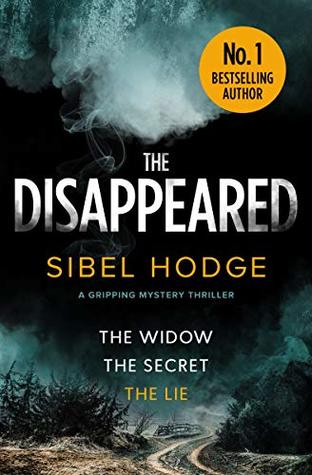
I usually have a single line idea. For example, with The Disappeared it was that Nicole’s husband died in a plane crash in Africa, but ten months later she receives a letter that could only have come from him. So what happened to him out there? Sometimes I can think of an idea and start on it the next week. Sometimes it has to fester for a year or so to be mixed with another idea.


Name some things that has helped your craft as a writer.

Reading. For me, it’s the number one thing that’s helped me understand the craft, to see what I think works or doesn’t work, to understand a writer’s voice that I’m a fan of, and to hone my skills. Then you have to write, write, write! Even if it’s a project that’s never going to be published, it’s all about practice and learning, like anything in life. Also passion is important. If you believe in something so strongly, it will shine through in what you do and motivate you to carry on.


What are the most challenging aspects of writing?

Every single word! Because one word leads to another and another, which eventually becomes a story (hopefully!). Because I’m not a plotter I can’t relax with my work in progress until I have a first draft and I know for sure I’ve got a story to work with.


Challenge sign image with blue sky.jpeg


How do you incorporate pacing in your books?

Chapter length, sentence and paragraph structure, and using multiple points of view are all methods I use to increase or decrease pacing.


How would you define a Psychological thriller?

A story that messes with your head or emphasises the psychological and emotional states of the character(s). I love psychological thrillers with unreliable narrators, where their motivations or emotions are questionable or you don’t know who to trust.


What motivated you to write about them?

With The Disappeared it was a documentary I watched, but, unfortunately, I can’t tell you the name now as it will give away the whole story in advance! But I do mention it in my author note at the end of the novel.

When I’m writing I see the scenes playing out in my head, exactly like watching a film. Often they’re accompanied by actors who I think my characters are like or would portray them perfectly. One movie that was also a backdrop in my mind as I was writing this novel was Blood Diamond. And, yes, Leonardo DiCaprio also featured in there, too, who I admire, not just because he’s a hugely talented actor, but because of his work with The Leonardo DiCaprio Foundation that does amazing things for both wildlife and the environment.

Most of my thrillers are inspired by real life events, and research for The Disappearedincluded reading hundreds of online articles from NGOs, government organisations, humanitarian groups, and investigative journalists. I also read many books on the subjects covered in the novel. When I’m writing, I have notes everywhereβ€”snippets of dialogue, character traits and names, statistics, one sentence reminders of things I need to include, and much more. This book was no different, and I had about a hundred pieces of A4 paper filled with the stuff that I had to, somehow, turn into something readable. Fingers crossed readers will experience something that’s both thrilling and exciting, but also authentic and sympathetic to the subject matter.


In the Disappeared, how did get to know your characters?

I don’t know much about my characters at the beginning of the novel (unless I’m using repeat characters from other books). They always evolve as I’m writing the story.


Disappeared image Sibel Hodge


Who is Nicole Palmer and what motivates her?

She’s an ordinary woman who’s become unexpectedly widowed. A primary school teacher who believes her husband died in a plane crash in Africa ten months before. But she’s also stronger than she thinks, independent, brave, with a fierce motivation to find out what really did happen to her husband when she realises not everything is as it seems. And she’s about to be tested to the limit.


Sibel Hodge


Sibel Hodge image


Award Winning and International Bestselling Author

Website

Twitter

Facebook


Leave a comment below to enter for a chance to win a free e-book ofΒ The Disappeared by Sibel Hodge!Β 


Historical Mysteries with K.B. Owen

KB Owen


INTERVIEW


What do you enjoy most about writing historical mysteries?

I’ve always enjoyed reading historical mysteries, and writing them feels much the same (though more work, haha). I love stepping back into a different time, whether it’s through research or while plotting within the worlds of my characters. I’ve known them all for so long now, after seven books in one series and three books in another.


How important is the setting in historical fiction?

Since the term β€œsetting” indicates both place and time, I would say that setting is absolutely crucial to historical mysteries. A given time period will influence and constrain the main characters of a story in terms of travel, communication, the interpretation of evidence, their comportment while out in society, and so on.


Setting bridge colorful image.jpeg


What is the Pinkerton Agency?

It was the first major private investigation and security agency, founded by Scotsman-turned-American Allan Pinkerton in 1855. The icon is an open eye that reads β€œWe Never Sleep,” hence the term β€œprivate eye.” The Pinkertons were mostly men, and the work was both subtle (acting as covert operatives and infiltrating criminal organizations) and brutish (strike-breaking and security). Pinkertons have broken up criminal syndicates, protected President Lincoln in one early attempt called the Baltimore Plot (this was before the Secret Service guarded presidents), thwarted bank robberies and train robberies…the list goes on.

There were a few women operativesβ€”Kate Warne being the most notable of themβ€”and their assignments were more of the covert variety, which is where my protagonist, Pen Hamilton, comes in.

In Never Sleep: The Chronicle of a Lady Detective #1, describe the nature of Penelope’s relationship with her estranged husband.

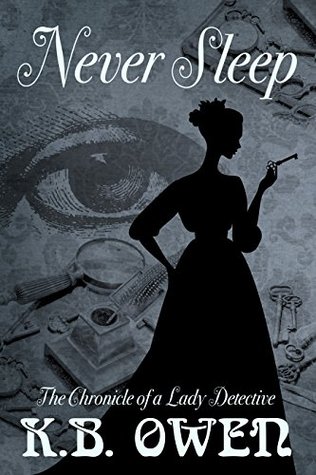
If it were a Facebook designation, it would read: It’s Complicated. As the Chronicles continue, I reveal more of their past, both the good and the bad. Frank Wynch is a recovering alcoholic and that of course makes any relationship difficult. The two love each other after a fashion, but whether they can make it work is another questionβ€”especially on Pen’s side, as she’s quite guarded around him. In Never Sleep, Frank asks Pen to help him with a case. It’s the first time they’ve spent any time together since their separation. She agrees, despite her discomfortβ€”she wants to secure a job in her own right at the Pinkerton Agency, and the successful outcome of the case with Frank would make that possible.

By the way, any interested readers can get a free ebook ofΒ NEVER SLEEP when they sign up for my book news (twice yearly) newsletter:Β Subscribe


Never Sleep KB Owens


In The Mystery of Schroon Lake Inn: the Chronicle of a Lady Detective #2, who is William Pinkerton and what is his role in the story?

William Pinkerton, son of the agency’s founder Allan Pinkerton, runs the Pinkerton Chicago office by this time. He assigns this case (and others) to Pen. He gets a bit more involved this time around, as he comes up with a disguise Pen can use to better infiltrate the inn and keep an eye on the guests. Pen has never posed as a spirit medium before…can she pull it off? She’d have to be truly clairvoyant to know….


In The Case of the Runaway Girl: The Chronicle of a Lady Detective #3, what is Penelope going up against?

Pen is up against quandaries that are both professional and personal in book #3. Professionally, she’s navigating the powerful worlds of big business and back-room politics (with some anarchists thrown in) as she works to keep the two young ladies in her charge safe from unscrupulous people.

Personally, there is the complication of another love interest in the form of the dashing, somewhat-reformed Phillip Kendall. He’s very interested in Pen and she’s drawn to him despite herself, even though she doesn’t fully trust him. Is he truly reformed, or is he out for himself?


Dilemma with block letters image with man.jpeg


What are some interesting historical facts of the 1880’s?

That’s quite an open-ended question, but I’m happy to share a fun backstory I picked up while researching THE CASE OF THE RUNAWAY GIRL. Several scenes from that book take place at the Corcoran Gallery of Art in Washington, DC (now the site of the Renwick Gallery). The building was so grand in its heyday and housed such a wonderful collection it was dubbed β€œThe American Louvre.”

William Corcoran, a very wealthy businessman with southern sympathies, had acquired an extensive art collection and in 1859 commissioned the gallery to be built to house it all. The site was prime real estate, at the corner of Pennsylvania Avenue and 17th Street.

However, when the Civil War started, things got too hot for him, so he decided to move himself and his family to Europe to wait out the war. The Corcoran Gallery was mostly completed by then, though not the interior. The Quartermaster Corps seized Corcoran’s building to use as a supply depot for the Union Army, and proceeded to finish the interior with cheap materials and partition the space into storage rooms and offices.

William Corcoran returned after the war and wanted his gallery back. It was returned to him in 1869, but not the back rent that he claimed he should be paid. He worked with the original architect to have all the modifications ripped out and the gallery completed, which opened in 1874.

If you want to read more, I recommend American Louvre by Charles J. Robertson (D. Giles Ltd, 2015).


What’s next for you?

I just finished book #7 of the Concordia Wells mysteries…UNSEEMLY FATE. By the time this interview comes out, it will be released!


UnseemlyFate.jpg


Beware of rich men bearing gifts…

It’s the fall of 1899 and the new Mrs. David Bradleyβ€”formerly Professor Concordia Wells of Hartford Women’s Collegeβ€”is chafing against the hum-drum routine of domestic life.

That routine is soon disrupted, however, by the return to Hartford of the long-hated but quite rich patriarch of her husband’s family, Isaiah Symond. His belated wedding gift is a rare catalogue by artist/poet William Blake, to be exhibited in the college’s antiquities gallery.

But when Symond is discovered in the gallery with his head bashed in and the catalogue gone, suspicion quickly turns from a hypothetical thief to the inheritors of Symond’s millionsβ€”Concordia’s own in-laws. She’s convinced of their innocence, but the alternatives are equally distressing. The gallery curator whom she’s known for years? The school’s beloved handyman?

Once again, unseemly fate propels Concordia into sleuthing, but she should know by now that unearthing bitter grudges and long-protected secrets to expose a murderer may land her in a fight for her life.


Available May 1st at these online retailers:

Amazon:Β Amazon

BN, Apple, Kobo:Β books2read.com


KB Owen


About K.B. Owen


K.B. taught college English for nearly two decades at universities in Connecticut and Washington, DC, and holds a doctorate in 19th century British literature.

A mystery lover ever since she can remember, she drew upon her teaching experiences to create her amateur sleuth, Professor Concordia Wells. There are seven books in the Concordia Wells Mysteries so far.

K.B. also has another series, about the adventures of a lady Pinkerton in the 1880s, entitled Chronicles of a Lady Detective. There are three novellas/novels in the Lady Detective series so far.


AmazonΒ |Β GoodreadsΒ |Β TwitterΒ |Β Website


Author Steven Konkoly Discusses the new Ryan Decker Series

The Rescue image


Former CIA operative turned mercenary for hire Ryan Decker’s specialty is rescuing kidnap victims. Hired by an influential US senator to liberate his daughter from a human-trafficking ring, Decker never anticipated sabotage or that the assault could go so disastrously wrong. The hostage is dead. His team is wiped out, and so are their families, including Decker’s own wife and sonβ€”eliminated one by one by the Russian mafia. And he’s survived to take the fall.

When he’s inexplicably freed soon into a ten-year sentence in federal prison, Decker suspects another setup. And private investigator Harlow Mackenzie knows he’s right. She has evidence that a power greater than the Russian mob was behind the raid that ruined Decker’s life.

The next move in a nationwide cat-and-mouse game of high-level sedition is up to them. Fueled by revenge and an obsession to clear his name, Decker has only one mission: to destroy a growing conspiracy before it’s too late.


AmazonΒ |Β GoodreadsΒ |Β Website


Conspiracy letters on wooden background image.jpeg


Interview with Steven Konkoly


What kind of person is Ryan Decker?

Ryan Decker is the quiet professional type. Cautious, meticulous and constantly evaluating his circumstances/situation. He’s a dedicated family guy (or was, before what happened to his family), humorous in a dry and sarcastic way and loyal.


What kind of skills does he bring to the table that make him a hostage rescue operator?

Decker was a former U.S. Marine Corps field intelligence officer, who served overseas in various hot spots and conflicts. After the Marine Corps, he spent a few years in the CIA’s Global Response Staff (GRS), protecting overseas CIA assets, guarding sensitive CIA run facilities and participating in highly classified CIA missions. He got the idea to form the World Recovery Group (his VIP hostage rescue/recovery firm) while working for GRS. He met Brad Pierce, his main partner at WRG, and one of the main collaborators/recurring characters in the Decker books, in GRS.


Marine Corp flag image.jpeg


Who is the US Senator who hires Decker and what role does she play in the story?

Senator Margaret Steele is a long standing senator from Maryland, whose daughter is kidnapped (backstory for book 1) and vanished. Another senator recommends that she hire Ryan Decker’s firm to find his daughter…and the rescue attempt goes terribly wrong.


What are Decker’s strongest traits that will help him survive the odds against him?

While Decker is a meticulous planner, he’s also an excellent improviser, constantly assessing and adjusting his plan. This saves him in a number of situations. He’s a good judge of character and accepts help when he needs it. He’s not above leaning on associates and friends to get a job done or survive a situation. He’s also a quick decision maker, which allows him to maintain a quick tempo during missions…his enemies have a hard time keeping up.


What did you enjoy most about writing this story?

I thoroughly enjoyed the revenge aspect of the story, and rebuilding Decker from scratch. At the start of the story, he’s lost everything…building him up again was one of the most satisfying aspects of the story. Equally as fun…assembling a new crew around Decker. He’s clearly up against nearly insurmountable odds from the outset of the book, which required him to accept help and seek help from the most unlikely people.


What was the most challenging?

Building the relationship between Ryan Decker and Harlow Mackenzie. Getting that right and not rushing their relationship took some rewrites.


What’s next?

Book 2, THE RAID. Release date is October 5. THE RAID will bring the team back together to unravel another conspiracy and tie up some loose ends from Book 1.


Steven Konkoly image


Steven is the bestselling author of ten novels and several novellas, including a commissioned trilogy of novellas based on the popular Wayward Pines series. His canon of work includes the popular Black Flagged Series, a gritty, no-holds barred covert operations and espionage saga; The Perseid Collapse series, a post-apocalyptic thriller epic chronicling the events surrounding an inconceivable attack on the United States; and The Fractured State series, a near future, dystopian thriller trilogy set in the drought ravaged southwest

You can contact Steven directly by email (stevekonkoly@striblingmedia.com) or through his blog

(www.stevenkonkoly.com).


Marine Corp medal image.jpg


Writing Crime Fiction with Gretta Mulrooney

Crime word on paper typewriter image.jpeg


Interview with Gretta Mulrooney


*Why do you write crime fiction?


I write crime fiction because I’m fascinated by motive, secrets, guilt, revenge and betrayal. The genre allows me to cover all kinds of social and cultural issues. Β Psychopaths and serial killers don’t interest me. I prefer domestic murders involving people driven to breaking point by rage and disappointment. After all, most people are killed by family members. I like the past breaking into the present and taking revenge – a dish much better eaten cold. A number of my novels have female protagonists and killers. I’m tired of reading about male crime towards women and the world is full enough of that in real life. I reckon that women can be more subtle and strategic in planning to kill and in playing the long game, so you’ll find that theme in some of my books. My crime novels to date have featured a male private detective because I like playing with that genre. I’m now writing a novel with a female police inspector. I love reader feedback and try to respond to everyone who gets in touch.


*What fascinates you about motive, secrets, guilt, revenge etc.?

I’ve studied psychology and I enjoy considering what propels emotions and actions when writing crime. Guilt and anger are often two sides of the same coin and I like dissecting how these combined emotions can lead to violence and murder. Also, I like to track how every action has a consequence, particularly when the past comes back to bite a character.


Close up of angry man with steam coming out from his ears


*What’s your writing process like?

I’d call my writing process organic. I do very little planning. I have the kernel of a plot, create the characters and see where they lead. I often don’t decide on the perpetrator until I’m near the end. Sometimes I’ve changed my mind about who did it at the last minute.


*What can you tell us about what you’re currently working on?

I’m currently working on my seventh novel about private detective Tyrone Swift. I’m also working on an idea for a novel about a female police detective. I’m having fun with that because I’m creating a fictitious town.


Gretta Mulrooney Author Photo png


AUTHOR BIO

I was born and educated in London, of Irish parents. I studied for a degree in English Literature at the University of Ulster, Magee college in Derry. I have worked in education and social care.

I started writing in my thirties and I published four books for children and teenagers with Poolbeg Press, Dublin; A Can of Worms, A Nest of Vipers, A Den of Thieves and I Love You-Te Quiero. These books are available on Amazon.

I have published five literary fiction novels.

Araby and Marble Heart were published by Harper Collins to critical acclaim. They have been translated into Dutch and Spanish. Β These books are available on Amazon. They are being reissued in May 2016 by Fourth Estate as Kindle and paperbacks.

Fire and Ice, Out of The Blue and The Apple of Her Eye were published by Robert Hale. These books are available on Amazon.

Out of The Blue was published by Joffe Books as an e book and paperback in February 2016 and is available on Amazon.

Lost Child was published by Joffe Books as an e book and paperback in March 2016 and is available on Amazon. (This was previously published as Fire and Ice by Robert Hale.)

Coming of Age was published by Joffe Books as a e book and paperback in April 2016 and is available on Amazon. (This was previously published as The Apple of Her Eye by Robert Hale.)

I have always been an avid reader of crime fiction and psychological thrillers. I have started a series of crime novels featuring charismatic private detective Tyrone Swift.

The Lady Vanished was published as an e book and paperback by Joffe Books in December 2015 and is available on Amazon.

Blood Secrets, the second novel featuring private detective Tyrone Swift, was published as e book and paperback in spring 2016 and is available on Amazon.

Two Lovers, Six Deaths, the third Tyrone Swift novel, was published as an e book and paperback in December 2016 by Joffe Books and is available on Amazon.

Watching You, the fourth Tyrone Swift novel, was published as an e book and paperback in June 2017 by Joffe Books and is available on Amazon.

Low Lake, the fifth Tyrone Swift novel, was published as an e book and paperback in March 2018 by Joffe Books and is available on Amazon.

Bound By Lies is a boxset trilogy of the first three Β novels in the Tyrone Swift series. It was published as an e book and paperback in June 2017 by Joffe Books and is available on Amazon.


YOUR LAST LIE cover


AmazonΒ |Β GoodreadsΒ |Β Website


Writing Historical Mystery with Rhys Bowen

Rhys in LA 2006


Interview with Rhys Bowen


I had the wonderful opportunity of interviewing historical mystery author Rhys Bowen regarding her writing, and more specifically, the 12th book of the Royal Spyness series –Β Four Funerals and Maybe a Wedding.


Four Funerals and Maybe a Wedding ebook image


In the days leading up to her wedding to Darcy O’Mara, Lady Georgiana Rannoch takes on the responsibilities of a grand estate, but proving she can run a household just may be the death of her in the new Royal Spyness Mystery from theΒ New York TimesΒ bestselling author ofΒ On Her Majesty’s Frightfully Secret Service.

If only Darcy and I had eloped! What I thought would be a simple wedding has been transformed into a grand affair, thanks to the attendance of the queen, who has offered up the princesses as bridesmaids. Silly me! I thought that withdrawing from the royal line of succession would simplify my life. But before Darcy and I tie the knot in front of queen and country, we have to find a place to live as man and wife…

House hunting turns out to be a pretty grim affair. Just as we start to lose hope, my globetrotting godfather offers us his fully staffed country estate. Mistress of Eynsleigh I shall be! With Darcy off in parts unknown, I head to Eynsleigh alone, only to have my hopes dashed. The grounds are in disarray and the small staff is suspiciously incompetent. Not to mention the gas tap leak in my bedroom, which I can only imagine was an attempt on my life. Something rotten is afootβ€”and bringing the place up to snuff may put me six feet under before I even get a chance to walk down the aisle…


AmazonΒ |Β GoodreadsΒ |Β Audible


AUDIOBOOK REVIEW


Four Funerals and Maybe a Wedding is book #12 in the Royal Spyness series set in 1930’s London. An absolute blast to read and very entertaining on many levels. Told in the point of view of Lady Victoria Georgiana Rannoch, the story unravels seamlessly until the very end. I was very captivated by the humorous tone and style of writing by Rhys Bowen. I listened to the audiobook version and laughed out loud several times! The ability to capture each character within the time period was very impressive. Lady Georgiana, affectionately “Georgy” is so adorable as she plans for her wedding, prepares a new home, and attempts to solve a mysterious murder. This review is based on the audiobook version with exceptional new series narrator Jasmine Blackborow.


INTERVIEW


What do you love most about writing history?

Rhys: I love writing about the 1930’s in the Royal Spyness series because it was such a fascinating time, poised between two world wars. A time of great contrasts, haves and have-nots, Fascism and Communism fighting for control of Europe and of course my delicious Royal scandals. My big stand alone novels take place in WWI and II, times of heightened emotion, of good vs evil and the comforting knowledge that good prevailed.

And for historical mysteries all those lovely motives: I love Another but I am not free etc!


“History will be kind to me; for I intend to write it.” – Winston Churchill


Do you have a certain method for researching a story?

Rhys: it all starts with a sense of place. I do my background reading of the true historical framework then I have to go to the place and experience it myself


Research text on keyboard button


How important is setting for historical fiction writers?

Rhys: for me setting drives many of my stories. NAUGHTY IN NICE. TIME OF FOG AND FIRE. Etc etc

And it’s important to get every detail right. I read biographies, accounts of battles, diaries, study old maps


What’s the historical context behind Four Funerals and Maybe a Wedding?

Rhys: Β it was high time that my protagonist got married. It is summer 1935 and as she goes to Ascot with Queen Mary and King George she realizes the king does not look well. He will, of course, die that winter. And I’m looking forward to stories when the Prince of Wales becomes king.


Wedding engagement pic


Who is Lady Georgiana Rannoch’s godfather and what role does he play in the story?

He is Sir Hubert Anstruther, a mountaineer and explorer. Her mother was once married to him and she has fond memories of the childhood days at his house. He was fond of her and wanted to adopt her. She was one of three heirs but the other two came to bad ends in the first book of the series,


What did inheriting a country estate detail back then?

Rhys: she hasn’t inherited it as he is still alive. This is lucky as if Sir Hubert had died she’d have to pay a fortune in death duties ( estate taxes)

I imagine this is an informal arrangement between them with the understanding that the estate will be legally hers when he dies.


west dean


Describe the emotional state of Lady Georgiana and Darcy O’Mara as they prepare for marriage.

Goodness, they are British! They don’t have emotional states. They just get on with things! Β Actually Georgie in naturally excited. Darcy seems to be taking it in his stride. Georgie can’t believe that everything is going right for once… This is before the various roadblocks appear.


What were weddings like in that time period?

Much simpler than now. An afternoon ceremony, then cake, champagne, a few speeches and the couple drives off on their honeymoon.


Champagne wedding


What’s next for you?

I have just published another stand-alone,Β THE VICTORY GARDEN.


Victory Garden image


IN August another Georgie novel, this time set in Kenya. It’s calledΒ LOVE AND DEATH AMONG THE CHEETAHS.Β Pre-order now and available August 6, 2019.Β 

AND I’m just finishing a book about Queen Victoria.

Not idle!


Rhys in LA 2006


“I’m a New York Times bestselling mystery author, winner of both Agatha and Anthony awards for my Molly Murphy mysteries, set in 1902 New York City.

I have recently published two internationally bestselling WWII novels, one of them a #1 Kindle bestseller, the other selling almost half a million copies to date.

I also write the Agatha-winning Royal Spyness series, about the British royal family in the 1930s. It’s lighter, sexier, funnier, wicked satire. It was voted by readers as best mystery series one year.

I am also known for my Constable Evans books, set in North Wales, and for my award-winning short stories. “

I was born and raised in England but currently divide my time between California and Arizona where I go to escape from the harsh California winters

When I am not writing I love to travel, sing, hike, play my Celtic harp.


WebsiteΒ |Β AmazonΒ |Β GoodreadsΒ |Β Twitter


Interview with William L. Meyers

William L. Myers Jr image


William L. Myers Jr. – A Killer’s Alibi – Book Review & Interview


A Killers Alibi image


For attorney Mick McFarland, the evidence is damning. And so are the family secrets in this twisty legal thriller from the Amazon Charts bestselling author ofΒ A Criminal Defense.

When crime lord Jimmy Nunzio is caught, knife in hand, over the body of his daughter’s lover and his own archenemy, he turns to Mick McFarland to take up his defense. Usually the courtroom puppeteer, McFarland quickly finds himself at the end of Nunzio’s strings. Struggling to find grounds for a not-guilty verdict on behalf of a well-known killer, Mick is hamstrung by Nunzio’s refusal to tell him what really happened.

On the other side of the law, Mick’s wife, Piper, is working to free Darlene Dowd, a young woman sentenced to life in prison for her sexually abusive father’s violent death. But the jury that convicted Darlene heard only part of the truth, and Piper will do anything to reveal the rest and prove Darlene’s innocence.

As Mick finds himself in the middle of a mob war, Piper delves deeper into Darlene’s past. Both will discover dark secrets that link these fathers and daughters–some that protect, some that destroy, and some that can’t stay hidden forever. No matter the risk.


AmazonΒ |Β GoodreadsΒ |Β Audible


BOOK REVIEW


This is top notch for legal thrillers and crime drama. Never a dull moment. The ride begins from the first scene when Philly crime boss Jimmy Nunzio is caught red handed with the dead body of his daughter’s lover. Criminal defense attorney Mick McFarland is never really on his feet on this one. The case blindsides him from the beginning and never lets up. Then there’s Mick’s wife, Piper who investigates an innocence project case to free a young woman from a murder case. Two cases. Two dire situations. A legal thriller laced with tension, an intricate plot, a full cast of characters–But at its core it’s about one thing, family.


INTERVIEW


*What kind of person is attorney Mick McFarland that made him your protagonist?

Β Β Β Β Β Β Β Β Β Β Β  In crafting Mick, I set out to build a character who is basically a good guy, who wants right to prevail over wrong, but who, in the pursuit of right, will do whatever is necessary, including things that are wrong. As an attorney, Mick is a thinker, a planner, and very Machiavellian. He enjoys the β€œgame” and excels at it.


Lawyer at work image sitting.jpeg


*What can you tell us about the kind of case Mick is undertaking?

Β Β Β Β Β Β Β Β Β Β Β  Mick is in an interesting situation. His client is Philly crime lord Jimmy Nunzioβ€”a man used to calling the shots. A Machiavellian manipulator. A man like Mick himself in many ways. What this means for Mick is that he isn’t the alpha dog as he is with most of his clients, and he finds himself having to dance with Jimmy Nunzio, for control of the case.


Moral dilemma ahead signage


*What is your method of creating characters and how do you bring out their flaws?

Β Β Β Β Β Β Β Β Β Β Β  I create characters by outlining them only in very general terms and then placing them into the storyβ€”putting them under stress–and watching how their flaws appear. I remember reading once that stress and conflict reveal character; you only find out core character by putting someone to the test. So, I make sure that my protagonists, and my antagonists, too, are under real threat.


*Tell us about Mick’s wife, Piper.

Β Β Β Β Β Β Β Β Β Β Β  Piper’s evolution is an interesting one. When I wrote, β€œA Criminal Defense,” the first book in β€œThe Philadelphia Legal Series,” I started out with the plan simply to make a two-dimensional β€œwife” character for the main protagonist, Mick. But whenever I wrote Piper into a scene, she asked for more, she told me β€œI have more to contribute here.” By the end of the book, Piper was a fully-formed character with her own agenda, secrets and fears. In β€œA Killer’s Alibi,” Piper plays an even more important roleβ€”as a driving force behind one of the two main plot lines. She really comes into her own. (And, spoiler alert, in the fourth book, which I’m finishing now (in which Mick is imprisoned on charges or murder), Piper becomes THE driving force in Mick’s defense team.


A Killers Alibi image


*Is the innocence project she’s involved with commonplace in law firms today? Would her official position be an investigative attorney?

Β Β Β Β Β Β Β Β Β Β Β  Most law firms which do innocence project work do so under the auspices of, for example, the Pennsylvania Innocence Project. Larger law firms do have pro bono practices and some have attorneys devoted solely to pro bono work.


“No man knows the value of innocence and integrity but he who has lost them.” – William Godwin


*What can you tell us about the kind of case Piper is taking?

Β Β Β Β Β Β Β Β Β Β Β  Piper is leading the charge on behalf of Darlene Dowd, a young woman who was convicted of killing her sexually abusive father fifteen years earlier. Piper learns there is exculpatory evidence the jury never heard and she has to go on a hunting expedition to find the woman who has that evidence. But the woman has secrets of her own, and has been in hiding for years. It takes all of Piper’s will and resourcefulness to win the woman over and see that Darlene gets a fair hearing in court. But nothing is black and white in my books and Piper has to pay a price.


Evidence


*Now for one of my favorite questions. What is justice?

Β Β Β Β Β Β Β Β Β Β Β  Justice is like pornography: difficult to define but you know it when you see it. Β When something happens to a character (good or bad) and it feels right to you, that’s justice. Β The character, of course, may disagree with youβ€” fictional characters, like real people, believe they are good guys, whether they are or aren’t. Along these lines, a word to the wise: if someday you find yourself standing before St. Peter, the one thing you should never say is I want what’s coming to me.


*What is a jury consultant?

A jury consultant:

A jury consultant is an expert hired by an attorney to help the attorney pick a jury favorable to his side. The jury consultant helps the attorney with questions to ask potential jurors and also helps to create a profile of the type of juror the consultant believes would be most favorable to the attorney’s client. A jury consultant also counsels the attorney on how to present the case, and how to conduct himself or herself in court.


Jury image courtroom


*In Piper’s case, how many appeals are permitted for someone on death row?

The number of appeals:

There are two avenues to appeal a conviction. One is simply a direct appeal of the jury verdict. Here, you’re saying the judge committed errors in allowing prejudicial evidence that should not have been allowed into the record. Or you can argue the judge erroneously disallowed evidence that would have been favorable to the defendant that should have been allowed. Another branch of appeal is done through the Post-Conviction Relief Act, which allows a defendant to petition for a new trial based upon newly-discovered evidence.


William L. Myers Jr image


William L. Myers, Jr. is the No. 6 best-selling author for Amazon Kindle in 2017 for his debut novel, A Criminal Defense. That was the first in what has become the Philadelphia Legal Series. The third book in that series, A Killers Alibi debuts February 19, 2019.

A Killer’s Alibi has had rave early reviews including New York Times Bestselling author, Bill Lasherβ€”

β€œWilliam Myers’ riveting new novel is not just a crackerjack legal thriller, it is a wrenching portrayal of a whole range of farther-daughter relations, showing how they can damage, how they can nourish, how they go dangerously off track. A story not to be missed.”

Born in 1958 into a blue-collar family, Mr. Myers inherited a work-ethic that propelled him through college and into the Ivy League at The University of Pennsylvania School of Law. From there, Mr. Myers started his legal career in a Philadelphia-based mega defense firm. After ten years defending corporate America, he realized his heart wasn’t in it. So, with his career on the fast track to success–he gave it all up and started his own firm. It was time to start fighting for the common guy.

That was twenty-five years ago and since then, he has focused on representing railroad employees and other honest, hard-working people who have been injured by others. He has represented thousands of clients in his tenure and has become a highly-regarded litigation attorney up and down the Eastern Seaboard.


AmazonΒ |Β GoodreadsΒ |Β TwitterΒ |Β Website


Blog Tour: Restorations by Charles Strickler

Restorations image


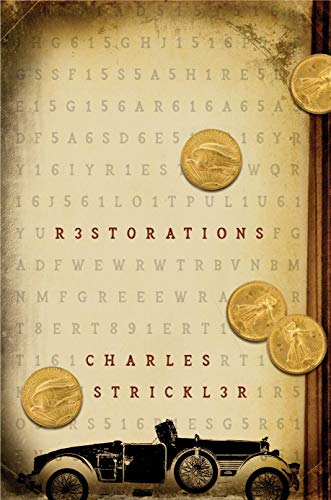
When Miles West discovers a mysterious treasure in an old car he acquires, he thinks his broken life is on the mend.Β But the 1928 Stutz Black Hawk Boat Tail Roadster contains a secret that has remained hidden for almost ninety years, left there by the infamous bank robber “Lefty” Webber. Jewels, old gold pieces and a coded journal force Miles to dig into the past. With the assistance of the resourceful Bramley Ann Fairchild, West sets out on an adrenaline-fueled adventure. They must evade ruthless Mafia boss Carlo Bello, who seeks to acquire the car and the treasure for himself, no matter the cost. Will West unravel the decades old mystery, rescue his friend, and help a man restore his family name? Or will he simply become another victim of the Roadster’s murky history?


AmazonΒ |Β GoodreadsΒ |Β B&N


Stutz-Black-Hawk-Boat-Tail 1928


Restorations by Charles Strickler is an excellent story and a well written mystery all centered on an old 1928 Stutz Blackhawk Boat tail roadster. But this is no ordinary classic. This Stutz is a modified mob car with secret compartments housing a decades old treasure and coded journal linked to the mafia.Β  I loved the simple yet resilient Miles West and his assistant Bramley. I found myself transported into their lives in the peaceful countryside. Well, sort of peaceful.


four wooden stars for christmas


Charles Strickler


About the Author

Charles Strickler is a native Virginian. He graduated from Virginia Tech where he also met his future bride Mary. An entrepreneur with work experiences that range from the barnyard to the Board Room, Charles brings a unique perspective to his mysteries. Like many others, the only mystery that Charles does not like is Polycystic Kidney Disease. PKD is a genetic disease affecting 200,000 people per year. While there is no cure yet, the PKD Foundation continues to fund promising research to discover treatments that can slow the progression and eventually end PKD.