The Writer’s Digest Podcast: Old and New Technology with Elizabeth Sims

Podcast Theme Letterpress Word on Wood Background


The Writer’s Digest Podcast with Gabriela Pereira


Episode 11: Writing Technology Old and New with Crime and Mystery writer Elizabeth Sims


This podcast originally appears on Writer’s Digest December 7, 2018. Duration: 51 min.


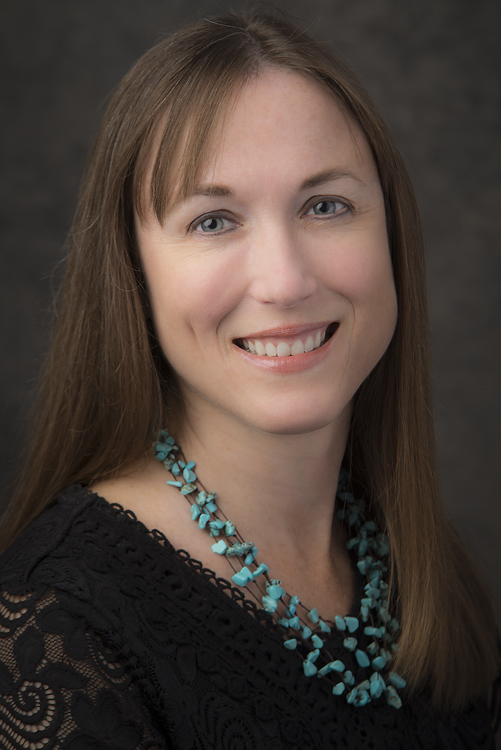
elizabeth sims image

Photo credit: Thomas Bender


Elizabeth Sims is an American author and writing authority. Her novels include the Lambda Award-winning Lillian Byrd crime series and the Rita Farmer mystery series, and she writes frequently for Writer’s Digest magazine, where she is a Contributing Editor.

Booklist calls her work “crime fiction as smart as it is compelling,” and Crimespree magazine praises her “strong voice and wonderful characters.”
Are you a writer too—or would you like to be one? If so, you might find inspiration in Elizabeth’s book You’ve Got a Book in You: A Stress-Free Guide to Writing the Book of Your Dreams, published by Writer’s Digest Books.

Elizabeth earned degrees in English from Michigan State University and Wayne State University, where she won the Tompkins Award for graduate fiction. She has worked as a reporter, editor, photographer, technical writer, bookseller, street busker, ranch hand, corporate executive, and symphonic percussionist. Elizabeth belongs to several literary societies as well as American Mensa.

To learn more about her and to view a full list of her available works, including free excerpts and book discussion guides, visit www.elizabethsims.com
There you can get in touch and / or join her newsgroup.


Writer’s Digest | Elizabeth Sims


girl with headphones


Why You Need to be Publishing Audiobooks – With Mark Dawson, James Blanch, and Tina Dietz

Books and headphones. Concept of listening to audiobooks.


Why You Need to be Publishing Audiobooks


Highlights

  • The importance of creativity in every type of business
  • How creativity makes us more productive
  • The different approaches to audiobooks by fiction and non-fiction authors
  • Thoughts on narrating your book yourself
  • The range of cost for producing an audiobook, including what you can expect to pay a narrator
  • Auditioning narrators to find the right voice for your book
  • Providing character information to narrators to find a good fit
  • Reading your book out loud yourself to get a sense of your characters’ voices
  • The three reasons for starting a podcast


This podcast originally appears on selfpublishingformula.com Sept. 14, 2018. Duration 50 min. Download full transcript: Here


Tina Dietz image


Tina Dietz: Website


Attractive young man wearing glasses casual clothes.Man sitting in vintage armchair modern loft studio and relaxing whith headphone music.Panoramic windows on blurred background.Horizontal.


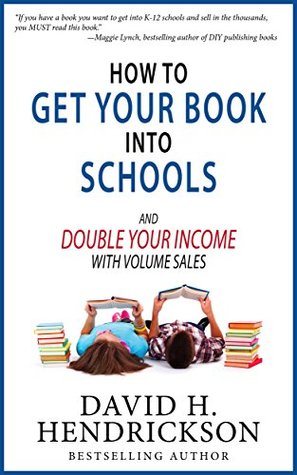
How To Get Your Book Into Schools And Double Your Income With Volume Sales With Dave Hendrickson

happy student girl or woman with books in library


Link to full transcript


How to get your book into schools image


Amazon | Goodreads


Have you ever dreamed of an entire school reading your book?

 
Would you like to double (or more!) your writing income?

 
This book shows you how.


Drawing from his own first-hand experience, David H. Hendrickson leads you through every step of the process. He highlights the critical pitfalls to avoid, and points out ways to maximize your profit when a school adopts your book.

With advice and insights that are adaptable to getting your book in front of audiences ranging from middle grade to high school to college, and even to corporations, this book is for you!

 
“If you have a book you want to get into K-12 schools and sell in the thousands,
you MUST read this book.”
—Maggie Lynch, bestselling author, Career Author Secrets series


www.hendricksonwriter.com


How To Write Emotion & Depth Of Character With Becca Puglisi

Emotions Happiness Sadess Anger Love Word Collage


People will forget what you said and did, but they won’t forget how you made them feel.” – Maya Angelou


Joanna Penn interviews Becca Puglisi on the Creative Penn Podcast


This podcast originally appears on The Creative Penn Feb. 12, 2018

Duration: 1 hr 7min


crazy


“This is far more than a brilliant, thorough, insightful and unique thesaurus, this is the best primer on story — and what REALLY hooks and holds readers– that I have ever read.”  ~ Lisa Cron, bestselling author of Wired For Story & Story Genius


Emotional Wound Thesaurus image


Amazon | Goodreads


Readers connect to characters with depth, ones who have experienced life’s ups and downs. To deliver key players that are both realistic and compelling, writers must know them intimately—not only who they are in the present story, but also what made them that way. Of all the formative experiences in a character’s past, none are more destructive than emotional wounds. The aftershocks of trauma can change who they are, alter what they believe, and sabotage their ability to achieve meaningful goals, all of which will affect the trajectory of your story.

Identifying the backstory wound is crucial to understanding how it will shape your character’s behavior, and The Emotional Wound Thesaurus can help. Inside, you’ll find:

•A database of traumatic situations common to the human experience
•An in-depth study on a wound’s impact, including the fears, lies, personality shifts, and dysfunctional behaviors that can arise from different painful events
•An extensive analysis of character arc and how the wound and any resulting unmet needs fit into it
•Techniques on how to show the past experience to readers in a way that is both engaging and revelatory while avoiding the pitfalls of info dumps and telling
•A showcase of popular characters and how their traumatic experiences reshaped them, leading to very specific story goals
•A Backstory Wound Profile tool that will enable you to document your characters’ negative past experiences and the aftereffects

Root your characters in reality by giving them an authentic wound that causes difficulties and prompts them to strive for inner growth to overcome it. With its easy-to-read format and over 100 entries packed with information, The Emotional Wound Thesaurus is a crash course in psychology for creating characters that feel incredibly real to readers.


Becca-Puglisi-300x300


Becca Puglisi is a YA fantasy and historical fiction writer who enjoys slurping copious amounts of Mountain Dew and snarfing snacks that have no nutritional value. She has always enjoyed contemplating the What if? scenario, which served her well in south Florida during hurricane season and will come in handy now that she’s moved to New York and must somehow survive winter.

Becca Puglisi is a speaker, writing coach, and bestselling author of The Emotion Thesaurus. She is passionate about learning and sharing her knowledge with others through her Writers Helping Writers website and via her newest endeavor: One Stop For Writers—a powerhouse online library like no other, filled with description and brain-storming tools to help writers elevate their storytelling. You can find Becca online at both of these spots, as well as on Facebook and Twitter.


Goodreads | Website | Twitters | Amazon


Getting Twitter To Fly for Authors – With Ian Sutherland

Advanced Twitter for authors


Amazon | Goodreads


SPF – Self Publishing Podcast 114 – Getting Twitter To Fly for Authors – With Ian Sutherland


This podcast originally aired on April 13, 2018 – on www.selfpublishing.com Duration: 35 min.

Get the Full Transcript


Ian Sutherland image


Ian Sutherland was brought up in the Outer Hebrides, idyllic remote islands off the west coast of Scotland. In an effort to escape the monotonous miles of heather, bracken and wild sheep, Ian read avidly, dreaming of one day arriving in a big city like London. And then, at the tender age of 12 he was unexpectedly uprooted to Peckham, an inner city suburb of South-East London. Ian quickly discovered that the real London was a damn sight more gritty and violent than the version in his books and shown on tv. Undeterred, Ian did what he did best, and buried his head in books, dreaming of other places to escape to.

Roll forward some years, and Ian can still be found with his head in a book. Or, given that he enjoyed a successful career in the IT industry, an eBook Reader. And now, having traveled a fair bit of the globe in person and even more of it via the Internet, Ian lives with his wife and two daughters in a small idyllic village, surrounded by green fields, copses and the occasional sheep, yet located just outside of the London he finally came to love.

Here, he writes gritty, violent crime thrillers full of well-rounded characters, set in and around London and its suburbs. His stories also feature the online world that most of us jump into blindly each day, but Ian exposes its underbelly and dramatically illustrates how dangerous the internet can be for the unwary.


Headphones plugged into phone image


Crime Writing Conferences by Christina Hoag

Directions choice image


Conferences: Where to go? Which to Choose?
By Christina Hoag


For crime fiction authors, the good news is that there are plenty of  writing conferences. The bad news is that there are plenty of writing conferences. It can be hard to choose the best investment for your money and time.

I decided not to choose. I just went to a slew of them, although not all by any means. Not only did I have a great time at every one, I found value in all of them. Each offers something different, and from each I took away things I didn’t know before, as well as a host of new friends. Frankly for me, networking is one of the best reasons for attending conferences. I love meeting other writers and discussing writing, publishing, reading. These are my peeps!

The two biggies are Bouchercon, held in a different city every year, and Thrillerfest, held in New York City every year. Both get well over 1,000 attendees. I chose to attend Thrillerfest this year, leaving Bouchercon for 2018. Thrillerfest is the most expensive con of the bunch, plus Manhattan is a pricey destination, which is something to keep in mind. But this is the place for networking and there’s plenty of opportunity to mingle with the biggest names in the business from Lee Child to Lisa Gardner. Thrillerfest also hosts a separate event, Pitchfest, which attracts a ton of top agents and editors, a key advantage to being in the center of the publishing industry.

There are also a host of smaller regional conferences, usually sponsored by local chapters of the Mystery Writers of America and/or Sisters in Crime. These typically attract 200-300 attendees, including published and aspiring authors as well as fans, and cost in the range of $200 to $350. Most offer authors a chance to participate as panelists and to sell and sign their books in the con bookshop. This makes them great promotional vehicles if you’ve got a new book out or are simply seeking exposure.

However, cons have different requirements for panelists so that may affect where you choose to go if promotion is your goal. Sleuthfest, held around Florida, for example, requires panelists to be published by approved publishers. Killer Nashville is friendly to independent and pre-published writers while New England Crimebake in Boston does not allow authors to request panels and selects its own. Magna cum Murder in Indianapolis, California Crime Writers Conference, held biannually in Los Angeles, and Left Coast Crime, offered in a different western city every year, generally offer authors panel spots.

Another factor to look at is the con’s subgenre emphasis. Malice Domestic, held annually in Bethesda, Maryland, is geared to cozies and traditional mysteries while Thrillerfest is as its name suggests.

Finally, you may choose a particular conference simply because it’s in a place you want to visit or where you have friends or family. Whichever conference you choose, you can save by planning well in advance and taking advantage of early bird prices, which usually start the year before. Another cost-cutting tip: you can stay in less expensive hotels, or AirBnBs, or with friends and Uber back and forth. I’m already looking forward to my next conference in 2018!

Christina Hoag is a former journalist for the Miami Herald and Associated Press who’s been threatened by a murderer’s girlfriend, had her laptop searched by Colombian guerrillas and phone tapped in Venezuela, hidden under a car to evade Guatemalan soldiers, posed as a nun to get inside a Caracas jail, interviewed gang members, bank robbers, thieves and thugs in prisons, shantytowns and slums, not to forget billionaires and presidents, some of whom fall into the previous categories. Her noir crime novel Skin of Tattoos (Martin Brown Publishing, 2016) was a finalist for the Silver Falchion Award for suspense, while her thriller Girl on the Brink (Fire and Ice YA, 2016) was named to Suspense Magazine’s Best of 2016 YA list. She also writes nonfiction, co-authoring Peace in the Hood: Working with Gang Members to End the Violence (Turner Publishing, 2014. Christina makes her home in Los Angeles and lives on the web at www.christinahoag.com.


Her novel Skin of Tattoos is available at Amazon


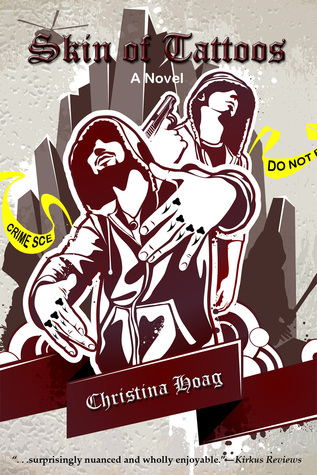
Skin of tattoes


When Cyco Lokos gang member Magdaleno (Mags) Argueta comes home to Los Angeles after serving prison time for a robbery, he wants nothing more than to start a new life. However, there’s one obstacle he has to overcome first…his old life.

Mags tries to let go of his bitterness–he was framed by Rico, the new leader of the Cyco Lokos–and stay out of gang life for the sake of his Salvadoran immigrant family and his girlfriend Paloma, but trying to integrate into society after a stint in prison doesn’t come easily. Faced with low job prospects and Rico’s demands to help the Cyco Lokos make money, a broke and disillusioned Mags makes the only choice he can. However, Mags soon discovers that loyalties have shifted, including his, and being a part of the Cyco Lokos with Rico in charge is far more dangerous and uncertain than it used to be. With his sister pregnant by a rival gang member and his own relationship with Paloma, his best friend’s sister, a violation of gang code, Mags becomes caught in a web of secrets, revenge, lies, and murder that might ultimately cost him everything.


Amazon | Goodreads | My review


How to Harness the Difference between Plot & Story with Steve Alcorn

share your story. Coffee mug and wooden letters on wooden background.


How to Harness the Difference between Plot and Story with Steve Alcorn


Original air date Feb. 15, 2018 TCK Publishing Epi. 176

Duration 32 min

Full Transcript


Steve Alcorn Author pic


Steve Alcorn is the author of a wide range of fiction and nonfiction works. His novels include the mystery A Matter of Justice, the historical novel Everything In Its Path, and the romance Ring of Diamonds (under the pseudonym Sharon Stevens). His best-selling history of the Imagineers who built Epcot, Building a Better Mouse, was co-written with author David Green.

During the past decade Steve has helped more than 30,000 students turn their story ideas into reality, and many of his students have published novels they developed in his classes, taught through http://writingacademy.com

When he isn’t writing and teaching, Steve is the CEO of Alcorn McBride Inc., a leading theme park design company.


Headphones brown nice

What Is Suspense by Crime Writer Sue Coletta

Suspense film. Serie géneros cinematográficos.


What is Suspense?


Suspense arises from our readers anticipation of what’s about to occur. They worry, even fear, what will happen to the characters they love.

To build suspense, we need to raise our readers concern over how our POV characters’ plans can go array. Ever hear this comment when talking books with a friend? Nothing really happened so I stopped reading. I’ve put down numerous books for the same reason, and some by authors who are household names, authors who should know better. But that’s the thing about suspense. It’s not easy to hold our readers hostage for 300 pages. By employing the following techniques we have a better shot of grabbing them by the throat. Then it’s just a matter of not letting go.


“Show that something terrible is about to happen, then postpone the resolution to sustain the suspense.” ~ Writer’s Digest


Promise Word on Green Puzzle.


Promises, Promises

Every book makes a promise to the reader. The difference between concept and premise is, something happens to the main POV characters that disrupts their lives. If you’re not familiar with the difference between concept and premise, there’s no one better to learn from than Larry Brooks. He has several posts on the subject, including this 3-minute workshop video.

Rather than asking yourself, “What should happen next?” Try: “What can I promise that’ll go wrong? Problems that will bring my characters to their knees.”

The central dramatic story question promises an intriguing quest.

By making promise after promise, we keep our readers engaged. Don’t tell the reader, of course. Instead, hint at the trouble to come; tease the reader into finding out. Do it right away, too. We need to establish our CDSQ on page one. If we can accomplish it in the first paragraph, all the better.

Every promise, no matter how minor, should either setup or pay off a future scene. Once a promise is paid, make another. The largest promises, like the central dramatic story question, should be paid off in the climax.

For an example of a CDSQ, let’s look at Wings of Mayhem.

After unknowingly stealing his trophy box, can Shawnee Daniels a forensic police hacker by day; cat burglar by night, stop the serial killer who’s destroying her life before he murders everyone she loves?

If your story drags, it’s often due to the lack of tension and/or suspense. In other words, you haven’t made your reader worry enough. How can we fix a dragging plot? By making bigger, more important, promises. Promises that will devastate our hero and secondary characters. Promises they might never recover from.


Strategy on Pocket Watch Face.


Don’t Give Away Too Much Too Soon

This is a story killer. Don’t explain what’s happening, or why. Trust the reader to figure it out on their own. I realize it’s not always easy. After all, we know what will happen next (at least we should), and we can hardly wait for the reader to find out.

Trust me on this. Keep it to yourself for as long as possible.

No info. dumps! Just because we know our characters’ backgrounds does not mean our readers need to know it. Share what’s relevant to the story, or enough about the POV characters so the reader can empathize with them. Sprinkle the information throughout the story rather than dumping it all at once.


Characters’ Goals

“To create powerful suspense, make your hero face her greatest fear, and risk losing the thing that matters most to her.” ~ Dan Brown

No matter how we try to build suspense, if our readers don’t care about our characters, we’re sunk. Contrary to belief, the reader doesn’t have to like our characters, but they do need to empathize with them. That’s the key word: empathy.

For three-dimensional characters, we need to know their backgrounds, flaws, world views, religious beliefs, causes they support/protest, fears, concerns, mannerisms, dialect, profession, childhood, history with other characters, how they look, how they act in difficult situations, how they dress, nervous tics, scars, tattoos, favorite music, food, I could go on and on. We don’t need to show all these things, but we do need to know our characters as well as ourselves in order to slip into their skin.

To build suspense the character must have goals that really matter to them. What does she want it, and why? What happens if she doesn’t get it? What’s standing in her way? A strong hero needs a strong opponent. If our character is more timid, then we better make sure she desperately needs to achieve her goal. If she doesn’t do X, then Y will happen. Y is bad. The reader doesn’t want Y to happen. Hence, they stiffen up and pay attention. Bam! You’ve just built suspense.


“A murder is not suspense. An abduction with the threat of a murder is.” ~ Brian Klems


Violence, Where and When?

I love this quote from Brian Klems, because it’s so true. The act of violence isn’t suspenseful. The snapping of twigs as our character stumbles through the darkened forest, knowing the killer could attack at any moment is suspenseful. Or the squeaky floorboard on the second floor when the character is home alone. The phone ringing in the middle of the night. A knock at the one door the character never uses. Footfalls gaining on the character when they’ve wandered off the hiking trail. Tires screeching around the corner, the headlights appearing in the rear view mirror seconds later. The click of a shotgun in the deadly quiet milieu. A single flame that shoots from the tip of a lighter in the dark. The possibilities are endless.


Sentence Rhythm

Our sentence rhythm should match the reader’s emotion. Many of us do this automatically. Ever notice when you’re writing a suspenseful scene how you’ll pound the keyboard? When you’re slowing the pace, your fingers glide over the keys. Same holds true for sentence rhythm. Fragmented, staccato sentences quicken the pace. Long, run-on sentences tend to slow it down. As with most things in writing, though, there’s an exception. You can use run-ons to increase suspense if you vary the sentences with shorter ones.


Example from MARRED:

Adrenaline masked my pain, and I sprinted from room to room, closed and secured all the windows and double-checked the locks on the front and back doors, bolted upstairs, and pressed my foot on the sliders’ security bar. Colt and Ruger watched me zip around the house, not knowing what was wrong. Ruger gave up and laid his head on crossed paws while Colt bounded over and stayed on my heels.

When I returned to the kitchen table, the phone rang again. My gaze locked on the handset, and I froze. Colt’s face ping-ponged between me and the phone. He put the pieces together in his mind, trotted over, and knocked the receiver off the cradle, gently clasped the handset in his lips and carried it to me. By using his training to aid me, he was trying to help, but at that moment, it was the last thing I wanted him to do.

I didn’t speak.

Mix staccato and fragmented sentences with longer sentences to create an overall effect of balance and maintain rhythm in your writing. Is every sentence in the scene the same length? The reader will fall asleep.


SCENE - 3d rendered headline


Scene and Sequel Structure and Motivation-Reaction Units

I’ve discussed these subjects several times, so I won’t repeat the tips here. You can find a couple of the posts here: Importance of MRUsScene and Sequel in Action.


Start Late, End Early 

Start each scene with a story question, intrigue, or conflict. Our goal is to arouse the curiosity of our reader. Keep them guessing. (Start late) If we make it easy on them, and answer all their questions at once, there’s no reason for them to keep reading.

We can’t wrap up our scene in a nice little bow, either. That’ll undo everything we’ve worked so hard to accomplish, to hook them in the first place. Rather, end on a note of uncertainty, or with a new challenge. (End early)


Scene Cuts or Jump Cuts

This is a cinematic technique that can work in any genre. Create a series of short, unresolved incidents that occur in rapid succession. Stop at a critical point and jump to a different scene, maybe at a different time and place, maybe with different characters.  For example, we could pick up a scene where we left off earlier. Or switch from protagonist to antagonist. Or from one tense scene to another. Rapid alternations keep the reader in a state of suspense.


Micro-Tension

Micro-tension is the moment-by-moment tension that keeps readers in suspense over what’ll happen in the next second. The Fire in Fiction by Donald Maas is a fantastic resource that discusses micro-tension. When the emotional friction between characters reaches a boiling point we’ve built suspense. Keep in mind, the characters don’t have to be enemies. Husband and wife. Tension between partners. Parent and child. Micro-tension is added in numerous ways. An easy way is with dialogue.
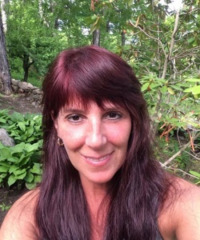


Sue Coletta author pic


Member of Mystery Writers of America, Sisters in Crime, and International Thriller Writer, Sue Coletta is a bestselling, award-winning author of psychological thriller/mysteries. In 2017, Feedspot awarded her Murder Blog as one of the Top 50 Crime Blogs on the net. Sue’s also the communications manager for Forensic Science and the Serial Killer Project. She’s also a proud member of the Kill Zone, where she blogs every other Monday. Learn more about Sue and her books at


Website | Amazon | Goodreads | Twitter | Facebook
 

Writer’s Block: Can You Use it as a Tool? By Melinda Leigh

Metallic Wrecking Ball Shattering Wall


Writer’s Block: Can You Use it as a Tool?

Writing is both fulfilling and frustrating. There are days, that no matter how much I want and need to make progress on a book, I am unable to put words on the page. Or, if I do force myself to write, every word feels wrong. I know I’ll be deleting most of them the next day.

When I first starting writing, this terrified me. But over the past ten years, I’ve learned that writer’s block is my subconscious telling me that something has gone wrong in my book. There a plot hole issue or a problem with a character arc. I need to back up and reassess.


The 3D guy got over the challenge


I often will go back to the beginning and read the entire manuscript. So that I don’t feel as if I’m wasting time, I use this time to edit. When I return to the stopping point, sometimes I’ve recognized the problem and put the book back on track. If I’m still stuck, I reach out to a writer friend and talk through the issue.

So next time you’re struggling with writer’s block, give your WIP a good edit. Reassess your plot, make sure your characters are following their arcs, and then reach out to a friend to talk about why you’re having trouble. It’s possible your story has wandered off course and needs to be redirected.


Traffic cop


Melinda Leigh image


Amazon Charts and Wall Street Journal bestselling author Melinda Leigh is a fully recovered banker. A life-long lover of books, she started writing as a way to preserve her sanity while raising her kids. Over the next few years, she learned a few things about writing a book. The process was much more fun than analyzing financial statements, and she decided to turn her hobby into a career. Melinda’s debut novel, SHE CAN RUN, was nominated for Best First Novel by the International Thriller Writers. She is a RITA® Award Finalist and has earned three Daphne du Maurier Award nominations, Two Silver Falchion Awards, and Two Golden Leaf Awards.

Melinda holds a 2nd degree belt in Kenpo Karate. She’s dabbled in Arnis stick fighting, studied Brazilian Jiu-Jitsu, and taught women’s self-defense. She lives in a messy house in the suburbs with her husband, two kids, a couple of shelter dogs and two rescue cats who clearly run the show. With such a pleasant life, she has no explanation for the sometimes dark and disturbing nature of her imagination. Find out more about Melinda by visiting melindaleigh.com.


A Search Engine For Writers by Elizabeth S. Craig

automotive engine gearbox assembly is isolated on a white backgr


A Search Engine for Writers

By Elizabeth S. Craig


When you’re just starting out as a writer, it can be hard to figure out how to improve at your craft. There are an overwhelming number of writing reference books out there. There are courses to take. I tried both of those things, but never really felt as if I was getting the information I needed. That’s when I started combing through writing blogs for craft tips.


Before subscribing to writing blogs, I’d discovered that Google wasn’t helpful for delivering writing-related links. For example, a search on POV would return results for a show on American public broadcasting.


In frustration, I decided to build my own set of reliable resources to help me improve my craft. In a way, I started collecting writing blogs. I’d find a good one and then frequently found that those blogs linked to other blogs in their sidebars…so I’d hop over to see if those blogs were helpful. Finding these blogs and subscribing to them became a fun rabbit-hole of information.


I read a lot of blog posts and found tons of useful information on the writing craft, on promotion, and on the industry itself. That’s when I decided it might be helpful if I shared the posts as I found them. I figured that not only would it create some good karma for me, but it might also help to build my social media presence on Twitter at the same time.


Social media cartoon pic


Since 2009, I’ve been finding writing and publishing-related articles that serve as resources for writers. I use an RSS feed reader and subscribe to over 1,000 writing blogs. Every day, I scroll through the reader, looking for the best posts to share on Twitter.


The only problem was that everything on Twitter seemed really ephemeral. The tweets were useful, and they were being shared. But the tweets weren’t the static resource that I wanted to create. I decided to share each week’s links as a roundup on Sundays on my blog. That helped (especially since not everyone is on Twitter). But there wasn’t really an effective way of searching for specific content.


In 2010, software engineer Mike Fleming was reading my blog and read on one of my posts: “I’m sure there’s got to be a better way to do this, but I can’t think of it.” He emailed me his idea: a search engine for the writing links. It could be searchable by topic and writers could find a list of resources for any writing-related questions they might have.


In January 2011, a special search engine for writers debuted, developed by Mike. Called the Writer’s Knowledge Base, or WKB, it’s a free resource for writers in conjunction with novel organizer Hiveword. You can search by topic or by category (e.g., business, creativity, promo). You can also sign up to have these posts delivered to you via email (customizable by frequency and category). More information about email delivery in Mike Fleming’s post here.


Search image with blue background


I love that I have a hand in sharing all of the amazing information for writers out there. There are now nearly 45,000 articles in the WKB. If you ever find you need help with the writing craft, figuring out how to start your own writer website, or even researching a blog post, I hope you’ll check into this free resource.


Elizabeth S. Craig--Web (2)


Elizabeth is the bestselling cozy mystery author of the Southern Quilting mysteries, Memphis Barbeque mysteries, and Myrtle Clover Cozy Mysteries for Penguin Random House, Midnight Ink, and independently.


Website | Twitter | Facebook | Amazon | Goodreads



Series by Elizabeth S. Craig